Outdoors

Pak Chong, Khoa Yai National Park, and Silk in Surin

After our break in Railay we decided to get back on the travel wagon and head for the great outdoors of Khoa Yai National Park near Pak Chong.

We took a brief research detour to the city of Patong, which is on Phuket Island. The one night stay was enough for us to know we didn’t want to stay there in the future with my family. Patong is VERY touristy, the most we’ve experienced so far. And with that comes the frustration of saying “no, I don’t want a taxi or tuk tuk, no I don’t want a suit, no I would not like a massage” over and over again. We booked it out of there the following day and heading up north and then east to the city of Pak Chong.

Pak Chong is  a smaller city that doesn’t have many tourist come through. It’s always refreshing to stay in a town like this. The people are more curious about you and very willing to help without expecting you to visit their shop or buy something from them. Dave and I have come to realize we enjoy towns like this much more than any touristy town out there. The lonely planet guides usually do a really good job of creating touristy towns, so these small gems are a lot harder to find.

We were both exhausted from the 13-14 hour overnight bus to Bangkok and the 3 hour bus from Bangkok to Pak Chong, so we decided to stay in the closest hotel we could find. The hotel was called Pak Chong Hotel and was right across the street from the night market. We indulged ourselves in the best Pad Thai we’ve had so far in Thailand, these crepe type things, waffles, and Happy Milk shakes. All of these were a total of 160 Baht ($5.20), which is what Dave and I spent on dinner or lunch in Railay. These night markets or even the day markets are perfect for us and our budget.
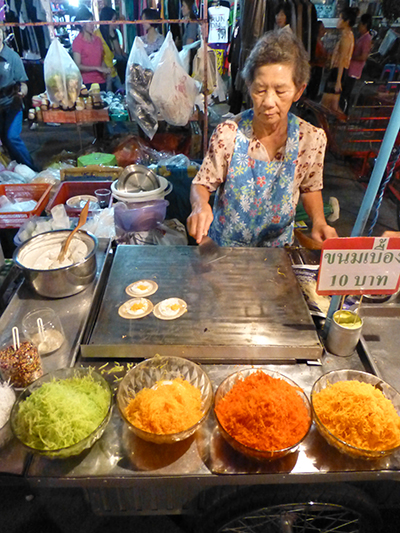
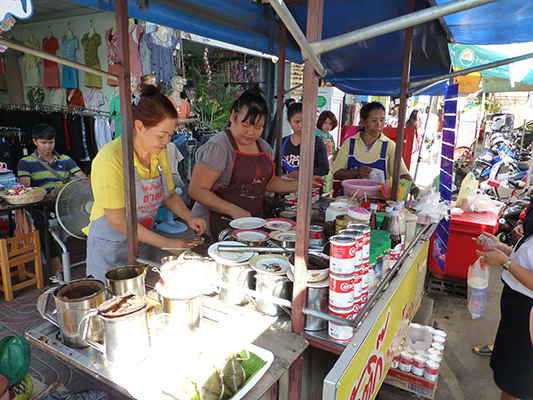
Making the crepe things.

Making the crepe things.

The food station where we got our pad thai.

The food station where we got our pad thai.

Best pad thai so far

Best pad thai so far

Night markets are cheap and offer lots of yummy food.

Night markets are cheap and offer lots of yummy food.

Waffles. We tried the coconut, chocolate, and corn one. They all tasted like butter to us.

Waffles. We tried the coconut, chocolate, and corn one. They all tasted like butter to us.

Happy Milk milk shakes.

Happy Milk milk shakes.

The "American" breakfast that was included with the hotel. Some how they think Americans eat hot dogs and various other forms of pork for breakfast. Not sure where this came from.

The “American” breakfast that was included with the hotel. Some how they think Americans eat hot dogs and various other forms of pork for breakfast. Not sure where this came from.

The following day we decided to book a tour of the national park with one of the companies that offered it. We decided to go with Bobby’s Apartments and Jungle Tours rather than Greenleaf, which was the only other option, for multiple reasons.

  • The cost of the tours was the same 1500 baht/person, BUT, the rooms were only 200 baht per night vs. 300 baht for Greenleaf
  • They included free Wi-Fi – not sure if Greenleaf does, it’s not on their website
  • Hot water showers
  • They both have 5 stars for reviews
  • And to top it all off, we had called Greenleaf the day before when we were undecided about doing a tour or not and they told us “no tour, then you can’t stay here, bye” which we didn’t appreciate at all

The tour was split into two days. The first included a swim in a natural spring, a tour of a cave where a bunch of bats live, a yummy fruit and cracker snack, and then watching millions of bats leave the cave at dusk. When I say millions, I am not exaggerating. It was amazing. They started to come out around 6:15pm and were still coming out when we left around 6:35pm. We were told it takes about an hour for all of the bats to leave the cave. It was an awesome experience that I know pictures won’t be able to capture.
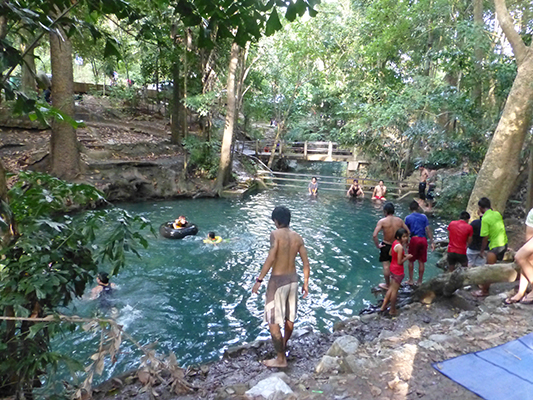
The water was a little cold, very refreshing. A lot of the locals went in with all their clothes on.
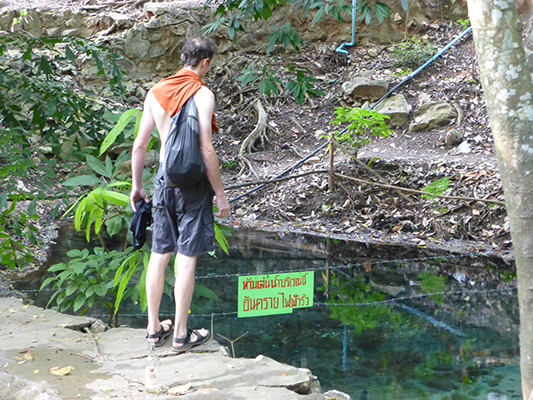
The water was a little cold, very refreshing. A lot of the locals went in with all their clothes on.

Dave checking out the source of the spring

Dave checking out the source of the spring

Another section of the river
Another section of the river

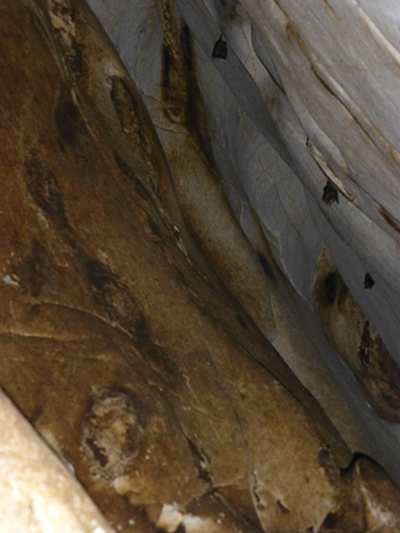
Bats sleeping in their cave.

Bats sleeping in their cave.

Sun setting at the farm where the bat cave entrance was.
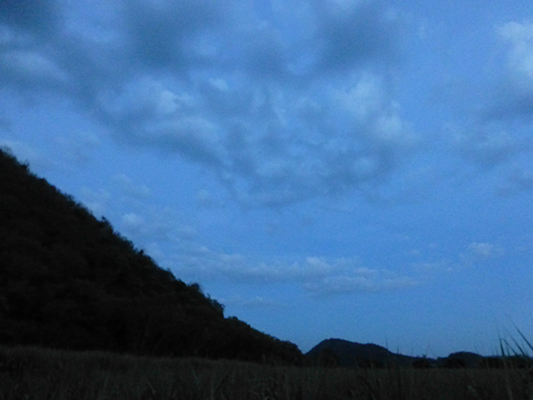
Sun setting at the farm where the bat cave entrance was.

It's a little hard to see them, but you can see a zig-zag trail of bats coming from the mountain.

It’s a little hard to see them, but you can see a zig-zag trail of bats coming from the mountain.

Another picture trying to capture the bats.
Another picture trying to capture the bats.

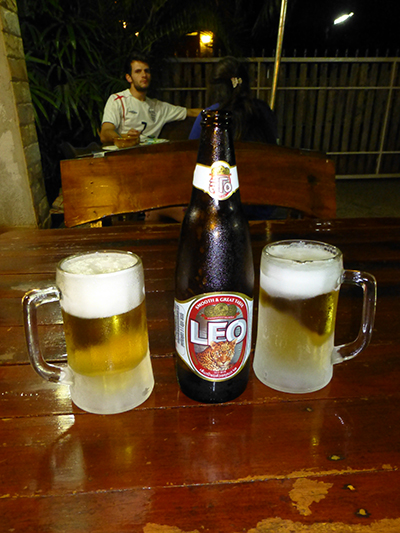
Enjoying a local beer after our first day.

Enjoying a local beer after our first day.

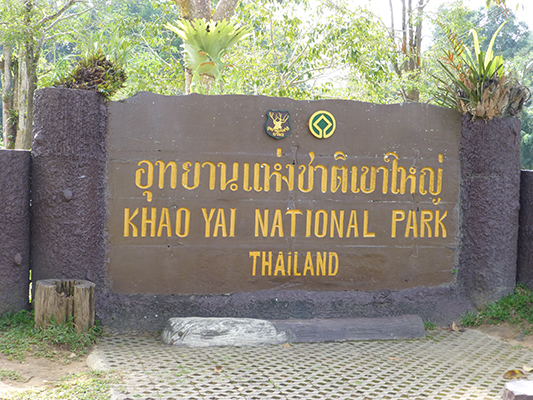
The second day was our trip into the Khoa Yai National Park and consisted of a visit to the visitors center, a hike through the jungle to look for animals and have lunch, a short walk to the biggest waterfall in the park, a swim in a smaller waterfall, and a never ending search for monkeys, birds, and elephants. Guess what? We got lucky and got to see all three plus a very poisonous viper and the pincers of a scorpion. Our guide did a very good job finding the animals and sharing the experience with us. I would recommend Bobby’s Jungle tours alone for the guide we had, of course, I didn’t experience other tour guides they might be just as good or better. I’ll never know.
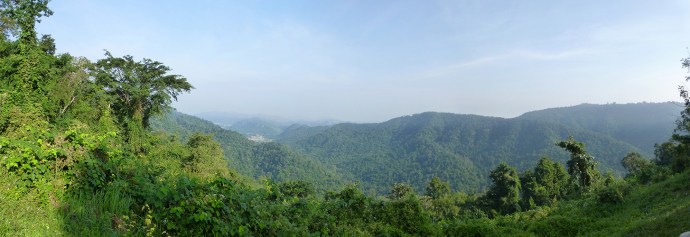
Panoramic from the view point in the park. Reminded us of the smokey mountains.
Panoramic from the view point in the park. Reminded us of the smokey mountains.

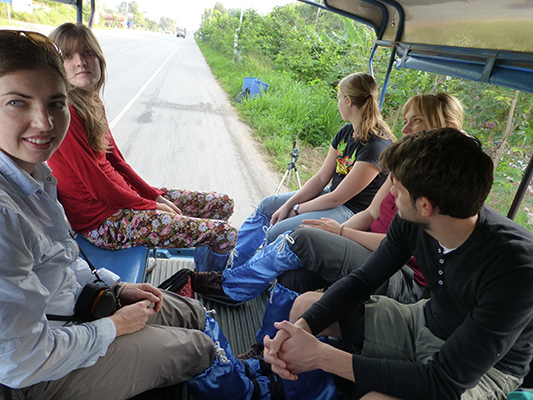
The pick-up truck ride that drive us around for the day and our fellow tourist.
The pick-up truck  that drove us around for the day and our fellow tourist.

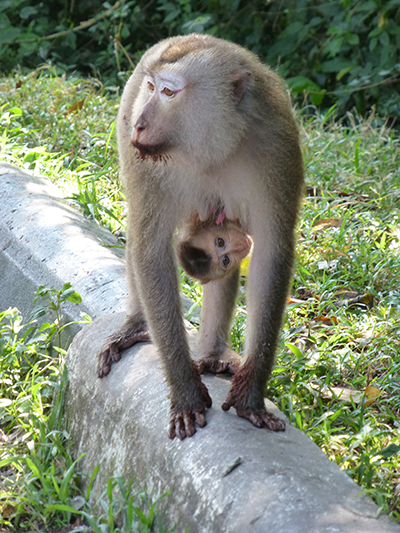
Monkeys and their babies.
Monkeys and their babies.

P1060348

Headed into the jungle to look for gibbons.

Headed into the jungle to look for gibbons.

Found some. Apparently these guys are very shy and you don't see them much. We got lucky.

Found some. Apparently these guys are very shy and you don’t see them much. We got lucky.

They have a really cute face and are pretty fuzzy.
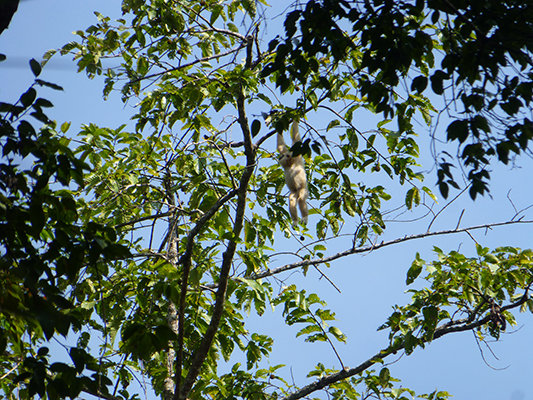
They have a really cute face and are pretty fuzzy.

Hanging monkey.
Hanging monkey.

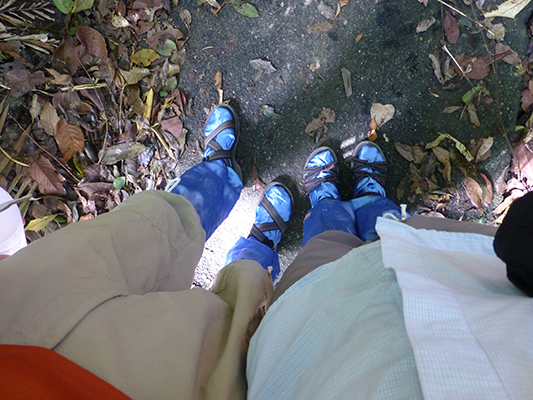
Our blue leech socks.

Our blue leech socks.

Sun bathing turtle

Sun bathing turtle

Barking deer

Barking deer

We also got to try some Holland candy. Which tasted like licorice and salt. They like them, I do not.

We also got to try some Holland candy. Which tasted like licorice and salt. They like them, I do not.

Scorpion do not like to be woken up during the day with a stick.

Scorpion do not like to be woken up during the day with a stick.

Still trying to get the scorpion to come out.

Still trying to get the scorpion to come out.

Huge termite nests.

Huge termite nests.

Huge trees.

Huge trees.

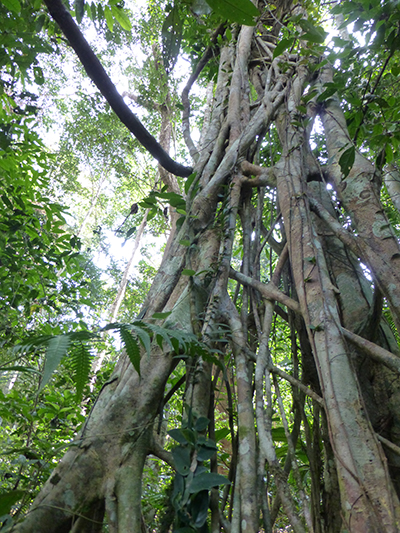
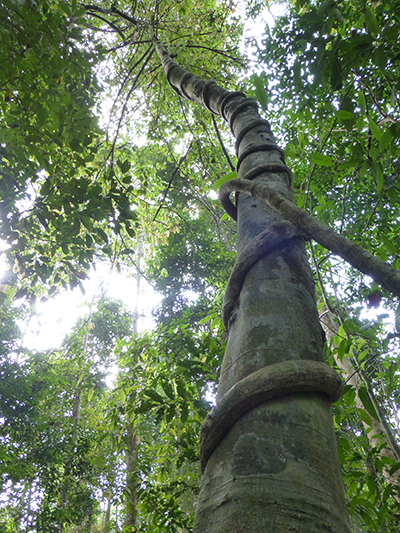
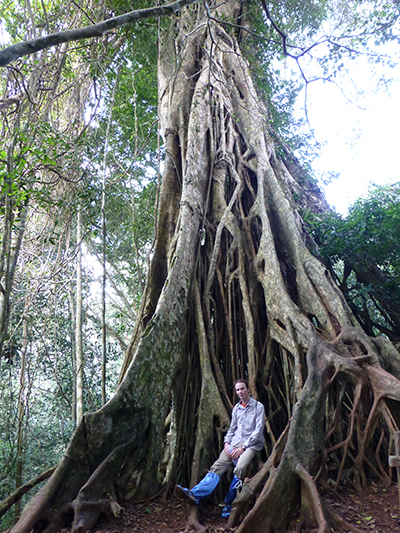
This is a fig tree. They grow on other trees until the other tree eventually dies and then gets eaten by termites.

This is a fig tree. They grow on other trees until the other tree eventually dies and then gets eaten by termites.

Trying to wake up another scorpion. No luck.
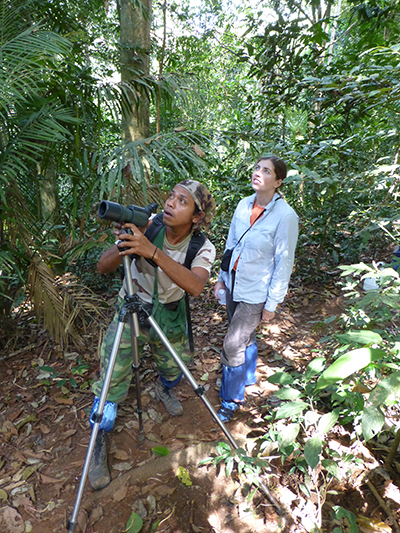
Trying to wake up another scorpion. No luck.

Bird watching is hard work. They move very fast.

Bird watching is hard work. They move very fast.

Gross spiders
Gross spiders

Cool trees.

Cool trees.

Lunch was rice with lemon-grass curry. Very tasty.

Lunch was rice with lemon-grass curry. Very tasty.

Trekking through the jungle.
Trekking through the jungle.

Large fig tree.

Large fig tree.

Lizard.

Lizard.

Very poisonous viper that was only about two feet away from the trail.
Very poisonous viper that was only about two feet away from the trail.

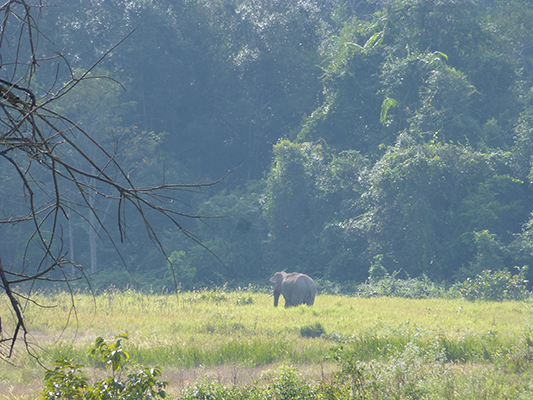
Wild Elephant!
Wild Elephant!

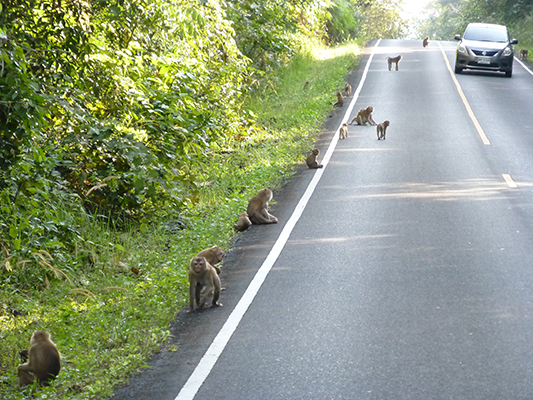
So many monkeys

So many monkeys

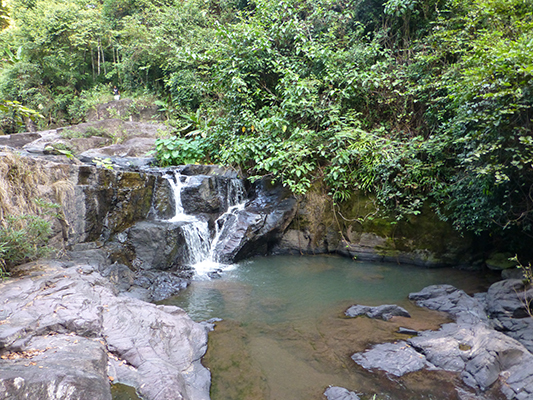
Largest waterfall in the park.
Largest waterfall in the park.

Swimming hole.

Swimming hole.

To finish the day off, a beautiful sunset.

To finish the day off, a beautiful sunset.

The day after the tours we decided to go further east to Surin by train. We were told that the trains were a little unpredictable, but decided it would be easier than buses. Well, the train showed up 2 hours late and took about 45 minutes longer than we thought. But, it didn’t cost much and we were in no real rush, so it worked.

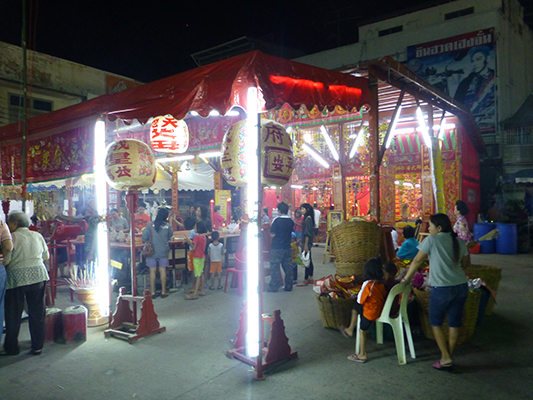
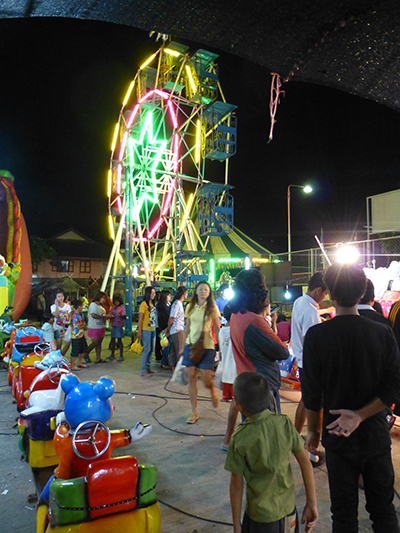
When we got off the train we walked into a festival happening in the square. We were told it was a Chinese Opera, but to us it seemed like a lot of singing, dancing, and carnival like games. We didn’t find the Chinese opera until the last night and it was very hard to hear and understand them. We think this was all for the king as it was the King of Thailand’s birthday the day after we arrived. The festival lasted the whole time we were there, which was very lucky for us as Surin is a small sleepy sort of town. But we did enjoy all of the food that came along with this festival. We did get Pad Thai again, but we tried some different things that looked like egg rolls and these cake type things with different toppings. We also got to see the whole town stop what they were doing and sing happy birthday to the king, or maybe it was the national anthem, either way, it was a cool experience. But this was only an added bonus for coming to Surin, we didn’t actually know that was happening until we got there.

Also, all the actors looked very distracted and annoyed that they had to perform at all.
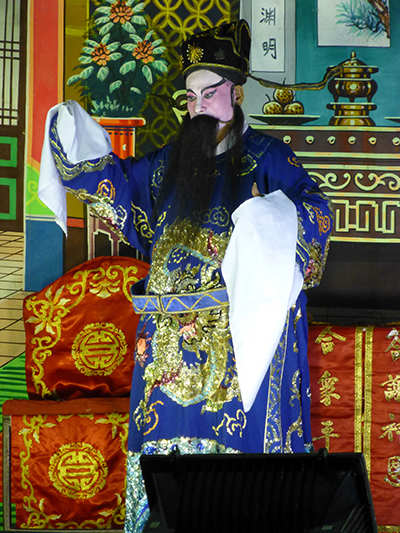
Also, all the actors looked very distracted and annoyed that they had to perform at all.

Again, they were speaking and singing in Chinese, so even the Thai people didn't know what they were saying.

Again, they were speaking and singing in Chinese, so even the Thai people didn’t know what they were saying.
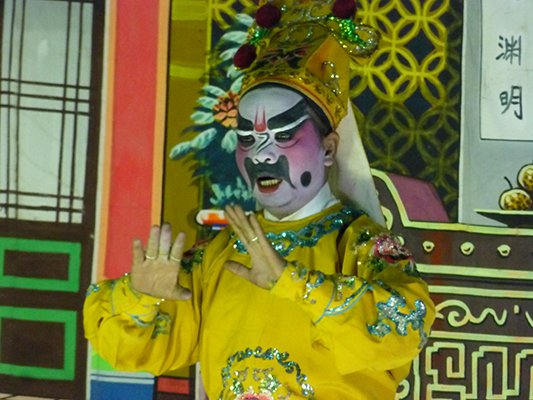
One of the characters in the opera
One of the characters in the opera

This was part of the Chinese Opera. They gave you burning incense to pray in a distinct order throughout this tent. We were someone lost and Dave burned himself numerous times. It was interesting though.

This was part of the Chinese Opera. They gave you burning incense to pray in a distinct order throughout this tent. We were someone lost and Dave burned himself numerous times. It was interesting though.

Traditional Thai dancing by 6 year olds.
Traditional Thai dancing by 6 year olds.

Rides and carnival games for the kids.

Rides and carnival games for the kids.

The cake dessert with different toppings. One was port, we didn't get that one.

The cake dessert with different toppings. One was pork, we didn’t get that one.
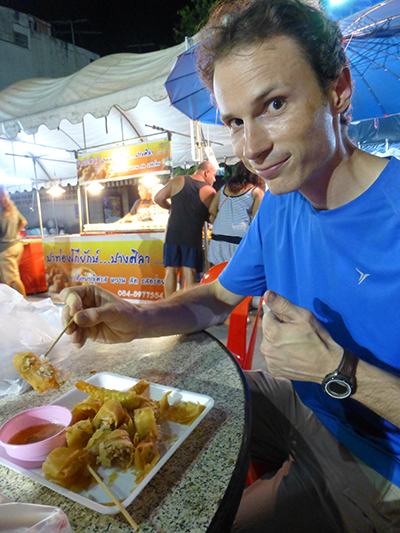
Dave trying the egg rolls.

Dave trying the egg rolls.

I think this is jelly fish. We didn't try it.

I think this is jelly fish. We didn’t try it.

Roasted chestnuts.
Roasted chestnuts.

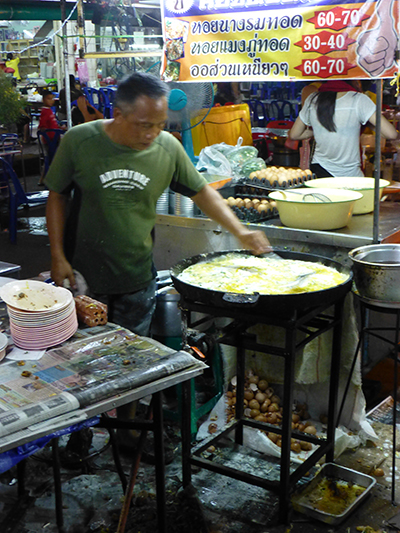
This guy made some sort of egg dish all night on this giant frying pan.

This guy made some sort of egg dish all night on this giant frying pan.

The king projected on the big screen
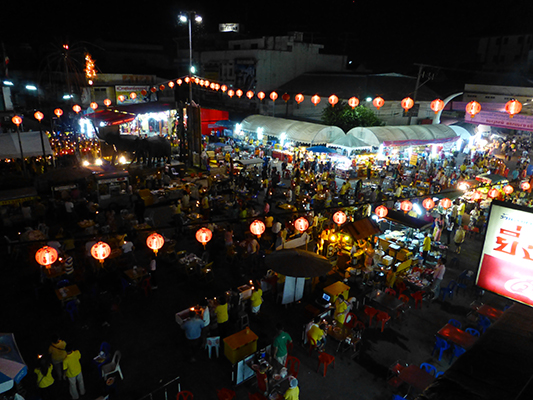
The king projected on the big screen

Everyone stopped and singing what we think was happy birthday to the king.
Everyone stopped and singing what we think was happy birthday to the king.

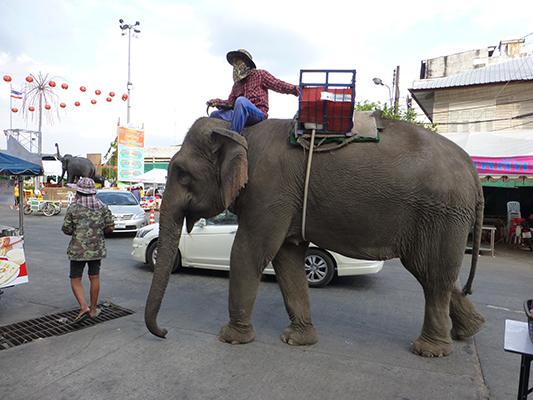
Surin was more famously known for it's Elephant round up. Which has thousands of elephants playing games and such. It was in November so we missed it by a week or so. But we still saw elephants in the town.

Surin was more famously known for it’s Elephant round up. Which has thousands of elephants playing games and such. It was in November so we missed it by a week or so. But we still saw elephants in the town.

The reason we did come to Surin is the nearby silk villages. The experience to and from was more exciting than we had expected. Our hotel recommended we take a tuk tuk to and from the village as it would be easier. It was also going to cost an estimated 300 baht ($10), most likely both ways. In our book it says you can take a local truck for 15 baht or 30 baht ($1) total for both of us, a tenth of the cost. Being budget travelers we went with the cheaper option, we’ve taken local trucks before anyway, no biggie. We set off with only the name of the truck we were suppose to take and the town it was going to. We stopped in a local store where the 3 people working deciphered what we wanted from our poor rendition of the Thai words for truck and the town name. Eventually they pointed us in the correct direction, which was the market down the street. We managed to find the market from the direction they gave us, but there was 10-20 trucks all with Thai writing parked around the market. Again, we asked some locals using the same Thai words as before. This time they laughed after we mentioned the town, Ban Tha Sawang, and pointed us towards a street that held most of the trucks. Still not knowing which truck to take, we proceeded to ask every truck “Ban Tha Sawang?” and were pointed in the general direction of the trucks behind them with a laugh afterwards. Finally we found it, but people from other trucks were still yelling out “Ban Tha Sawang” and then laughing afterwards. We were amused by the whole experience and still not fully sure we were on the correct truck. I don’t think many non-locals opt to take these trucks.
Thai iced tea stand.
Thai iced tea stand.

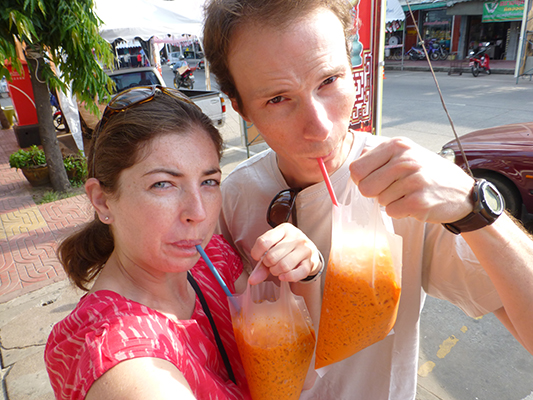
Iced tea in a bag!
Iced tea in a bag!

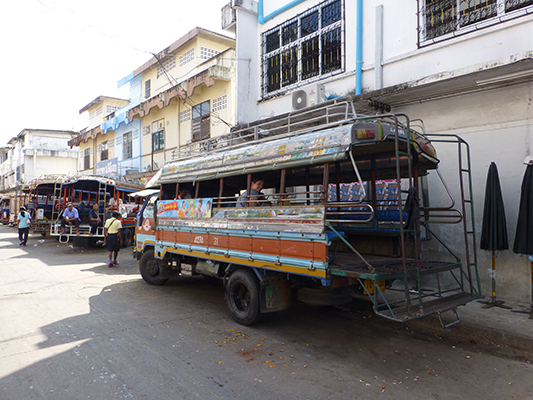
The truck we took to the silk village.

The truck we took to the silk village.

We arrived!

We arrived!

Anyway, we were on the correct truck and made it to the village. We checked out how they make the silk and shopped around for a couple of hours. Finally decided on a silk handmade scarf for me and a silk scarf that we’re going to use as a table runner whenever we get a table back home.

Silk weaving location

Silk weaving location

A couple of the women weaving. We are still not sure what everything is for, we did not get an explanation.
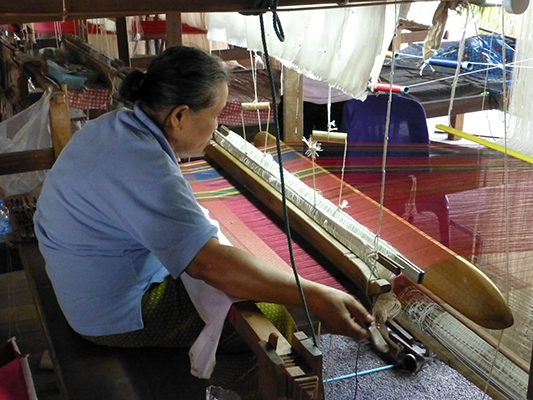
A couple of the women weaving. We are still not sure what everything is for, we did not get an explanation.

We did see this women take this wooden stick and throw it back and forth. The stick had gold silk attached to the end of it.
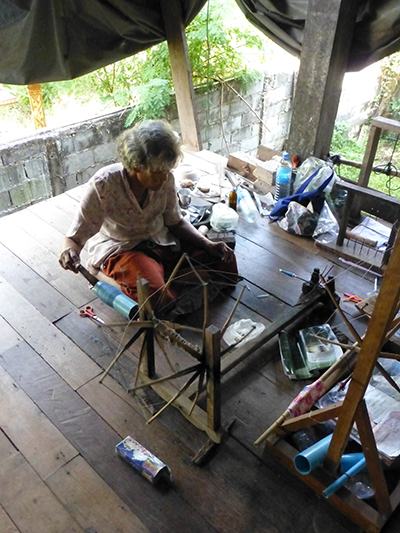
We did see this women take this wooden stick and throw it back and forth. The stick had gold silk attached to the end of it.

One of the weavers putting silk onto a bobbin.

One of the weavers spooling the silk.
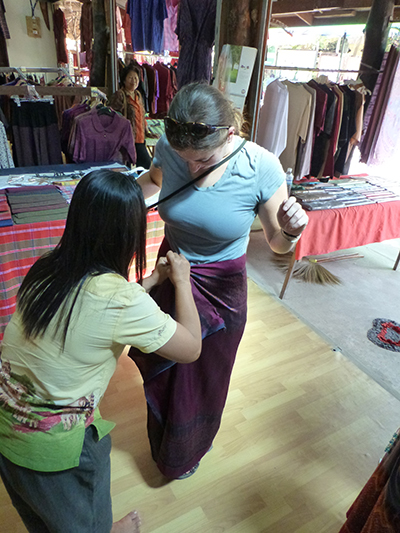
I tried on one of the silk skirts and asked them to tie it how they normally would have.
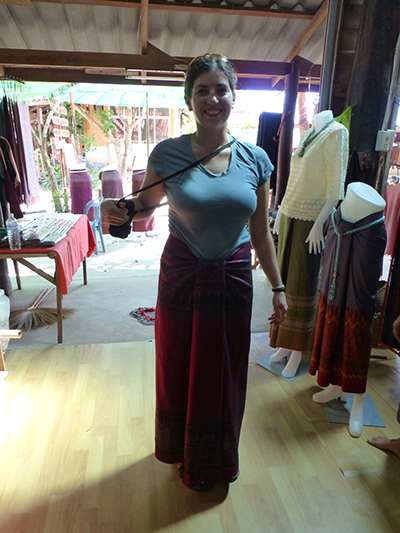
I tried on one of the silk skirts and asked them to tie it how they normally would have.

Pretty cool. But I would never wear this.
Pretty cool. But I would never wear this.

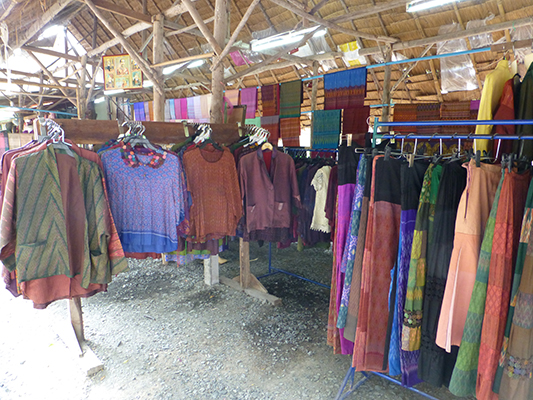
One of the many shops.
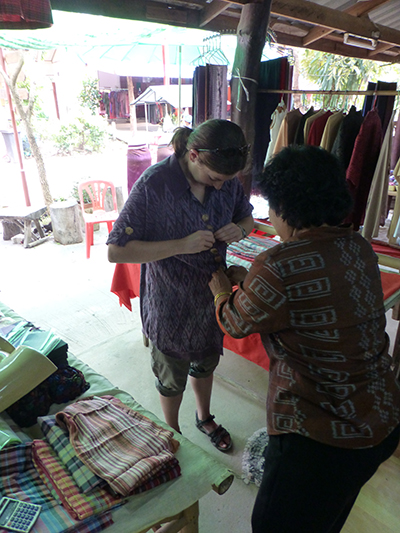
One of the many shops.

Trying on a one-size fits all dress. Not flattering on me at all.

Trying on a one-size fits all dress. Not flattering on me at all.

After this, we went to the location we were dropped off at and waited for a return truck. Thirty-five minutes into the wait a nice, older gentleman on a scooter asked us if we were waiting for a truck back to Surin. We said yes and he proceeded to tell us that sometimes they come and sometimes they don’t, so he was going to try and tell someone that we were waiting. We said thanks, both slightly confused as to what he meant. He went over to the side of the road and started to wave his hand, the equivalent of holding up your thumb, to hitchhike a ride back to Surin for us. Both of us kind of chuckled and wondered if this was 1. allowed and 2. normal practice. There was no stopping him, so we went along with it. Well, no luck and he said he was very busy. So we thanked him and waited another 10 minutes when we decided that after a total hour of waiting we would walk the 8km (5 miles) back if there was no ride. Another 10 minutes went by, 5 minutes before we decide to hoof it, Dave gets up the courage to start to wave at people. We had decided we would have better luck with pick-up trucks and we got lucky, there were three in a row and one of them actually stopped! Lucky us! Two nice young ladies in a pickup brought us back to town and wouldn’t even allow us to pay them. All in all, I’m glad we didn’t opt for the tuk-tuk, because the experience to and from the silk village ended up being better than the silk village itself.
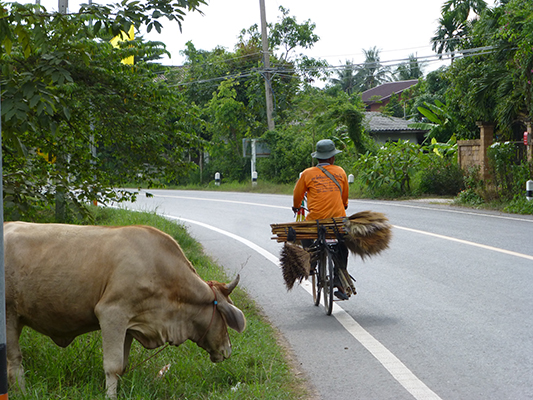
This is just to show how rural the place was.
This is just to show how rural the place was.

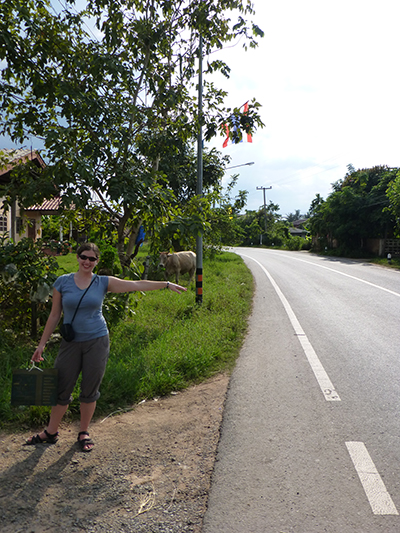
Hitchhiking. Dave actually did this for our ride.
Hitchhiking. Dave actually did this for our ride.

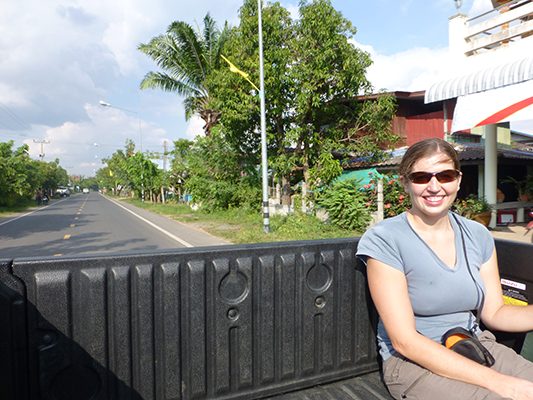
Wahoo, we don't have to walk back.

Wahoo, we don’t have to walk back.

We didn't get a picture with the ladies, but we snapped a shot of the truck.

We didn’t get a picture with the ladies, but we snapped a shot of the truck.
Categories: Cities, Handicrafts, Nature, Outdoors, South East Asia, Traveling | Tags: , , , , , , , , | Leave a comment

Huaraz, Peru and the Cordillera Blanca Mountain Range

On a trip of this length it’s very easy to make plans only to break them later due to a variety of reasons, including anything from loving a place and wanting to stay longer or even sometimes hating a place and wanting to move on as soon as possible. So we decided early on that our plan was not to have a plan, but instead to choose countries or sections of a continent to visit and figure out the specifics as we traveled. One of the ways we decide where to go is by talking to other travelers. They’ve either done better research than we have or have already been to a place and can give you the thumbs up or down. That’s exactly how we decided to visit Huaraz, Peru. We came across more than a couple travelers that told us Huaraz, and more specifically the mountains surrounding it, were a must see.

Huaraz is considered a Mecca for outdoor enthusiasts. Near the city are the mountain ranges of the Cordillera Blanca and Cordillera Negra. These ranges have some of the highest mountains in the Andes, treks that rank in the top 5 or so in the Andes (maybe even the world), great rock climbing and ice climbing, mountain biking, and a myriad of other activities offered by the many guide agencies in town. So it’s easy to see why we were attracted to this area. An interesting little fact about the Cordillera Blanca mountains is that it’s home to the mountain featured in the movie Touching the Void, which is a true story about a climber that had to crawl down much a mountain with a broken leg after his partner cut their climbing rope and left him behind. You’ll have to watch the movie to get the full story.

So, without much planned we made our way to Huaraz. Unfortunately, during our day layover between Chachapoyas and Huaraz, in the beach town of Huanchaco, Sarah picked up a not so friendly bacteria from a plate of ceviche—a dish consisting of fish cooked only by the acidity of a lime. So the first few days in Huaraz were spent resting and recovering. The downside to that time was that cabin fever started to set in for me, but the upside was that our Canadian friends, Jon and Ariane, made their way to Huaraz, allowing us to hang out with them once again.

Our original plan was to do a well known trek called the “Huayhuash” trek. It ranges from 8-14 days in length, depending on the route you take and how much you’re willing to pay a guide agency. After asking around we found out that we missed the best season to do the Huayhuash trek. It was now the rainy season and that section of the Cordillera Blanca range is especially susceptible to the seasonal rain due to it’s location. Other sections, and consequently other treks, are better protected from the rain and were therefore a better option. One of the most popular treks is the Santa Cruz trek, 4 days and 3 nights in length. We opted for this trek due to the amount of time we’d already spent in Huaraz, the lower cost, the need for less technical gear, and the fact that Jon and Ariane were up for doing this trek as well.

We spent a couple more days acclimating to the higher elevation and taking in all that was the city of Huaraz. And due to nationwide teacher protests in Peru our trek was delayed one more day. The jury is out on whether the trek was really delayed as a result of the protests. We found out that our guide agency wasn’t completely honest with us on a few accounts. This seems to be a common practice in Huaraz, likely due to the low profit margins and abundance of guide agencies competing for clients. Sarah and I made the best of the added day and took a guided rock climbing trip.

Below our many photos from out time there.

Photos in and around Huaraz:

P1030751

Most of the corn we’ve seen so far has massive corn kernels. It’s corn on steroids. Really it’s just a different type of corn we don’t see in the states.

P1030765

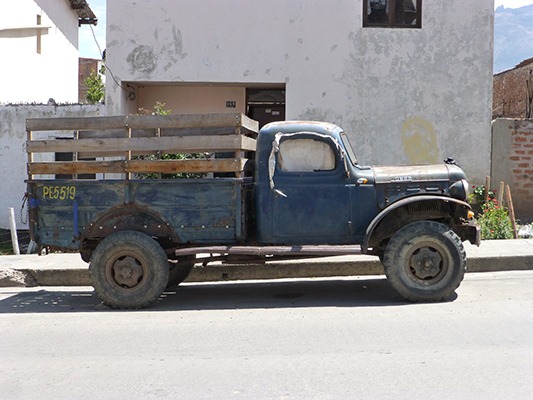
We seen many only model U.S. cars through South America. Here’s and old Dodge pickup that was parked near our hostel.

P1030767

This was an especially exciting day in Huaraz. While walking through town we stumbled upon a clash between police and the protesters. Minutes before this photo was taken rocks were being thrown and the police and they in return were chasing down the people throwing the rocks. We had to run with the crowd in order to avoid being run over. Kind of scary and thrilling at the same time. For the most part, though, the protests we witnessed all over Peru were peaceful.

P1030779

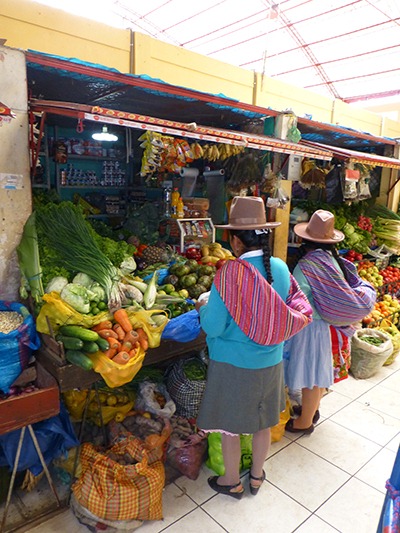
We saw women, and sometimes men, all over Peru dressed in traditional clothing. This photo was taken in the Huaraz market. The hats these women wear are really cool.

P1030781

Also at the market we saw Cuyes (Guinea Pigs). They’re eaten all over Peru. We’ve yet to sample any.

P1030793

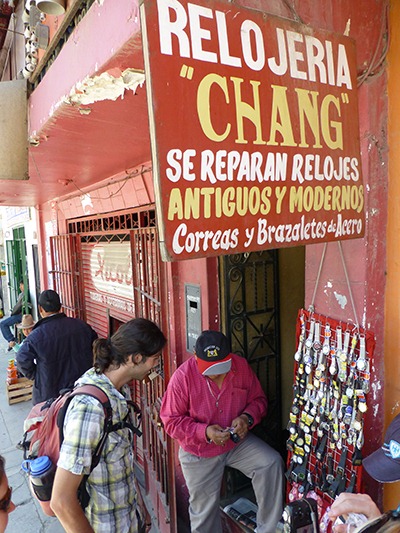
One of the cool things about countries like Peru is that you still see lots of things being fixed, as opposed to in the the U.S. where you simply buy a new version of whatever it is that broke. This is our friend Jon having his battery replaced. The watch failed to work a few days later though.

P1030800

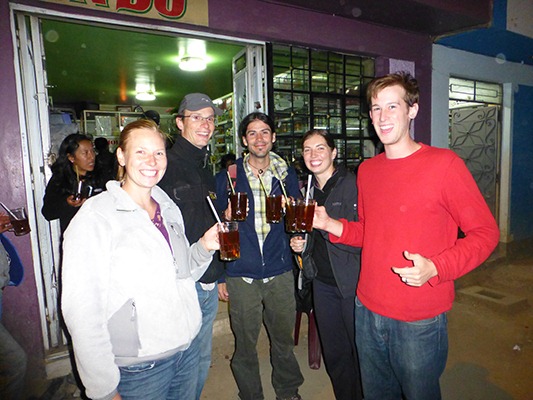
While in Huaraz we crossed paths with Erin and Zach, the couple from Seattle that we met at the farm in Ecuador. They are volunteering at an after school program in Huaraz for 3 months. They’re new group of friends introduced us to a local drink called Chuchuguasi, an alcoholic drink with supposed medicinal properties. It was cheap, costing around 40 cents, and strong.

P1030749

Me trying on an awesome hat/scarf combo at the artisan’s market.

P1030750

You see this hat worn around Peru by some of the men. It’s a wool felt cone.

Climbing near Huaraz:

P1030805

On our way to the climbing wall with our guide

P1030809

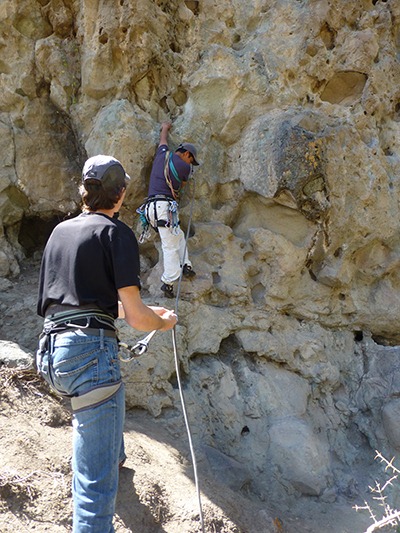
Sarah and I hadn’t climbed for a while and so we opted to have our guide lead the first route. Feel comfortable after the first climb, I led the next two. It felt really good to climb.

P1030815

Sarah climbing the first route of the day. Unfortunately, the guide service picked routes that were a little hard. Nonetheless it was still a good time.

P1030820

This had good pockets for hand holds but had a slight angle that made it challenging. Plus we were both out of climbing shape.

P1030836

The wall was on the outskirts of town in a small neighborhood. This was the view from the neighborhood.

Santa Cruz Trek:

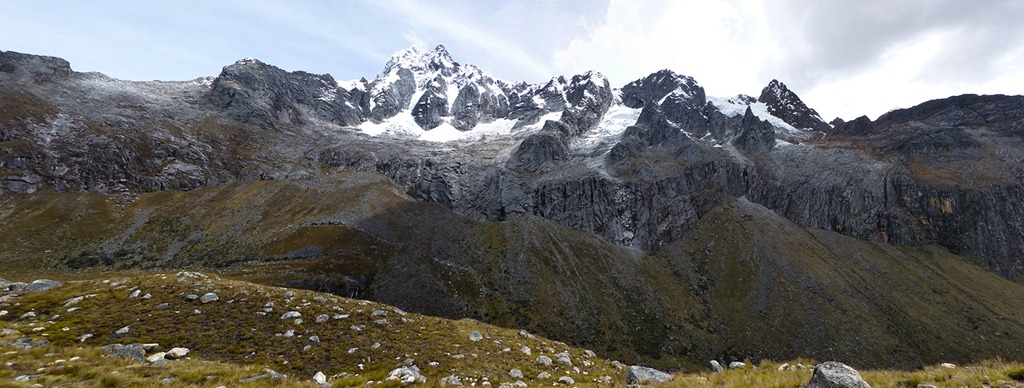
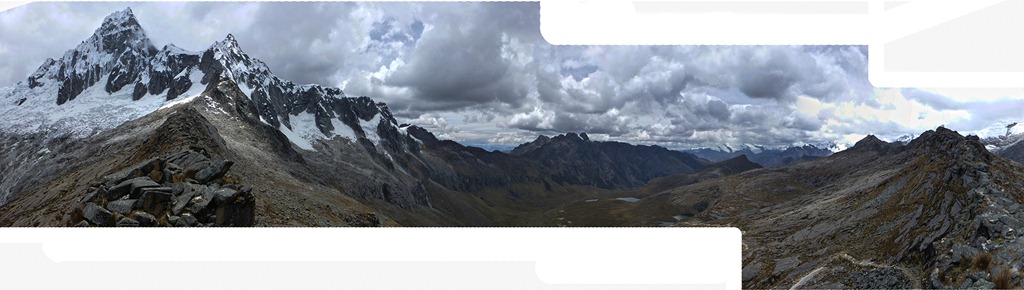
Santa Cruz_Panoramic_03

This is the view looking south (I think) on the second day of the Santa Cruz trek. We had just reached the highest point of the trek.

Day one of the trek started with a 5 hour colectivo ride from Huaraz to the trail head near a small town high in the mountains. We’ve ridden buses through a large portion of the Andes Mountains and I’m still fascinated by the farming that I see in this environment. All of the planting and harvesting is done by hand and cows are used for tilling. Some of the farms are located on very steep hillsides. There are usually grazing sheep scattered about as well. Unfortunately, we didn’t capture any photos along the way so you’ll have to use your imagination. We did manage to capture a couple photos had the highest point of the drive.

P1030850

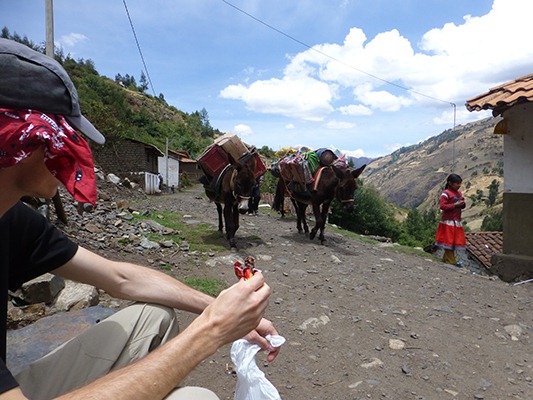
The drive to the starting point of the trek was very dust, hence the face mask.

P1030855

This view from the road got us really excited about the trek ahead.

After a long drive we finally arrived at the start of the trek in the Huascaran National Park. The last half of the day we hiked approximately 9 km to the first campsite. Even though we’d been in Huaraz for about a week at that point, we still found it difficult to catch our breath at the slightly higher elevations. I found myself having to catch my breath even when sitting. After the first day that wasn’t a problem.

P1030900

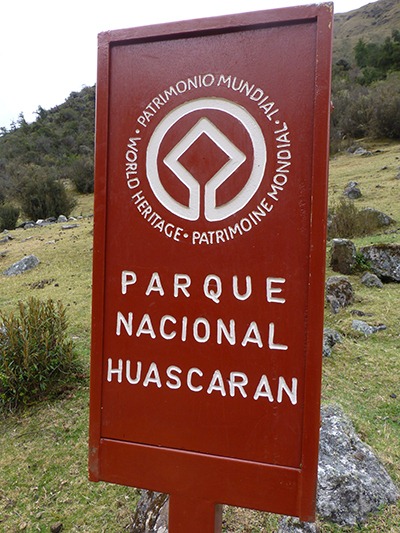
Huascaran National Park encompasses the Santa Cruz trek. It’s also the name of the highest peak in the park.

P1030860

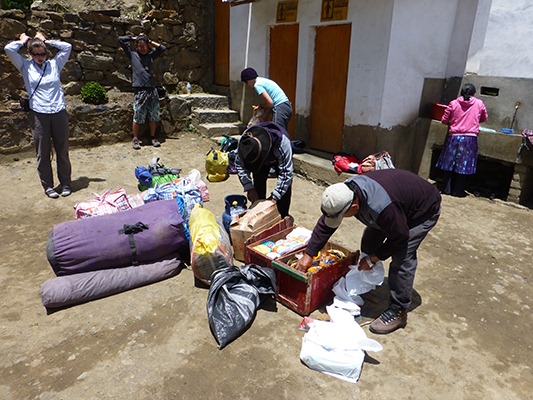
Our guide and donkey driver preparing the gear on the first day.

P1030875

These guys did all of the work.

P1030891

The first leg of the trek took us through some small farming communities. Here are some of the folks and their sheep that live near the park.

P1030893

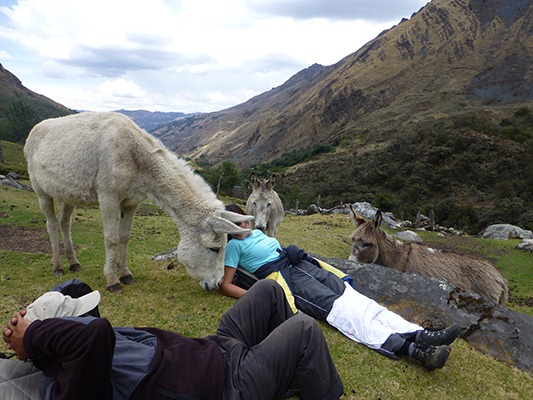
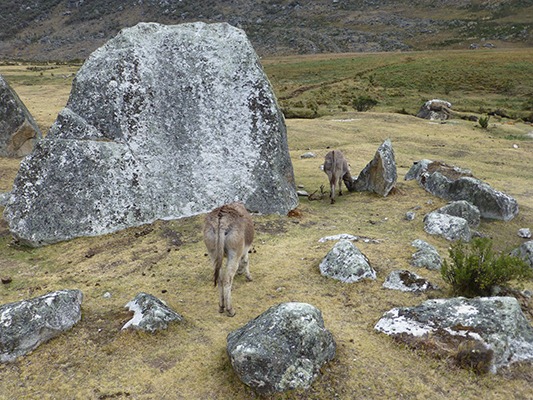
Very curios donkeys we encountered on the first day. He seemed so proud perched on his rock.

P1030899

It turns out that the donkey’s were very friendly, especially when they knew you had food. This guide stole a banana out of Angelic’s pack.

P1030909

As we hiked in the views got better and better. In the foreground is pasture land and you can see the glacier covered peaks in the distance.
P1030922

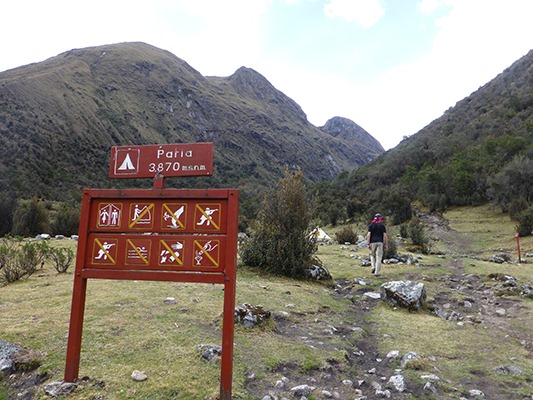
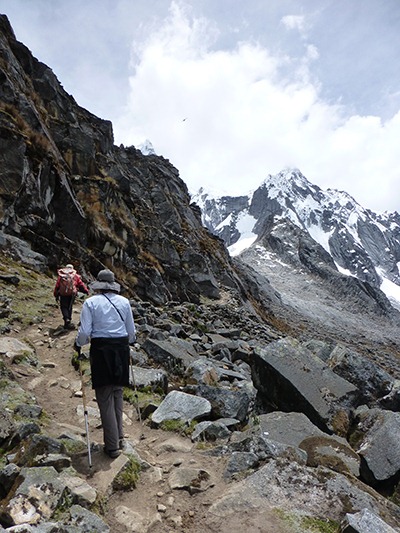
The first night’s campsite at 12,700 feet.

P1030924

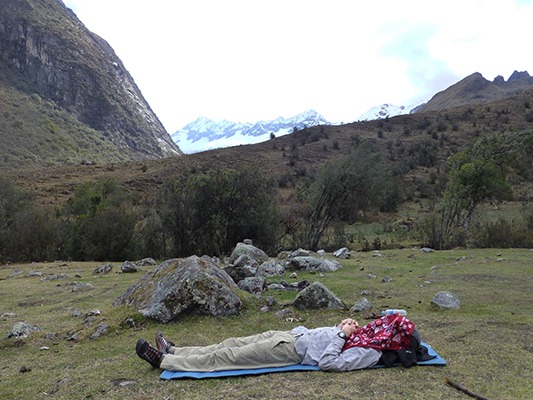
Soaking up the sun and taking a nap after the first hike.

P1030928

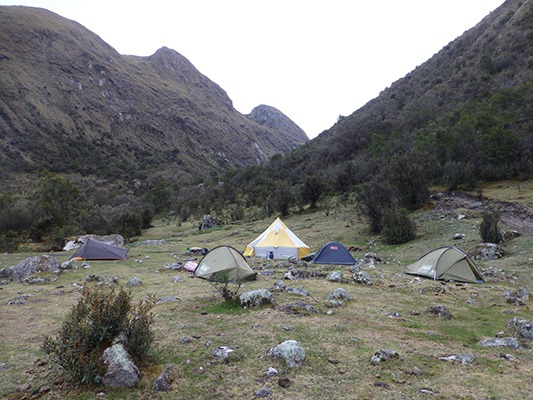
Out little tent city.

P1030932

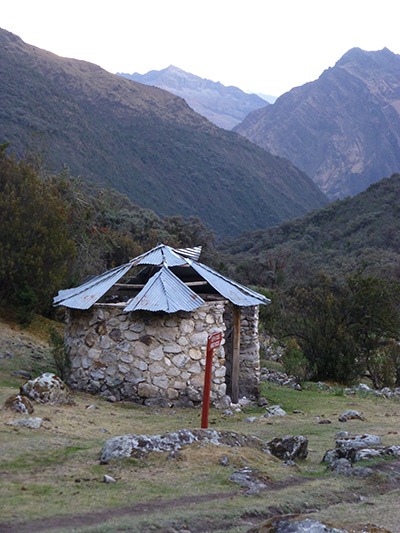
The outhouse was in rough shape inside and out.

P1030936

First course of the first night’s dinner, soup with a hard boiled egg. The dinners were delicious throughout the trek.

P1030939

Second course of rice, potatoes and chicken.

P1030940

Me sipping on some coca leaf tea to help with the altitude induced headache I had. This stuff really works. Also sporting my new wool Peruvian cap.

We woke early on the second day to get a jump on the longest day of the trek, at 18 km. The whole crew performed pretty well but I’m proud to say that Sarah and I seemed to be in the best shape of the bunch. It helps that we hand donkeys carrying nearly all of of the gear and the fact that we were sucking on coca leaves the entire time. This day saw the highest point of the trek at 4,750 meters. That’s the highest Sarah and I have ever been. It was very rewarding to reach the top, especially given that the good weather allowed for spectacular views. Over the next two days the weather degraded, so we were lucky to have good weather on the leg of the trek that offered the best views.

P1030942

The first day’s breakfast was the best, only because it included avocado. Every day after was only eggs, bread and jam.

P1030943

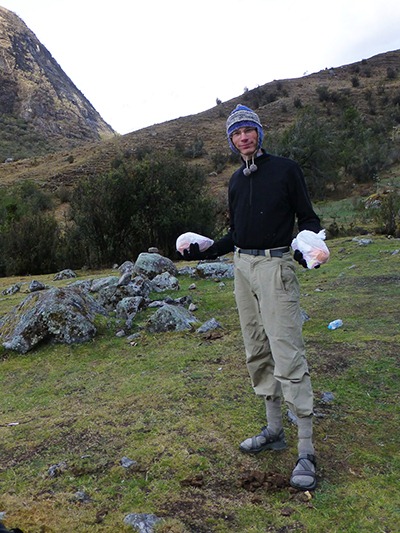
After much thought I decided that this was the best setup for hiking. Being so chilly at those elevations I opted to tuck in the pants to trap the heat. My sandals had more robust soles than my shoes so I went with them. It turned out to be a very good setup.

P1030957

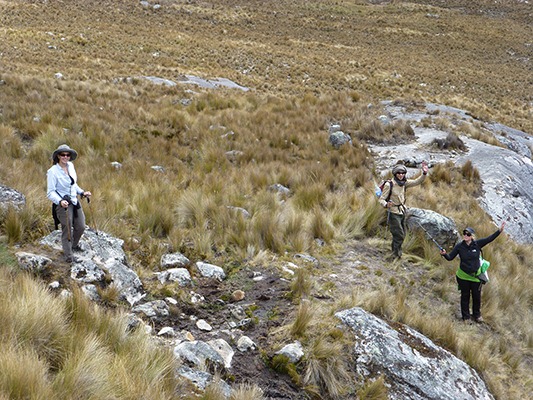
The views just got better and better.

P1030958

Our guide, Juan, soaking it up. It being all of the goodness of the outdoors.

P1030972

We saw a lot of elevation change this day, so coca leaves were a must. Jon and Ariane fueling up.

P1030973

Sarah’s first time doing coca leaves.

P1030974

Green teeth are a clear sign of coca use.

P1040029

And more great views.

P1040030

According to our guide, this poor donkey was carrying too much weight, causing him to tip over.

P1040036

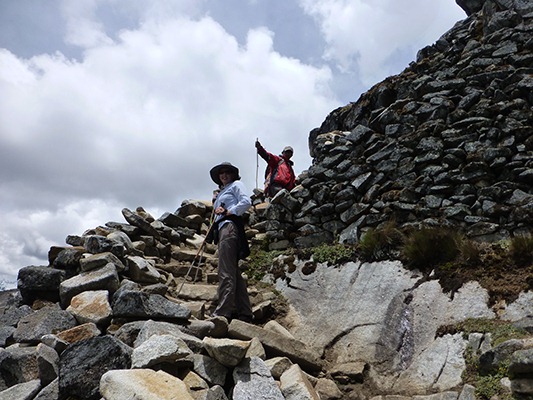
The stairs right before the summit.

P1040041

Punta Union was the highest point of our trek, at 15,580 feet. This is the highest Sarah and I had ever been. It was awesome.

P1040120

Posing with the crew at the summit. In order from left to right we have Jon, Ariane (French Canadians), Sarah, Dave, Angelic (England) and Do Ho (South Korea).

P1040135

The valley on the other side of Punta Union. Even more great views ahead.

P1040165

Happy to be going down hill.

P1040172

Sarah near the bottom of the second day’s hike.

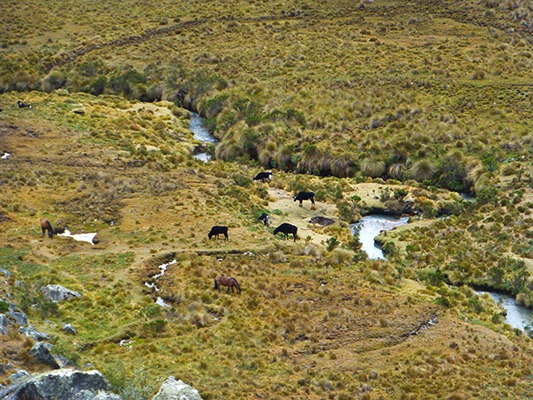
P1040181

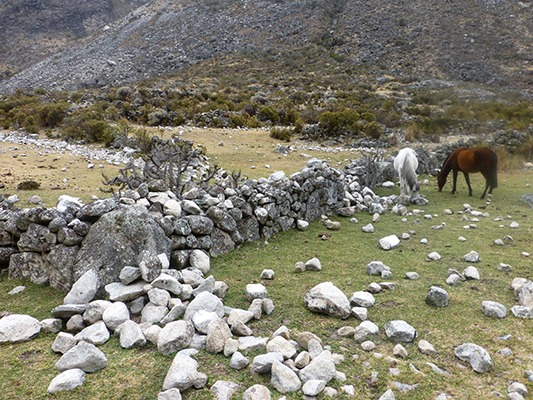
We saw lots of cows and horses grazing throughout the hike. Evidently some our wild and some our owned by people. I don’t know how they track them down. They’re miles and a day or more hike into some parts of the park.

P1040190

The second night’s campsite was just around the bend. This was the highest elevation we slept at. It was a little chilly.

P1040195

Jon almost to the campsite.

P1040196

River near our campsite.

P1040206

We arrived to a group of horses running through an open field. It was really cool to see the horses interact. They grazed near our campsite for the evening.

P1040220

Our asses taking a well deserved break.

P1040237

Awesome sunset of the first night.

The third day was a bit shorter than the previous day, coming in at round 12km. Most of the hike was down hill and flat, which was a welcome change from almost entirely uphill the day before. Our guide informed us that in February of this year a lake broke loose creating a landslide that traveled several miles down the valley we were hiking that day and deposited material in some areas up to 7 meters deep. It turned what used to be a lush, green valley floor, into a brown, dry, rock covered desert. We saw clear evidence of the extreme changes made to the environment by the landslide near our campsite and along much of the hike that day. Luckily no hikers were in the area at the time. Sadly, many horses, cows and donkeys were killed.

P1040239

We woke the next morning to snow on the ground.

P1040247

The valley we hiked through on the third day. All of the land in the foreground and the light brown section at the bottom of the valley is all of the debris carried by the land slide that occurred in February.

P1040248

More land slide damage.

P1040251

Our donkey’s hard at work again.

P1040263

This is better view of the debris deposited by the land slide on the valley floor.

P1040288

The glacier melt in some areas was crystal clear. I was almost tempted to drink it.

P1040301

There were rock walls like this throughout the park. Before being designated a park, people farmed and raised livestock. These walls are very similar to those scattered all over New England.

P1040308

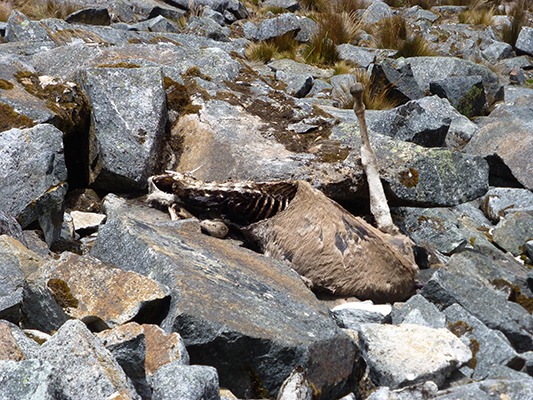
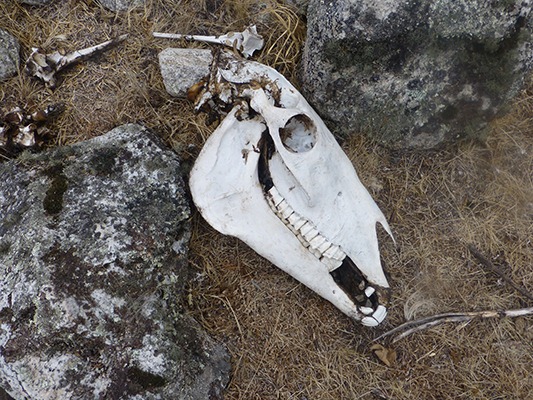
We came across quite a few bones.

P1040309

Getting a little closer to the third campsite.

P1040328

The plants changed as we descended. It became more and more desert like, with sand and some cacti appearing. This view reminds me of Yosemite a bit.

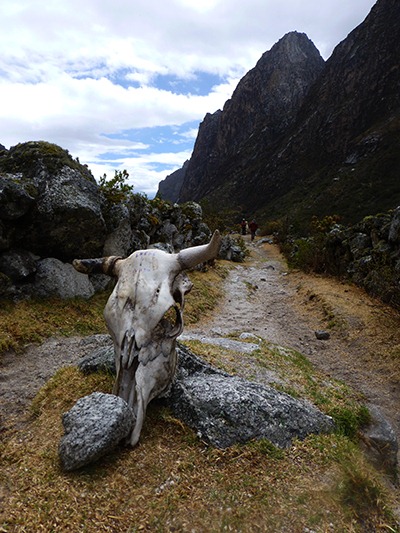
P1040333

Someone propped this skull up on the trail. Kind of ominous.

P1040341

Sarah and Juan.

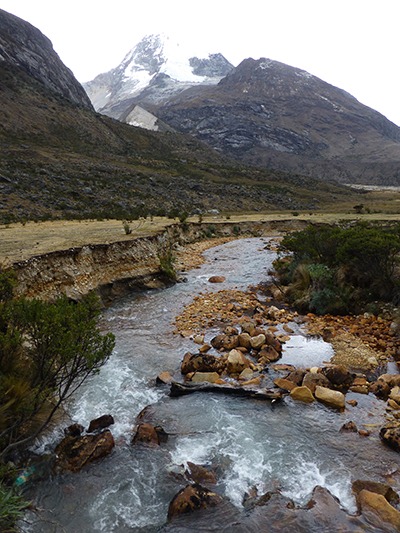
P1040344

The river at this point was really flowing.

P1040357

The last campsite.

With the poor weather and swarms of biting insects at our campsite, everyone was in a hurry to get back to civilization. The last leg of the trek went by pretty quickly, only taking about 2 hours to finish. The trail followed the river that we had been following since the end of the second day. It was really cool to see the river grow to become larger and faster as we moved down stream. Much of the river is fed by glacier melt-water, and over the last two days of the trek, rain water. We ended the trek at the point that most tour companies start the trek. I’m not sure why we went the opposite way. Maybe to do more downhill than up.

P1040365

At the end of the hike. This is usually where most people start the hike.

P1040366

This little guy greeted us at the end.

This section of the Andes is amazing and by far my favorite of what we’ve experienced thus far. We hope to return to the Cordillera Blanca region in the future to do follow through on our original plan to do the longer Huayhuash trek.

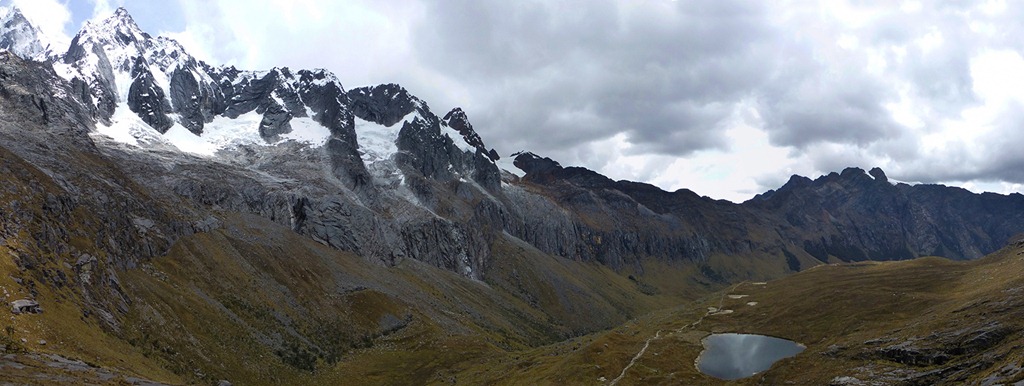
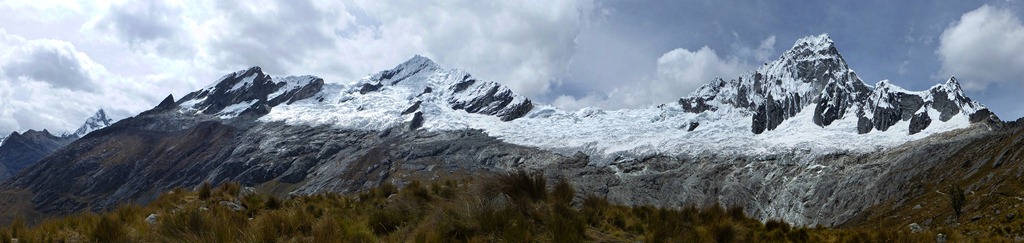
Along the way we took several panoramic shots. All but one of them stitched together well in Photoshop.

Santa Cruz_Panoramic_01

_

Santa Cruz_Panoramic_02

_

Santa Cruz_Panoramic_04

_

Santa Cruz_Panoramic_05

_

Santa Cruz_Panoramic_06

_

Categories: Nature, Outdoors, South America | Tags: , , , | 2 Comments

Create a free website or blog at WordPress.com.