Cooking Class and a Suit in Udaipur

Udaipur was our introduction to what is probably India’s most popular state for travelers, Rajasthan. Here is where you’ll find women wearing beautiful jewelry on nearly every part of their bodies not covered by sarees, men wearing colorful turbans, camels, deserts and beautiful stone palaces and forts. Before heading to Udaipur we hadn’t done much research and made our decision to visit partly out of necessity. Our goal was to head straight to Jodhpur, which would have had us skipping Udaipur. Fortunately for us there are no buses directly from Mumbai to Jodhpur. So a stop in Udaipur was necessary at least to make onward travel to Jodhpur. We figured we’d give the city at least a day to impress us and move on quickly if it didn’t. And well, it turned out that Udaipur was definitely worth more than just a day’s visit.

Udaipur Panoramic_03

Udaipur Panoramic_02

The narrow winding streets and proximity to water reminded me a bit of Varanasi. It’s referred to in our guidebook as the Venice of India because of the many buildings built right on the water’s edge. In fact, at least two palaces were built on two separate islands completely covering every square inch of them, to the extent that the walls of the palaces are in the water. Despite it’s similarities with other places in India we’d been to we observed it to be a much friendlier place to visit. Not that we’d encountered unfriendly people elsewhere, we just had far more friendly and genuine conversations with people in Udaipur than elsewhere up to that point. This characteristic seemed to hold true for every place we visited in Rajasthan after Udaipur.

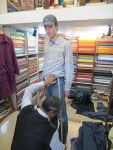
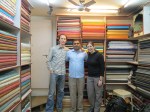
After deciding to spend more time in Udaipur we then decided to partake in a couple of fun experiences beyond the usual sightseeing, though, we still did our share of sightseeing. We decided to finally take a long anticipated cooking class so that we could bring some our favorite Indian food recipes home. The other experience involved no forethought at all and only came about because, well, it was just such a good deal I had to do it. While walking around the city we saw several custom clothing shops and decided to stop in to see just what kind of service they could provide. We were quickly impressed by their craftsmanship and I decided that this was a good opportunity to get a suit custom made to fit my lanky frame. Only other skinny fellas can appreciate just how difficult it is to get a suit that fits properly. And having one made in India meant I’d pay far less than for the same thing back home. Plus, India is full of skilled craftsman hand making many of the things we’ve long outsourced in the U.S. So I had some faith that the quality would meet my satisfaction.

Here are some pictures of the sightseeing we did in Udaipur, including a boat tour.

Sarah found the cooking class offered by a woman named Shashi by researching reviews on TripAdvisor (TripAdvisor has turned out to be a great resource for reviewing all kinds of traveler oriented needs, e.g. hotels and tours) and recommendations in the guidebook. The good reviews turned out to be true and Shashi delivered a great experience. She was a confident, feisty woman in her early to mid 50’s. Hearing the story of how offering these classes has drastically improved her quality of life by providing a stable and good source of income compared to her limited options beforehand made the experience even better. She also shared how the idea to create the class came from a tourist she made meals for and hosted at her home a few years back. And since then other tourists have helped her draft an easy to understand recipe book (which is included with each class) in multiple languages and one tourist even built her a website. She loves what she does and genuinely appreciates the help she’s been given by tourists. She was proud to announce that she is the number one ranked activity/attraction in Udaipur on TripAdvisor, outranking even the city’s architectural attractions, including the City Palace.

The class lasted about 4 hours. In the class with us were a young German couple. Together we all helped Shashi make a full dinner including, masala chai (tea with spices), vegetable and cheese pakora (battered and deep fried fritters), Aloo Ghobi masala (sautéed potatoes and cauliflower with a mix of spices), Vegetable Pulao (sautéed rice and mixed veggies with cashews and raisins), a few types of breads called Chapati, Paratha and Naan (minus a tandoori oven), and mint and mango chutni (dipping sauces). At the end of the cooking course we overindulged in the fruits of our labor and even had enough to take home to eat for breakfast the next day.

Below is a gallery of the cooking class.

The purchase of the suit was not an easy decision to make. Doing so would involve spending a bit more money than I had planned spending on any kind of souvenir for myself and also meant I’d either have to ship it home or carry the rest of the trip with me. Despite these concerns I decided to go for it and have a custom suit made. Besides, this will likely be the only time in my life that I have a custom suit made.

The turnaround time for the suit was impressive. After the initial measurements it only took the tailor a little over a full day to produce a finished suit and jacket. Upon first trying it on I was very happy. So happy that I overlooked slight fitting issue with the jacket. Thankfully Sarah saw it and pointed it out to me. The shop owner guaranteed that I would be happy with the fit even if it meant making some changes to the suit. So the owner, Sarah and I jumped on his scooter and drove to his brother’s shop a few minutes away. The brother checked out the issue and promised to deliver the suit the next evening. This was good because we needed to catch a bus the following morning.

The next evening we returned to the shop to check to see if the fit had improved. Much to our disappointed it had not changed much at all. Sarah and I, and the owner as well were a little flustered by the whole thing. For us it meant spending at least an extra morning in Udaipur. For the shop owner it meant having the tailor do another costly alteration to the suit causing delays in other work he had promised to do for other customers. After another drive and a lot of insisting on my and Sarah’s part that the change be made, the tailor reluctantly to make the changes that night and have the jacket ready to pick up the follow morning in time for us to catch the afternoon bus. The owner promised to return my deposit if the jacket did not fit properly.

The next morning we arrived expecting to not see much difference because the first alteration the tailor made didn’t produce much change in the fit of the jacket. Thankfully we were wrong. The fit was improved and we were finally satisfied with the suit. With the thirty minutes we had left before having to leave to catch our bus we helped the shop owner create a business profile on TripAdvisor as a little special extra thanks for doing what needed to be done to make sure we were happy with the suit. And then off to Jodhpur we headed.
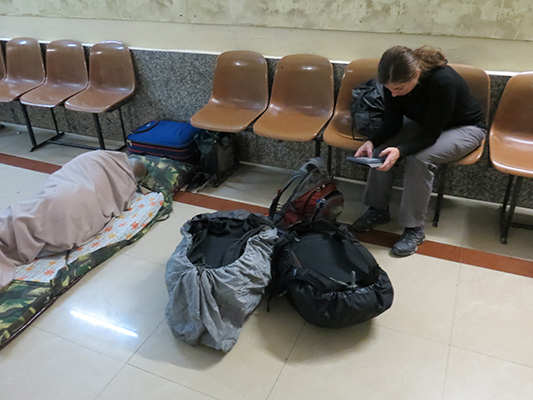
Sarah waiting for our late night train to Jaisalmer.

Sarah waiting for our late night train to Jaisalmer.

Sleeping attendant at the train station waiting room.
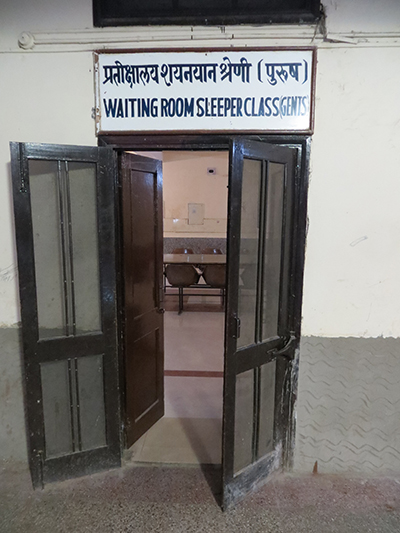
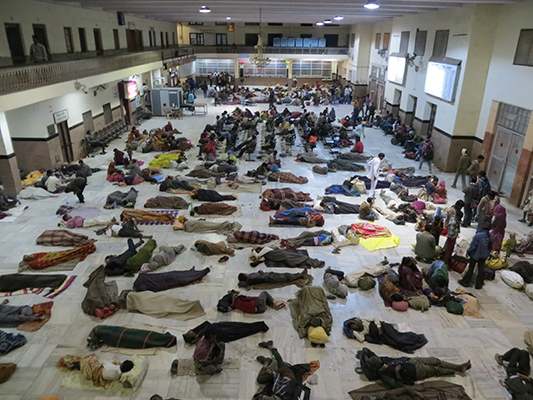
Sleeping attendant at the train station waiting room.

IMG_1439

Train station in Jodhpur.

Train station in Jodhpur.

Not so comfortable bus to Jodhpur.

Not so comfortable bus to Jodhpur.

Categories: Architecture, Cities, India, Traveling | Tags: , , , , | 1 Comment

Mumbai

Mumbai is only a short bus ride from Pune, so it was an obvious stop for us on our way to Rajasthan. We’ve met many people who’ve been to Mumbai and who live in Mumbai and say the traffic is bad and all these things which made us think that Mumbai was going to be crazy and over whelming like Kolkata. Our expectations might also have been influenced by reading Shantaram by Gregory David Roberts which is based in the city of Mumbai in the 1980’s. But, we were wrong, again.

Leopolds! This restaurant was one of the main settings in the book.

Leopolds! This restaurant was one of the main settings in the book.

Mumbai is the cleanest metropolitan city we’ve been to in India. There were not many touts and we could walk around so we avoided all rickshaw drivers. We were both very surprised. I guess, we’ve learned to set our expectations low and that way we can only be surprised and positive about the place when it’s better than our expectations. Ahh, the things you learn when traveling.

Early morning with no cars.

Early morning with no cars.

It is also very foggy in Mumbai. All of the mornings and days looked like this.

It is also very foggy in Mumbai. All of the mornings and days looked like this.

Big cities tend to be comfortable places for us. We can always find a place that is similar to home-for example, we’ve spent a good day in Starbucks using the free WIFI to catch up on blog posting, you’re welcome-and every time we find a place like that, it’s like we’ve teleported back to the states. It’s good because it reminds us of home and all of the wonderful comforts we have back there, but it can be bad as well. Since we stay in those places so long, we venture out into the real location less often. It’s all about balance. Places like home refresh us enough to keep on experiencing all of the great things these other countries have to offer.

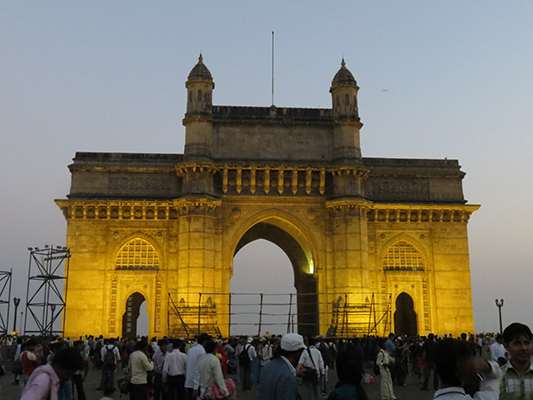
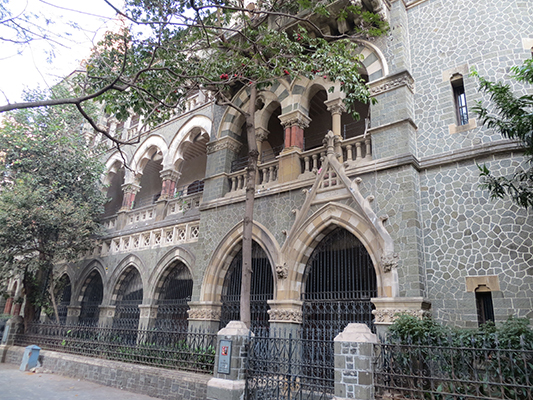
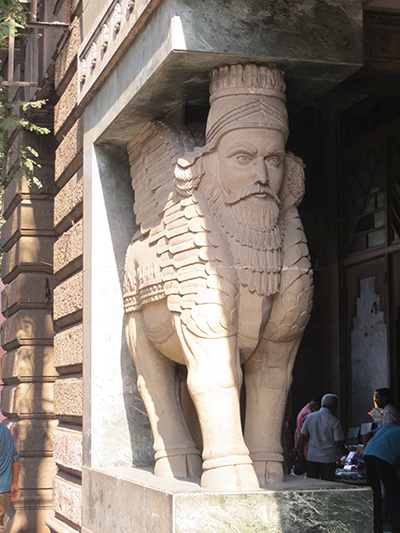
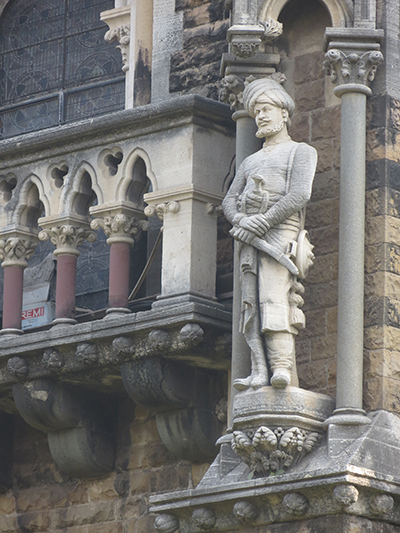
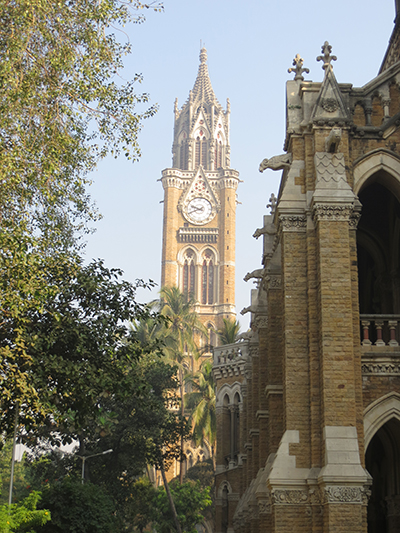
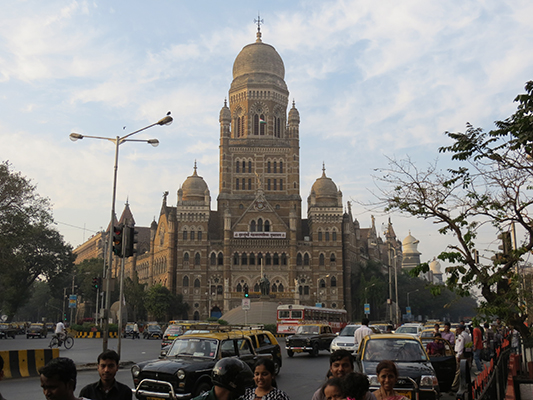
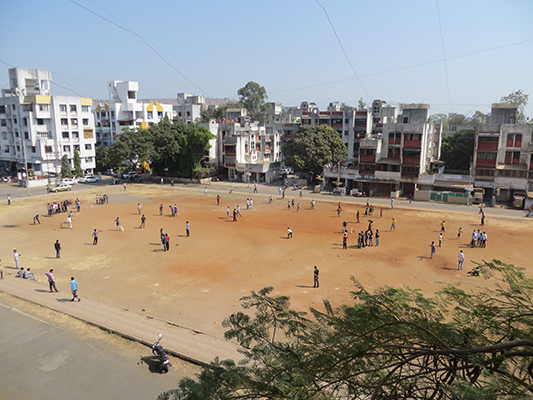
Mumbai was great. It is full of really old, beautiful buildings and landmarks and we got to see how people spend their Sundays playing cricket in the streets.

Night shot of the gateway of India and the Taj Mahal Hotel

Night shot of the gateway of India and the Taj Mahal Hotel

Taj Mahal hotel

Taj Mahal hotel

Gateway of India

Gateway of India

Taj Mahal Hotel

Taj Mahal Hotel

Dusk shot of the Gateway of India.

Dusk shot of the Gateway of India.

Flora Fountain

Flora Fountain

IMG_0966 IMG_0965 IMG_0959

University of Mumbai

University of Mumbai

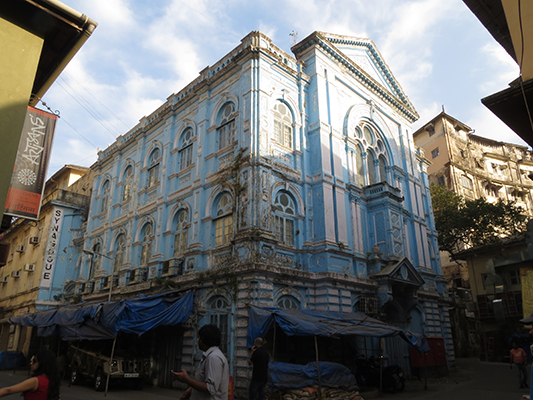
Keneseth Eilyahoo Synagogue

Keneseth Eilyahoo Synagogue

University of Mumbai

University of Mumbai

University of Mumbai

University of Mumbai

IMG_1003 IMG_1049

I think this was the foreigners Regional Registration Office.

I think this was the foreigners Regional Registration Office.

Victoria Railway Station stop

Victoria Railway Station stop

Top of victoria station

Top of victoria station

Another one of the victoria station. it was big and beautiful.

Another one of the victoria station. it was big and beautiful.

Perfect skies.

Perfect skies.

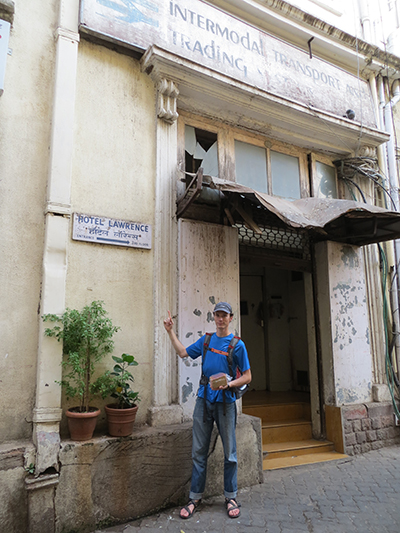
Dave in front of our hotel. It was much nicer inside. I promise.

Dave in front of our hotel. It was much nicer inside. I promise.

Crazy wires running every which way.

Crazy wires running every which way.

Cricket in the streets.

Cricket in the streets.

Endless ocean.

Endless ocean.

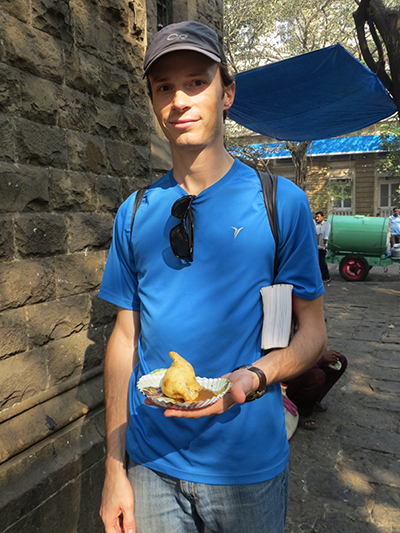
Yummy, but spicy, samosas.

Yummy, but spicy, samosas.

This nice guy told his friend to wait for him while he led us to the tourist office. Also, he didn't want anything from us! It was awesome.

This nice guy told his friend to wait for him while he led us to the tourist office. Also, he didn’t want anything from us! It was awesome.

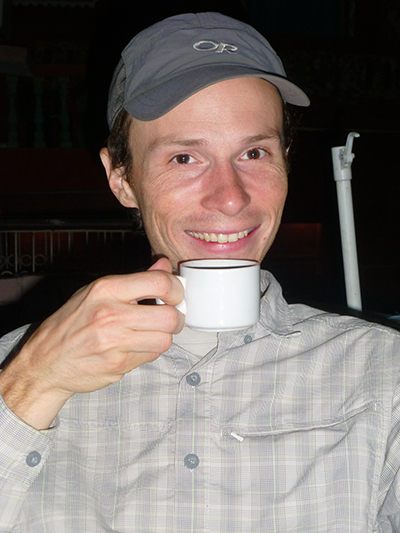
Dave enjoying coffee at the Indian chain Cafe Coffee Day. We tried to get WIFI there first, but it didn't work well and was only for an hour. Starbucks worked well and was for 24 hours. Thank you Starbucks.

Dave enjoying coffee at the Indian chain Cafe Coffee Day. We tried to get WIFI there first, but it didn’t work well and was only for an hour. Starbucks worked well and was for 24 hours. Thank you Starbucks.
We also used Mumbai as a place to try to obtain train tickets to our next destination, Udaipur, but there were none available. So we decided on another sleeper bus. The sleeper bus we took didn’t start at an official office or bus stand, it also didn’t start in the center of Mumbai. We had to take a train from Mumbai to the out skirts of Mumbai to catch the bus.

The train we took was PACKED! I think it was the most packed we’ve been in all of India. It was so packed we couldn’t move and therefore we couldn’t see the names of the stops. A kind Indian saw our lost faces and asked which stop we were looking for. He told us how many stops we had. He also encouraged us to get up before our stop-by encouraged he said “get up” and started tapping Dave frantically-he then motioned with a concerned look on his face for us to move closer to to the door. He knew that if we didn’t do this, we would miss our stop because we wouldn’t be able to push to the door. We knew what his look meant, and we also knew from experience that this was the best option for us. So I pushed as far forward as I could, that was two body positions closer to the door, with 10 body positions still between me and the door. Thankfully, there were many other people getting off the same stop, so I was pushed from behind and forced off the train without much effort on my part.

Now that we were off the very busy train we had to find the hotel where the bus would pick us up. After a couple of minutes searching we found the hotel on a very congested and busy street. We asked multiple times to multiple people if we were in the correct location on the correct side of the street. We got both sides of the street for answers, but one side was answered more than the other and it was our original spot, so we went with that side. We were so concerned with being in the correct location because this wasn’t a bus stand. The bus was arriving in the traffic and expected its passengers to board the bus while it was slowly moving in traffic. If we were on the wrong side the bus would move along in traffic and leave us behind without us ever knowing.

Also, these buses didn’t have any sign on the front indicating where they were going. We had met some very helpful rickshaw drivers that seemed to know the bus to Udaipur and assured us we were in the correct location and could indicate which bus it was. We had no other choice but to trust them. Thirty minutes or so after our expected departure time our bus, as indicated by the rickshaw drivers, arrives in the traffic and opens the doors for us. We head out into the traffic with all of our packs on and confirm it’s our bus before jumping aboard. Phew, we made it on.

But, because we boarded the bus while it was moving, we had to keep all of our luggage with us in the sleeper berth. We got creative with our luggage stacking and made it work so we could both sleep “comfortably.” Here’s to our last sleeper bus, we hope.

Waiting for our bus to arrive in all of this traffic.

Waiting for our bus to arrive in all of this traffic.

Might not look pretty, but it worked.

Might not look pretty, but it worked.

Categories: Architecture, Cities, India, Traveling | Tags: , , , , | 3 Comments

Ellora Caves

During our visit with Preeti and Pramod in Pune (refer to previous post for more on that) they encouraged us several times to make a trip to Aurangabad in order to view the nearby Ellora Caves. Neither the city of Aurangabad nor the caves were a place we planned to visit. We hadn’t heard of them during our travels or read about them in our guide book. So after Preeti and Pramod first mentioned them we had to looked up both places and did indeed find short mention of them in our Lonely Planet guidebook. But there was little mentioned and not enough to convince us to deviate from our plan to head to Mumbai.

But after a little more encouragement by Preeti and Pramod and a bit more research on our part, we decided to take their advice and head to Aurangabad to check out the Ellora caves. A big reason for deciding to go was because going would also allow us to spend more time with Preeti and Pramod. Pramod’s company closes their office on Thursdays as opposed to the weekend and we would be returning to Pune from Aurangabad Wednesday evening, allowing us to spend a full day with the two of them on Thursday. Sarah described the fun we had with them in the previous post.

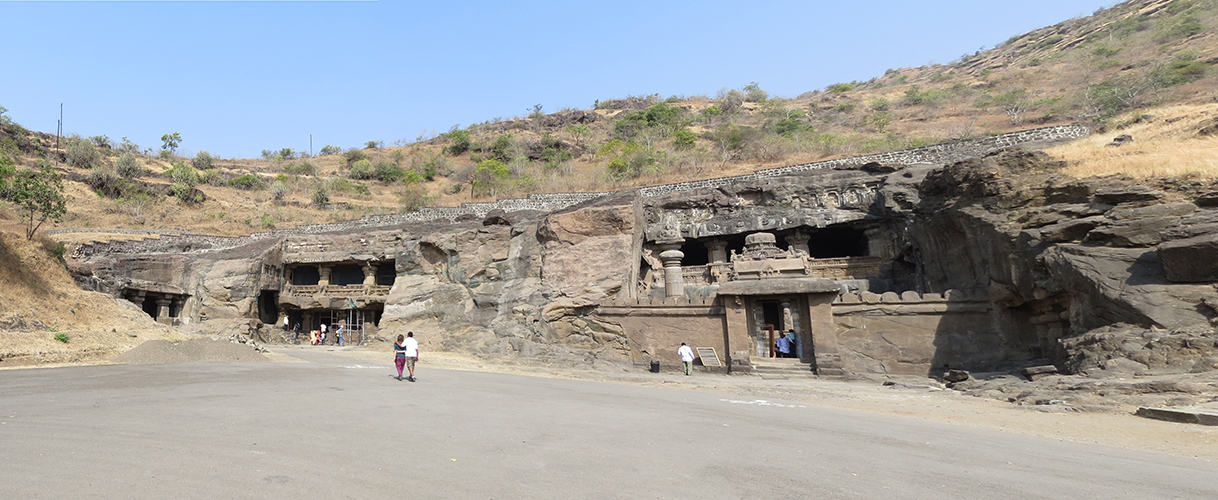
Panoramic shot of the Jain caves.

Panoramic shot of the Jain caves.

We took a five hour bus from Pune to Aurangabad and woke early the next morning to catch a another bus to the Ellora Caves. They were only about 45 minutes away from Aurangabad and we arrived just after sunrise before the crowds. There are 34 caves total: 12 Buddhist, 17 Hindu, and 5 Jain. I’ve read only a little about each of those religions (Hinduism, Buddhism, and Jainism) since being in India and the relationship and history between them seem to be very intertwined. Supposedly, both Buddhism and Jainism are offshoots and reactions against some of the beliefs of Hinduism. I won’t attempt to explain the details of these interrelations because I’ll surely get it wrong. The caves were carved over a period of five centuries and consist of monasteries, temples and more functional spaces like granaries. Many were carved around the same time, implying religious tolerance. Nice.

Entrance to the Ellora Caves. Only a small crowd at this point.

Entrance to the Ellora Caves. Only a small crowd at this point.

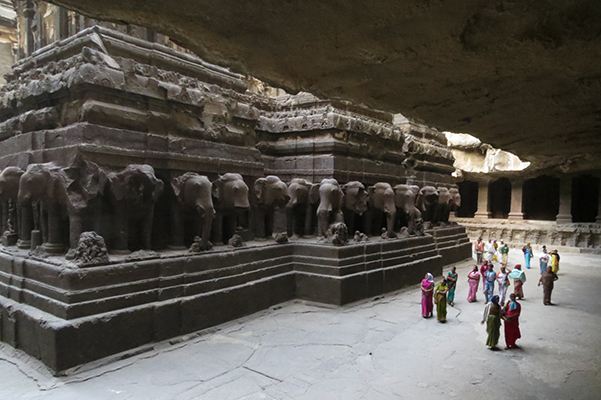
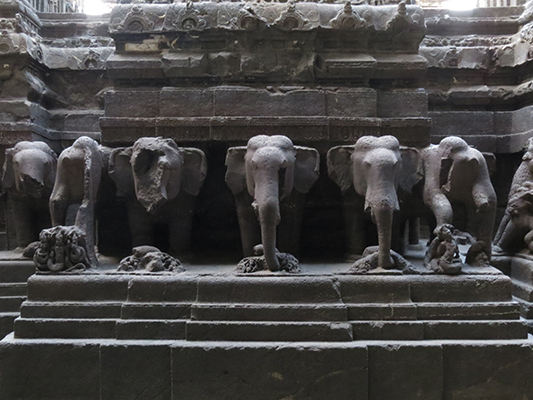
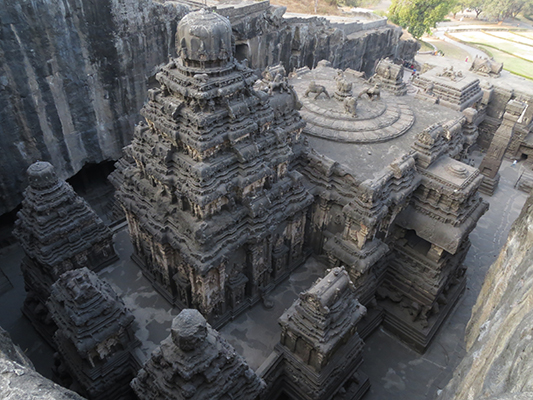
The first cave you encounter after entering the main gate is cave 16, Kailasa Temple, a Hindu temple. It’s the biggest and most impressive of all of the caves. It has many rooms, multiple levels, large carvings of elephants and lions, and a long path around the perimeter with carvings of many of the Hindu gods and goddesses. In a handful of areas there was original paint remaining. The painted surfaces had a white base layer and used other more vibrant colors for the detail work. Most of what you see though is the raw stone. While the remaining 33 caves were not as big as cave 16, many were equally impressive. Even though the caves were a mix of Hindu, Buddhist and Jain they shared similar styles and details. Nevertheless, we enjoyed checking out each one of them.

The first cave you see as you enter is Cave 16.

The first cave you see as you enter is Cave 16.

Entrance to cave 16.

Entrance to cave 16.

Cave 16

Cave 16

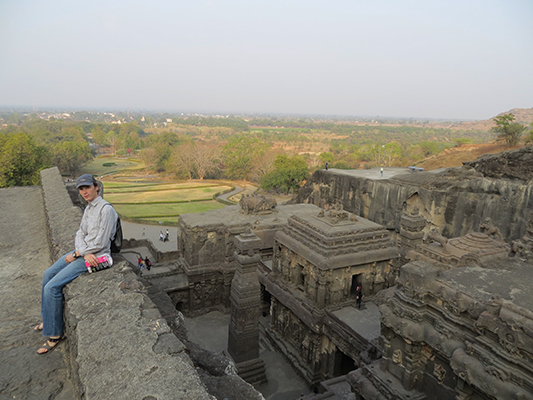
View of cave 16 from the top. You can see the scale of the place from this perspective.

View of cave 16 from the top. You can see the scale of the place from this perspective.

Another shot from the top.

Another shot from the top.

Cave 16

Cave 16

Cave 16

Cave 16

Pillar in cave 16. We saw this style of pillar in all the Hindu, Buddhist and Jain caves.

Pillar in cave 16. We saw this style of pillar in all the Hindu, Buddhist and Jain caves.

I like how they carved sections out to make it seem like a collection of separate pieces.

I like how they carved sections out to make it seem like a collection of separate pieces.

You can see some of the remaining paint.

You can see some of the remaining paint.

These little tie-down locations were carved everywhere and seemed randomly placed. We couldn't figure out what they were used for.

These little tie-down locations were carved everywhere and seemed randomly placed. We couldn’t figure out what they were used for.

Hindu Cave

Hindu Cave

This Buddhist temple reminded me of a Catholic church because of the high arched ceiling.

This Buddhist temple reminded me of a Catholic church because of the high arched ceiling.

Photo op with Buddha.

Photo op with Buddha.

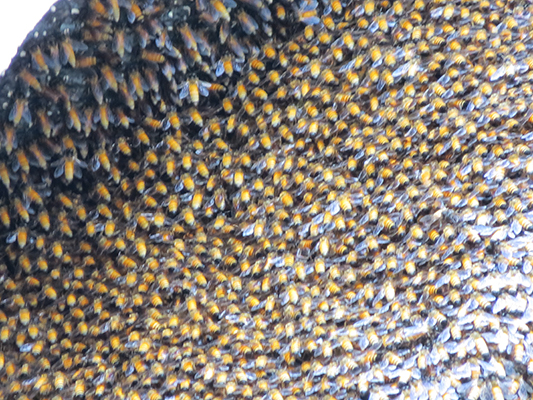
We noticed nests like things hanging in a few locations.

We noticed nests like this hanging in a few locations.

Upon closer inspection we found that the bees or wasps (not sure) were covering the outside of the nest. We zoomed in close enough to seem them moving. Gross!

Upon closer inspection we found that the bees or wasps (not sure) were covering the outside of the nest. We zoomed in close enough to see them moving. Gross!

High five! In hindsight maybe not the best way to act in a place like this.

High five! In hindsight maybe not the best way to act in a place like this.

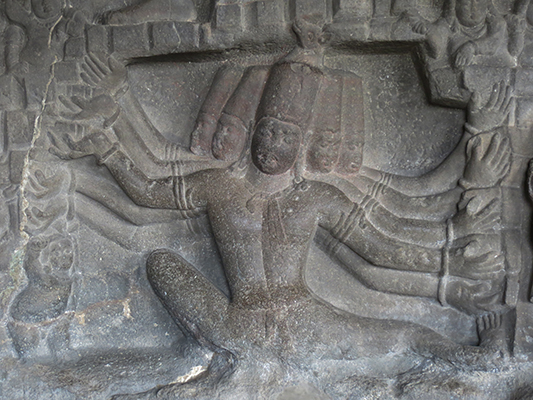
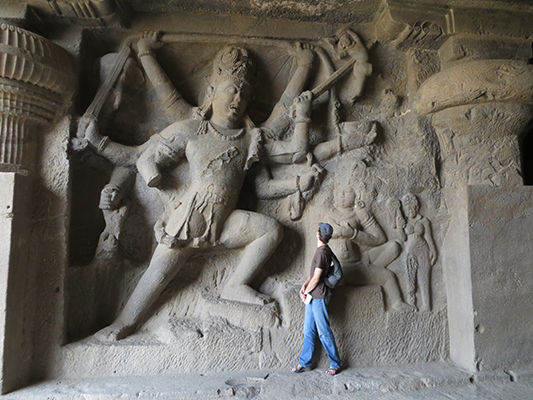
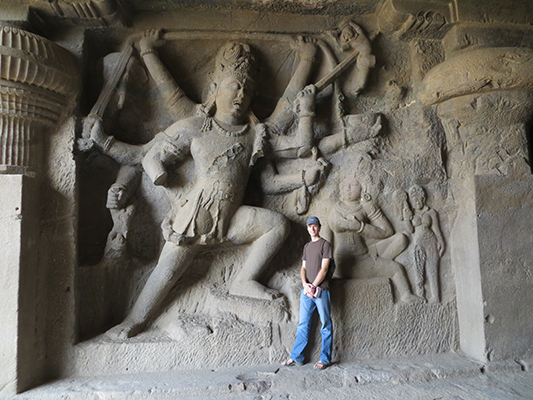
HIndu God.

HIndu God.

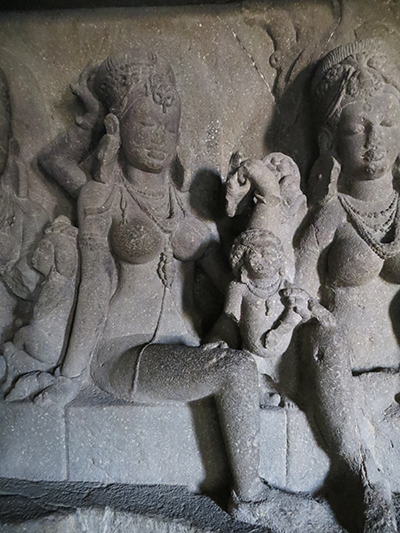
Many of the figures carved had very rigid postures. This one seemed the most natural. Also, you can see where most people touch the statues.

Many of the figures carved had very rigid postures. This one seemed the most natural. Also, it’s funny to see where people touch the statues (shiny sections).

In the rainy season there's a waterfall just to the left of  the cave. Pretty sweet location.

In the rainy season there’s a waterfall just to the left of the cave. Pretty sweet location.

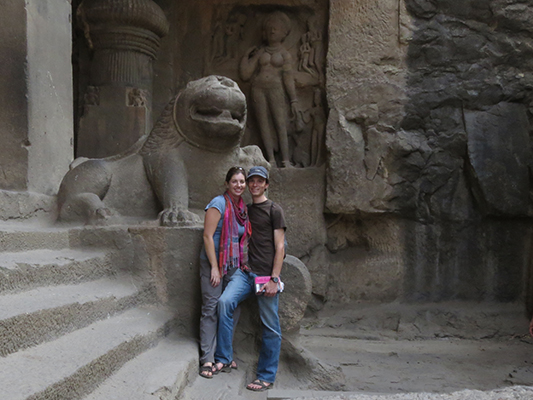
This lion reminds me of the lions commonly found in front of ancient Chinese buildings.

This lion reminds me of the lions commonly found in front of ancient Chinese buildings.

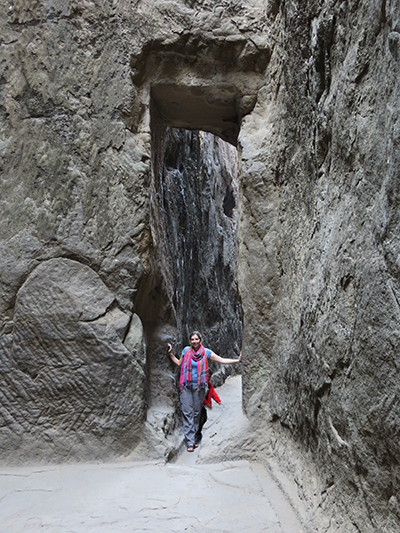
Giant doorway.

Giant doorway.

Doing my part to preserve the caves.

Doing my part to preserve the caves.

Sarah and I in a Hindu cave.

Sarah and I in a Hindu cave.

I think I saw him move.

I think I saw him move.

This guy is a little intimidating.

Couldn’t get him to smile for the camera.

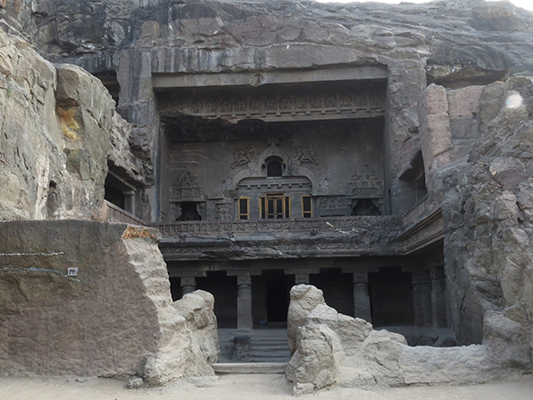
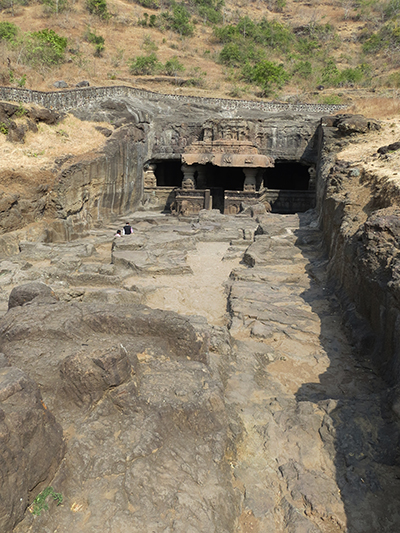
Jain cave. This cave had a lot of detail in some places and seemed incomplete in others, specifically the path leading to the cave.

Jain cave. This cave had a lot of detail in some places and seemed incomplete in others, specifically the path leading to the cave.

Jain caves had more fine detail than the others even though they tended to be smaller.

Jain caves had more fine detail than the others but tended to be smaller.

Elephant.

Elephant.

We saw this seam of another type of stone running through the cave and imagined how angry the builders must have been when they found it.

We saw this seam of another type of stone running through the cave and imagined how angry the builders must have been when they found it.

While we were there they were installing metal screens at the entrances of many of the spaces to prevent bats and birds from entering. Bats in particular have been making the caves their homes for sometime, which is evident by the strong smell of guano. There was also a lot of restoration work taking place at the Buddhist caves. The men doing the work were carving the stone with hammer and chisel just as with the original construction.

During our visit we came across yet another school field trip. In previous posts we’ve talked about our fun experiences with school groups. The kids always make you feel like a celebrity when they smile at you, say hello and want to have a photo taken with you. We spotted the kids heading our way near the Buddhist caves and decided to let them go ahead of us to avoid getting caught in the middle of their group. The school groups usually move pretty quick and are very well organized, so our wait wouldn’t be long. While waiting one of the teachers prompted a student to shake our hands. This in turn prompted the entire group of kids, boys and girls, to shake my and Sarah’s hands. Unfortunately, we didn’t anticipate the moment and didn’t have our camera ready. We must have shaken the hands of nearly a 100 students. The entire time we were grinning from ear to ear, as were they. The kids in India are great and consistently put a smile on our faces.

School kids are our biggest fans. We love you guys.

School kids are our biggest fans. We love you guys.

All of the caves, even the less detailed caves, were very impressive. We were so happy that we decided to listen to the advice of Preeti and Pramod to visit the caves. It was well worth the long trip and ranks high on the list of cool sights we’ve visited in India.

————–

At this point in the post I’ll go on a tangent and describe some of the fun we had with a rickshaw driver upon arriving in Aurangabad. Occasionally on the blog we share some of these stories but opt to leave them out most of the time because they can sound repetitive or come across as complaining. But based on a request from one of our blog followers I’ve decided to share a story that helps paint a more complete picture of our experience here. Feel free to not read ahead.

We’ve taken many long journeys in India and the bus ride from Pune to Aurangabad was no exception. The journey took 5 hours. Most of the time we opt for the least expensive mode of transportation, trains whenever possible and buses when we can’t get a train. In this instance we took a government bus. On these buses we rarely see other foreign travelers. The buses aren’t particularly comfortable (sometimes I don’t fit in the seat), don’t have A/C, are old and have rough suspensions, likely don’t meet any kind of safety standards, stop frequently, and involve going to the often times hectic and confusing public bus stand. And after these long and uncomfortable journeys we are always greeted by a traveler’s best friend (not), the rickshaw driver.

It’s semi-entertaining to watch them hunt for potential customers before the buses have even stopped. Sometimes they run alongside the bus and jockey for position to get closest to the door of the bus in an effort to nab customers as they exit. As they follow the bus they’re peaking inside to spot the best candidates. When they spot foreign travelers their eyes light up and they become even more frenzied in their hunt. A foreign traveler can mean they’ll get a larger fare—because foreign travelers are nearly always overcharged compared to local travelers—or they’ll get a commission for taking you to a hotel or travel agent, or best of all you might agree to hire them as your tour guide. Sarah and I don’t ever hire them as a tour guide or allow them to take us to a hotel they’ve recommended. We’ve even gone as far as to tell them not to enter the hotel with us as not to make the hotel staff think that they brought us their for commission. Though we avoid those two scenarios with the rickshaw drivers we still have to use them as the most common source of short distance travel in a city—when walking isn’t an option or we just don’t know where we are.

Combine the frenzied scenario just described with two road weary travelers with sore butts and things can become a bit volatile. So here’s how the rickshaw ride played out in Aurangabad. We were greeted by the rickshaw driver as soon as we exited the bus. He throws out the usual questions like: where are you from?, how long have you been in India?, can I recommend a best, cheap hotel? We say no to the best, cheap hotel and try to politely answer some of the other questions all the time knowing they’re leading up to some sort of sales pitch. We then told him the name of the hotel we wanted to go to and discussed price. The price of a rickshaw ride is not straightforward. If you’re lucky the rickshaw has a digital meter that clearly states the price. This is very uncommon. Most of the time the price has to be negotiated before you agree to the ride. This is challenging because prices are not consistent across India and so you have to learn the going rate in every new place you visit. In this case the rickshaw had an analog meter that tracks the distance but does not display the price. In places that use this type of meter you have to know the cost per kilometer to know what the price will be at the end of the ride. This is the kind of meter we encountered in Pune. The rate in Pune was 10 rupees per km (~ $0.20/km). Armed with this knowledge we insisted that the driver use the meter or we would move onto the next rickshaw. Walking away is the only way to get what you want in negotiations in India.

During the ride the driver again asked if we wanted to see a best, cheap hotel instead of the one we asked him to take us to. We politely said no. The rest of the ride he fed us his sales pitch about the tour service he offered that would take us to all of the sights. We again politely said no. But saying no does little for you in India when you’re talking with touts, beggars and of course rickshaw drivers. We typically let them talk while we repeatedly, and most of the time, politely tell them no thanks. He finally gave up and handed us his business card just in case we changed our mind. “We’ll think about it.”

After arriving at the hotel we unloaded our bags and asked the fair. Now this is where I realized we may have made a mistake. I assumed that the rate/km was the same in Aurangabad as we had paid in Pune. If anything it would be cheaper. I mean, Pune is a big city and big cities are always more expensive. The meter read 1km, so I calculated that the rate should be no more than 10 rupees. Not bad. But the driver wouldn’t tell me the cost and instead followed Sarah into the hotel. While on our way to the hotel Sarah and I discussed that she should go into the hotel to inquire about rooms while I stalled the driver by paying him the fare. This would help us avoid having to pay a higher rate for the hotel because of the commission the driver might request from the hotel for bringing us to them, even though we asked him to take us there. And so this is what we did. Sarah went into the hotel and I asked the cost of the ride. To which the driver told me it was going to cost 50 rupees. Wow, that’s way different than my calculation.

I asked the driver how that could be and what the cost was per kilometer. He had no good response and just kept telling me that the ride cost 50 rupees. I refused to pay him and told him that the rate in Pune was 10 rupees/km. How could his price be 50 rupees/km. That’s a huge difference. He couldn’t explain why there was such huge difference or what the actual cost/km was. He just insisted the cost was 50 rupees. Things escalated quickly and both Sarah and I began shouting at him. We told him that we only agreed to take his rickshaw if he used the meter. Now he’s totally discounting the meter and trying to charge us a flat rate. That’s not what we agreed on. We’ve had many bad rickshaw experiences prior to this and unfortunately for this guy he was dealing with two disgruntled tourist. We took all of our frustration from the other experiences out on this one guy. I continually refused to pay him. We asked him why he would lie to us and why he lies to so many other tourists. He had no good answer. We asked him what he would do if he were cheated as he was cheating us. He replied that “he would just deal with it”. Yeah, I don’t think so. So I responded by saying that I only had a portion of the fare and not the 50 he requested and that he’d “have to deal with it”.

In an attempt to learn what the actual fare from the bus stand to the hotel should be we asked the hotel receptionist and another driver and sternly told our driver not to discuss anything with them until they answered our question. He didn’t comply and spoke to them in an language other than English. This just escalated the situation. He then tried to support his case for not using the reading from the meter by wiggling the cable on the meter and then telling us that is was not working. To which we again reminded him that we only took his rickshaw under the agreement that we use a functioning meter. After much yelling and refusal to pay on our part, the hotel receptionist—visibly upset by the act playing out in his lobby—negotiated a slightly lower fare of 40 rupees. We reluctantly paid the fare and shared more unkind words with the driver.

There you have it. A scenario that’s all to common for travelers in India. I should add that we’ve encountered countless helpful people in India. But, as a traveler you deal with touts, drivers and hotel staff so often that your experience can’t help but be shaped by them. And it’s this group of people that we feel are some of the most dishonest and misleading people we’ve met during our travels. That said, the longer we travel here the better we get at dealing with them and the saner we stay.

Categories: Architecture, India, Ruins, Traveling | Tags: , , | 3 Comments

Guests are God in Pune

A previous coworker and friend of mine, Neeraj, is from India and when he heard we were traveling there he invited us to stay with his Family in Pune (pronounced poonay or poona). Indians have a saying “guests are god” and we sure felt like this was true when we stayed with Neeraj’s parents, Preeti and Pramod.

Before I get into our experience in Pune, I want to share our first experience on a sleeper bus. Because we couldn’t find a train out of Hampi, we decided to take a sleeper bus. We were familiar with partially reclining chairs from South America and Thailand, which they called semi-sleepers here. The sleeper buses have actual beds. We ended up with an upper bed in the middle of the bus. There was a lot of rolling and bumping from the turns and various potholes or speed bumps in the road, which makes it hard to sleep. It was an experience that we didn’t want to repeat if we could avoid it. The trains are by far the better option-they are both cheaper and more comfortable.

Inside the sleeper bus. Just enough room

Inside the sleeper bus. Just enough room

We had our own little fan and TV. It was luxury.

We had our own little fan and TV. It was luxury.

Ok, back to Pune. When we arrived, they had family staying with them so they offered us our own apartment-Pramod’s sisters apartment who lives in Scotland but needs the apartment when she stays in India for a month or so every year. It surprised us how much we missed having additional space to go to. It actually felt like home having a living room to hang out in. They also had a washing machine, which we jumped at the opportunity to use, it’s one of the things we greatly miss from home.

They play cricket every day all day. It was nice to see people play outside, that's become so rare in the U.S.

They play cricket every day all day. It was nice to see people play outside, that’s become so rare in the U.S.

But, the best part of Pune was hanging out with  Preeti, Pramod and their extended family. They were so welcoming, they made us feel like we were part of the family. We were able to meet Neeraj’s Aunts, Uncles, Cousins, and even his grandmother who told us “learn Hindi” so she could talk with us. We’ll have to learn next time we visit India. We had many interesting and insightful conversations with Preeti, Pramod, and their family. Preeti cooked some very tasty Indian food, a lot we haven’t tried before, and Pramod was excited to share with us all the different types of Indian sweets they had.

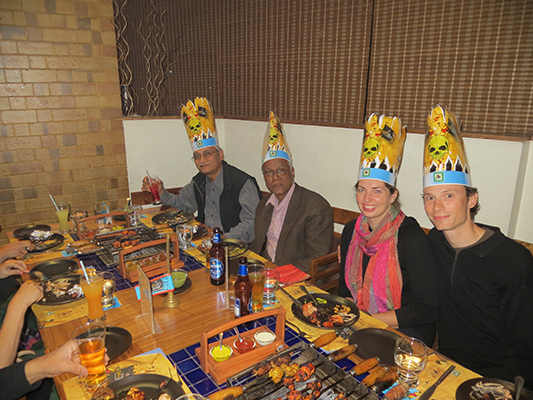
They took us to some very fun and interesting restaurants-one was called Grill Nation, where you grill chicken, fruit, paneer (Indian cheese), and various seafood over hot coals right at the table. It was definitely a first for us.

The awesome parking garage with moving parking spaces to maximize the space used.

The awesome parking garage with moving parking spaces to maximize the space used.

Neeraj's Uncle, Aunt, and mother, Preeti

Neeraj’s Uncle, Aunt, and mother, Preeti

Pramod, Neeraj's Uncle, and us

Pramod, Neeraj’s Uncle, and us

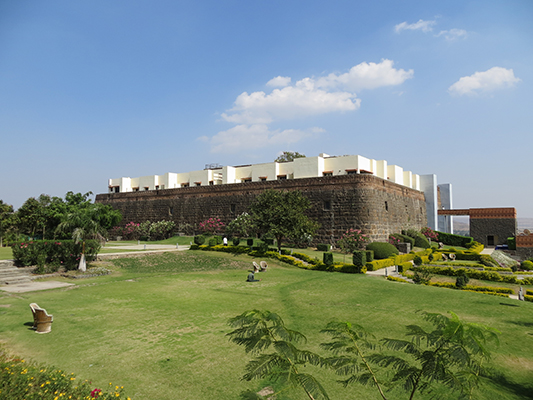
The second restaurant was an hour drive outside of Pune into the nearby mountains. It was an old fort that was converted into a hotel and restaurant called Fort Jadhav Gadh. The location was great and so quiet. The food was really tasty as well and we got to enjoy gulab jamun with ice cream. Which Dave and I both agree is the best dessert combination we’ve had in India. We plan to share this experience with everyone back home if we can find gulab jamun somewhere.

IMG_0954

Us outside the museum they had on site.

Us outside the museum they had on site.

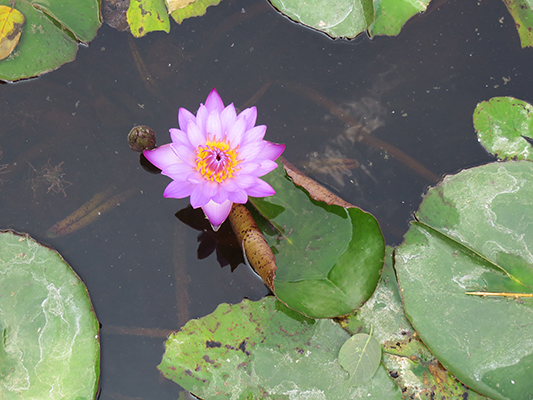
Lotus flower

Lotus flower

We even had time to smell the flowers!

We even had time to smell the flowers!

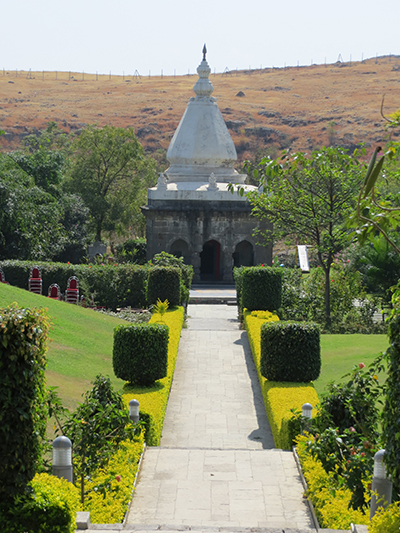
They even have a temple on the grounds where people can get married at.

They have a temple on the grounds where people can get married at.

A picture of the whole fort.

A picture of the whole fort.

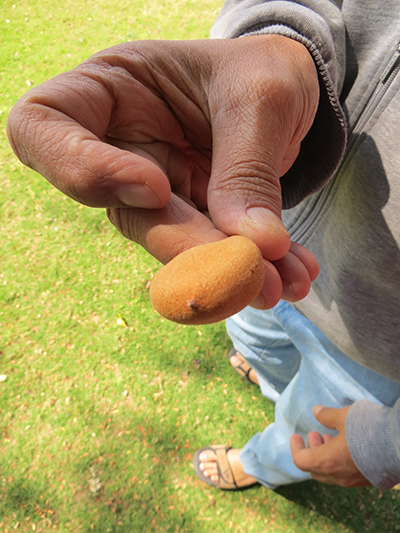
Dave trying it, it tasted a little sweet and sour.
Dave trying tamarind, it tasted a little sweet and sour.

Tamarind seed with the outer layer still on.
Tamarind seed with the outer layer still on.

Pramod and Preeti

Pramod and Preeti

IMG_0934

There was a tamarind tree on the grounds and this is a seed with the outer layer off

There was a tamarind tree on the grounds and this is a seed with the outer layer off

IMG_0912

small doors

small doors

View we had while we ate our lunch. Pretty awesome.

View we had while we ate our lunch.

IMG_0903 IMG_0902

They blow this horn and play a drum for every arriving guest.

They blow this horn and play a drum for every arriving guest.

The entrance to the fort.

The entrance to the fort.

Pune also has some interesting places to visit. One was the Ghandi National Memorial, which is also the Aga Khan Palace where Ghandi, his wife, his secretary, and other prominent nationalist leaders were interned by the British. They were held there for two years.

The palace Ghandi was interned in for two years.

The palace Ghandi was interned in for two years.

IMG_0557 IMG_0560

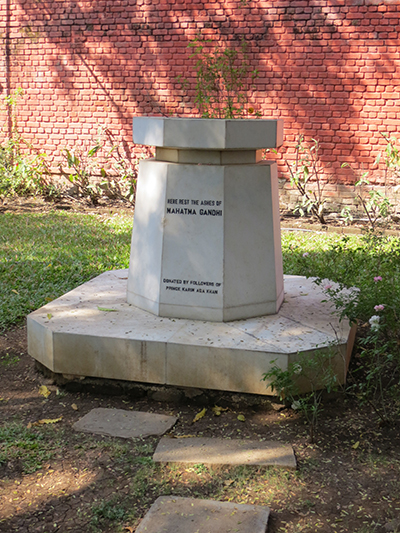
Both Ghandi's wife and secretary died during the two years they were at this palace. Their remains are kept in the back garden at the palace.

Both Ghandi’s wife and secretary died during the two years they were at this palace. Their remains are kept in the back garden at the palace.

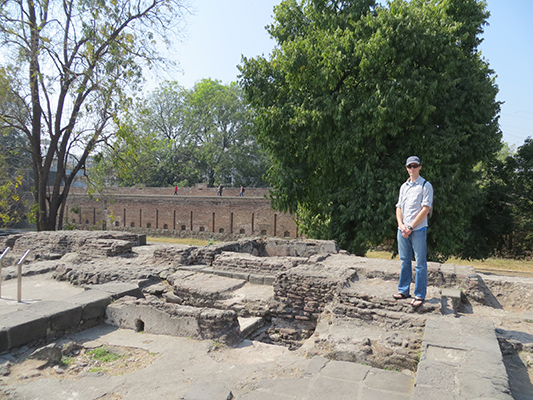
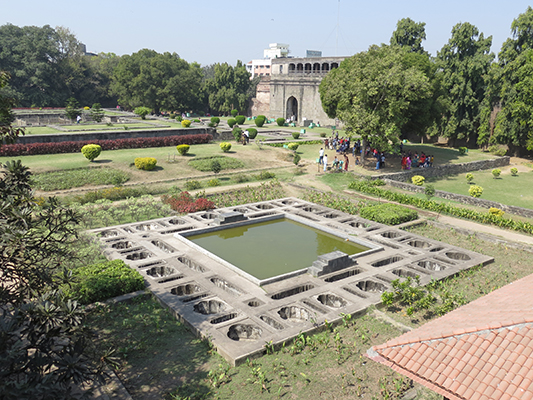
We also visited the Shaniwar wada, which includes the ruins of the fortresslike palace build in 1732 and burned down in 1828. This place is huge sitting in the middle of the busy city.

The fort ruins.

The fort ruins.

IMG_0614 IMG_0597 IMG_0587 IMG_0584 IMG_0583

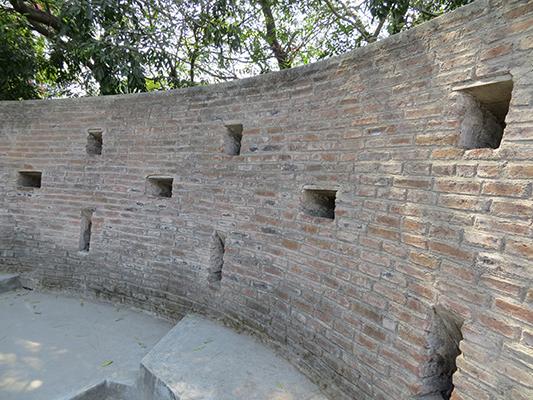
Looking through the gun hole.

Looking through the gun hole.

IMG_0572 IMG_0571 IMG_0569

The entrance to the old fort, the only wood piece that didn't burn down.

The entrance to the old fort, the only wood piece that didn’t burn down.

We also got to meet up with another ex-coworker of mine, Ameya. He moved back to Pune India a few months ago. He took us to a “daba” which he described to us as a truck stop. The food was really good and the atmosphere was cool. The seats they have there are really wide as the truck drivers would typically take a nap after eating.

Ameya and Dave at the daba restaurant

Ameya and Dave at the daba restaurant

We had a really great time hanging out with Preeti and Pramod. We can only hope that they visit Neeraj again in Massachusetts and we can show the same hospitality to them that they showed us. It really was one of the best experiences we had in India. Thank you again Neeraj, Preeti, and Pramod!

Categories: Architecture, Cities, India, Ruins, Traveling | Tags: , , | 5 Comments

Hampi

I can’t believe we almost decided not to go to Hampi. Actually, we did decide to skip it but changed our plans at the last minute in favor of going. Initially, we thought that the journey from Mysore to Hampi would be convoluted and take too much time. It turned out to be pretty straight forward and we had no trouble getting train tickets. Hampi is known for its Hindu ruins and climbing scene but we didn’t partake in any climbing while we were there.

Hampi was one of the biggest Hindu empires in Indian history. It was the capital of the kingdom of Vijayanagar and flourished  between the 14th and 16th centuries before its sudden collapse due to attack from outside forces. Evidently, it reached a population of around 500,000 and was a major stop for travelers and traders during its heyday.

We spent a few days there soaking up the plentiful sun and exploring the two major ruin sites, those nearest the Hampi Bazaar where we stayed and those a little further south in an area called the Royal Center. The photos are in Gallery format for better viewing instead of the format we typically use of embedding them in the text. I hope you enjoy the photos.

Categories: India, Ruins, Traveling | Tags: | 4 Comments

Mitraniketan and Mysterious Ooty

Mitraniketan is a small community located in the state of Kerala. It was started on the basis of providing education for village children around Kerala who wouldn’t normally be able to afford schooling. Over the years, it has grown to host over 300 elementary students, a people’s college, an organic farm, a small dairy farm, and a bakery. They also have a large community of people who visit as volunteers, curious tourists, or people on yoga retreat. We visited with the purpose of volunteering.

Morning assembly area. All the students would sing every morning.

Morning assembly area. All the students would sing every morning.

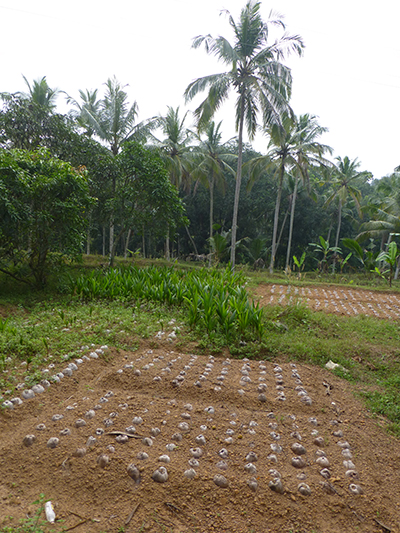
The organic farm was starting to grown coconut trees from the seeds.

The organic farm was starting to grow coconut trees from the seeds.

Organic farm section.

Organic farm section.

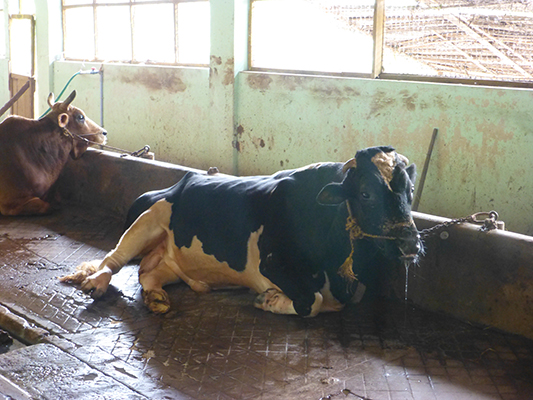
Massive bull in the diary farm section.

Massive bull in the dairy farm section.

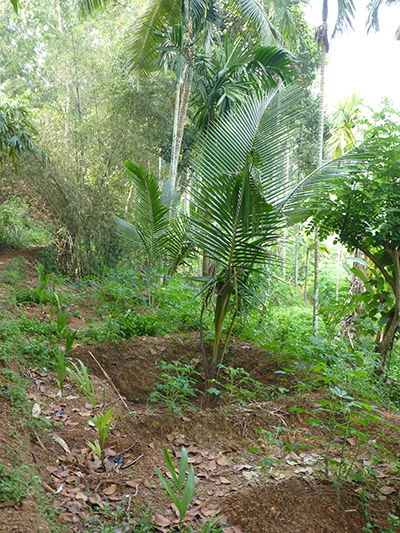
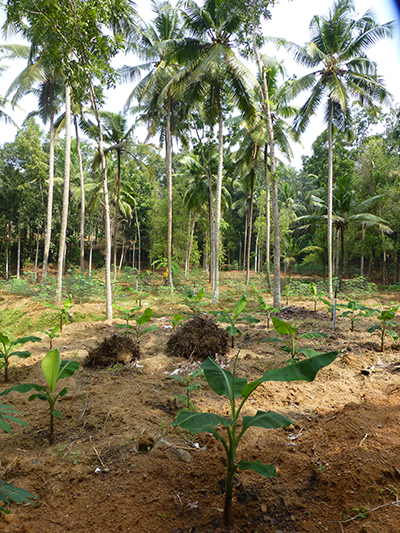
The people’s college received funding from a group of Mitraniketan enthusiasts from Denmark a year or so ago. The funding went to a project they called “Eco-campus project.” This project was looking at the whole Mitraniketan community-which includes the elementary school, people’s college, farm, bakery, and shared areas-in regards to water conservation. In recent years they have seen a drop in water levels as well as a decrease in the amount of rainfall they receive in a year. The work they are doing should help retain the water in the soil around the campus. Some examples of what they have completed as part of the project include planting of banana trees, coconut trees, and digging various trenches in key locations to trap the water. It was all very interesting and we learned a lot from the staff there during the tours.

Trenches around the trees to trap the water

Trenches around the trees to trap the water

Trenches next to the path to trap all the water that runs down the hill.

Trenches next to the path to trap all the water that runs down the hill.

Planting banana and coconut trees.

Planting banana and coconut trees.

They have other small projects that they want to do but haven’t had time since they have been focused on the water conservation. One of those projects was to look at the types of plastic wastes that is produced on campus and provide containers to sort these from other garbage. Dave and I were in charge of this project for the week that we stayed in the community.

Dave and I decided that to understand the types of plastic wastes and suggest sorting we needed to understand all waste streams coming from the campus. We walked around and took pictures of all the different types of waste we saw and where it was on campus. We had one of the students walk us around the dorms as well. It was amazing the difference we saw between the boys dorm and the girls dorms. Overall we found a variety of different types of waste and suggested they have three different bins-compostable waste, plastic bottles, and waste to be burned or appropriately disposed of. We provided a report and they seemed to be excited with the results. I hope what we did was actually beneficial to them and can be used in the future.

Trash can they use currently.

Trash can they use currently.

Boys dorm.

Boys dorm.

Clean girls dorm with some girls shying away from the camera.

Clean girls dorm with some girls shying away from the camera.

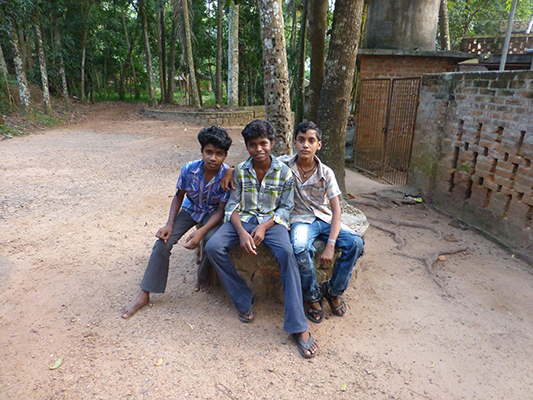
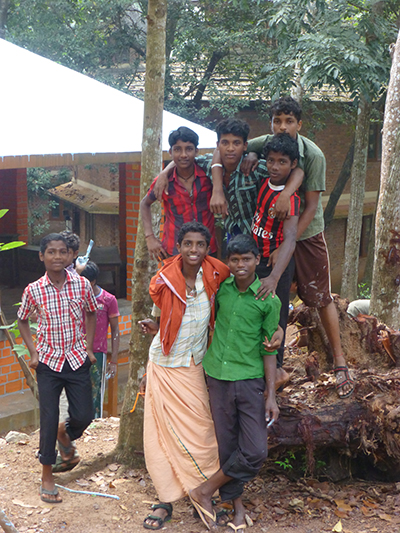
The boy on the far right was the one who helped us with the dorms. His name is Sudeen.

The boy on the far right was the one who helped us with the dorms. His name is Sudeen.

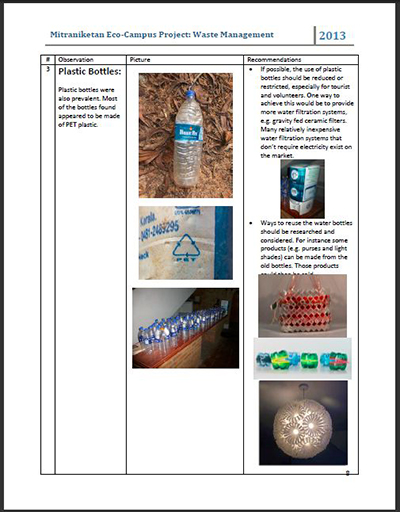
Snapshot of our report. Dave really wanted me to include this.

Snapshot of our report.

Mitraniketan was a blessing for both Dave and I. Before we arrived, we were really frustrated with the issues we were having with the trains, the touts, the rickshaw drivers, along with the stress from finding hotels, the endless beeping, and other exhausting traveling duties. The small community they created was so relaxing, quiet, and welcoming that we didn’t want to leave after the week we were there. We even asked if we could stay longer, but other tourists were coming in and there was no space.

One of the reason it’s so relaxing and stress free is because all of the meals are prepared for you. This is great because you don’t have to find non-spicy restaurants and we got to try a lot of different south Indian dishes. The food we had here was probably some of the best we’ve had in India. My favorite was a jack fruit and coconut dish.

Jack fruit are...

Jack fruit are…

HUGE!

HUGE!

Overall both of us had a great experience visiting the Mitraniketan community. We would recommend it to anyone visiting the south of India. We left refreshed. Thank you Mitraniketan and all the great people that it includes.

They have a pottery making area and this guy is a master.

They have a pottery making area and this guy is a master.

They were digging this very deep well to provide water for locals right next to the campus.

They were digging this very deep well to provide water for locals right next to the campus.

They have an area dedicated to making mats and other things out of coir, which is rope from coconut fibers.

They have an area dedicated to making mats and other things out of coir, which is rope from coconut fibers.

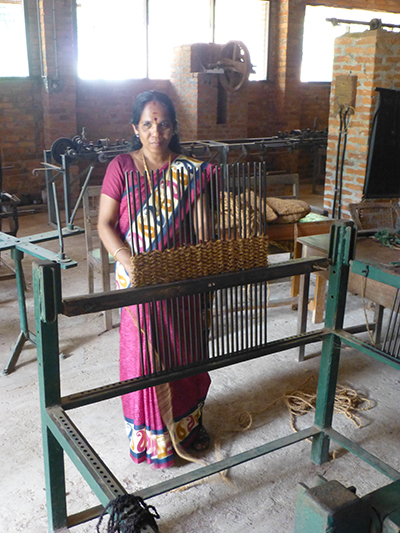
Coir weaving machine.

Coir weaving machine.

They had an engineering section that would produce new equipment to help the locals with a certain task, this one was for sifting.

They had an engineering section that would produce new equipment to help the locals with a certain task, this one was for sifting.

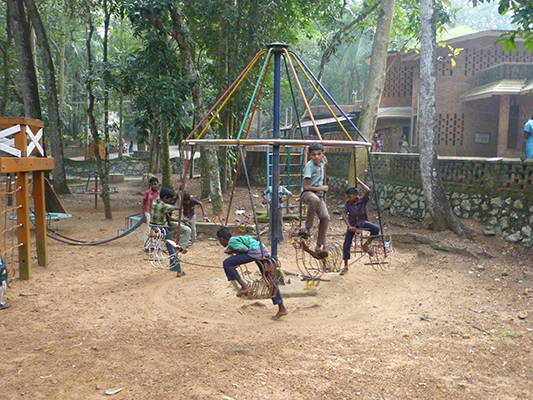
Some boys playing in the park area.

Some boys playing in the park area.

Some of the girls building a wall to help with water conservation

Some of the girls building a wall to help with water conservation

The boys helping out around the campus.

The boys helping out around the campus.

Dave was talking to all of these guys about Soccer, he never got to play with them though.

Dave was talking to all of these guys about Soccer, he never got to play with them though.

Wall building

Wall building

Rubber trees! They were not part of the farm, but right next to it.

Rubber trees! They were not part of the farm, but right next to it.

Our next stop was a hill station called Ooty in the state of Tamil Nadu. They have many tea plantations and Dave and I signed up to do a trek through the tea plantations and local villages. It was a great experience and we had some excellent pictures. Unfortunately, Ooty is also the place where we lost our camera. After 6 months of traveling we didn’t lose one thing, I think that’s pretty awesome on our part. But, I guess it was bound to happen at some point. It’s too bad it was our camera, not because it’s an expensive item, but because it holds pictures we can’t get back. But, we were lucky though because Dave unloaded all our pictures before Ooty so we only lost the pictures from Ooty and a few from Mitraniketan. PHEW! Anyway, we only have memories now of Ooty and a constant vigilance to not lose anything again.

Categories: India, Uncategorized, Volunteering | Tags: , , | 2 Comments

Bringing in the New Year in Kochi

With Christmas and a tiger sighting under our belt, next up was heading to a place to bring in the New Year. Sarah found out that there was a pretty big new year’s eve celebration every year in Fort Kochi, a small island that is part of the southern Indian state of Kerala. To get there in time for the celebration we had to cover a lot of ground. The journey from Jabalpur to Ernakulum (railway station closest to Fort Kochi) included a three hour train ride from Jabalpur to Itarsi (a layover station), an eleven hour layover in Itarsi, a thirty hour train ride to Ernakulum, and finally a thirty minute ferry ride to Fort Kochi.

Beautiful view from the train.

Beautiful view from the train.

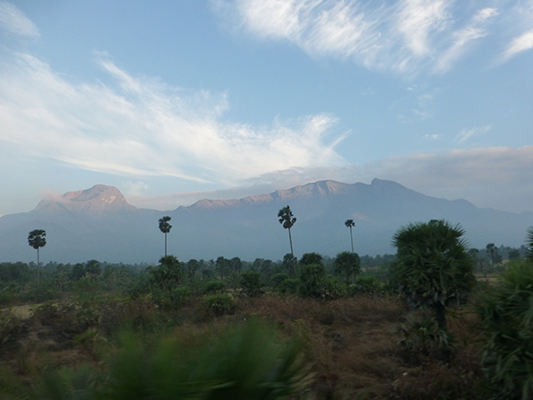
We saw these mountains from the train in the southern part of India.

We saw these mountains from the train in the southern part of India.

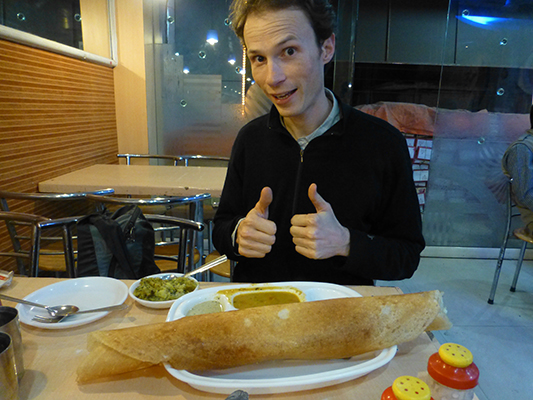
Paper Masala Dosa

Paper Masala Dosa at our stop in Itarsi

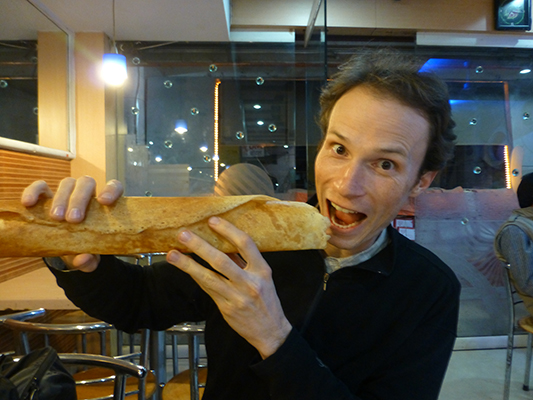
This is not the proper way to eat this.

This is not the proper way to eat this.

Enjoying some sweets during our layover in Itarsi

Enjoying some sweets during our layover in Itarsi

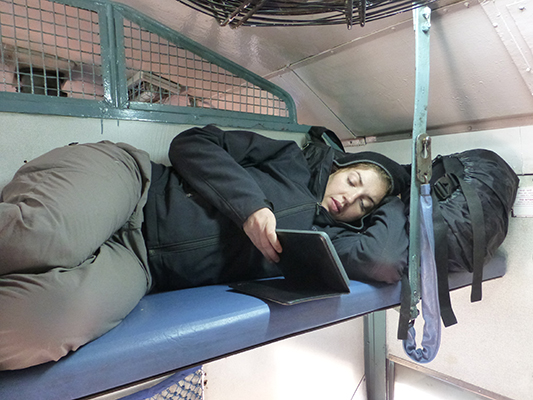
Sarah passing the time on the upper bunk.

Sarah passing the time on the upper bunk.

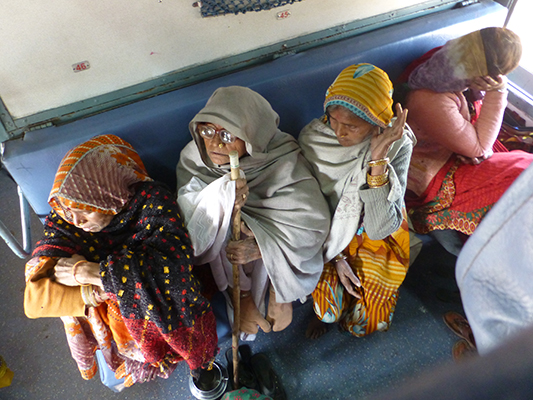
A few colorful older women sharing our cabin on the train.

A few colorful older women sharing our cabin on the train.

Both legs of the train ride were taken in Sleeper class. This is the class we try to take most of the time because we do a lot of overnight journeys and it’s also the most affordable, behind general seating. When there aren’t tickets available we sometimes take the class above called 3 A/C, which is the same layout as Sleeper but with air conditioning, privacy curtains, and a blanket and pillow included. Sleeper class is definitely the most interesting of the two classes because the less private accommodations affords more opportunities to interact with fellow passengers. The thirty hour leg of the train journey provided us with a few memorable moments.

To start, this was the first time we’d boarded a train late enough in the evening that everyone on the train was already asleep. Up until this point we had never had to contend with someone sitting or sleeping in our reserved seat. Not having any experience with the proper and most polite way to ask a sleeping passenger to get out of your seat, I asked a fellow Indian passenger who had boarded the late night train with us to offer some advice. Instead of offering advice he took our tickets and proceeded to firmly ask the guy in my berth to hand over the seat, claiming it was his seat. Nice. After a little resistance and requests by each party to view the other’s ticket, the seat was handed over. Our new friend did the same for Sarah’s sleeping berth but this time without any dispute at all. The woman that was in her berth quickly jumped up, grabbed her bags, and jumped into her friends berth across the aisle, which they shared for the remainder of the night. Success.

Being such a long ride we had plenty of time the next day to spend with the folks that had borrowed our sleeping berths the night before. I was a little worried that they might be some hard feelings, especially since we had enlisted the help of someone else to give them the boot, but no one acknowledged the event. It turned out that the fellow that was in my seat was from Nigeria and was traveling with a couple of his friends. We spent the remainder of the very long train ride chatting and convincing one of them to play cards with us. Along with him, a couple of Indian guys also joined in and we played a card game called Crazy Eights for what must have been 2 or 3 hours, most of time surrounded by onlookers. The train rides, especially during the day, are a hive of activity. People are constantly moving about and switching seats. The sleeping berths that were once beds become bench seats for at least three people and sometimes more.

The place we found in Fort Kochi was labeled as a homestay but it was really just a normal hotel with what turned out to be a very interesting staff. Shaw (or maybe Shawn?) worked the front desk most of the time and was a fun, talkative guy. In fact, one evening we came back to find him and a few of his friends trying on women’s wigs and clothing. All of us exchanged smiles and then Sarah and I proceeded to our room laughing at what we had just seen. The next day we found out from Shaw that they were preparing for a Carnival type parade taking place the day after new year’s day. Later, Shaw asked to borrow Sarah’s tweezers to give his eyebrows a proper plucking. With all of this we decided we had to attend the parade.

Finally mailing the post cards we got in Varanasi. Each post card cost RS15 to mail, or about $0.28, from India to the U.S. Took about 2 weeks to make the trip.

Finally mailing the post cards we got in Varanasi. Each post card cost RS15 to mail, or about $0.28, from India to the U.S. Took about 2 weeks to make the trip.

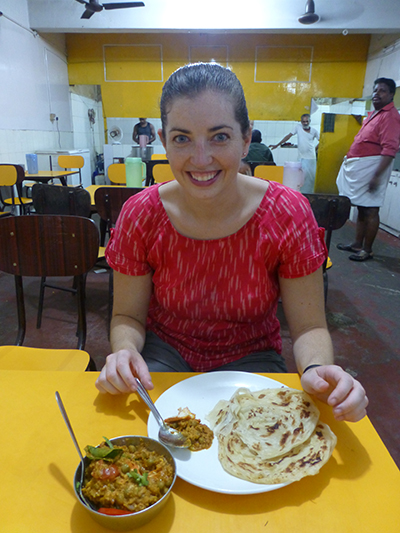
Our favorite restaurant in Fort Kochi. Great food and great prices. Our favorites included the Chicken and Pea Curry and Veg Korma with Paratha bread.

Our favorite restaurant in Fort Kochi. Great food and great prices. Our favorites included the Chicken and Pea Masala and Veg Korma with Paratha bread. The big man in the background is also a fan.

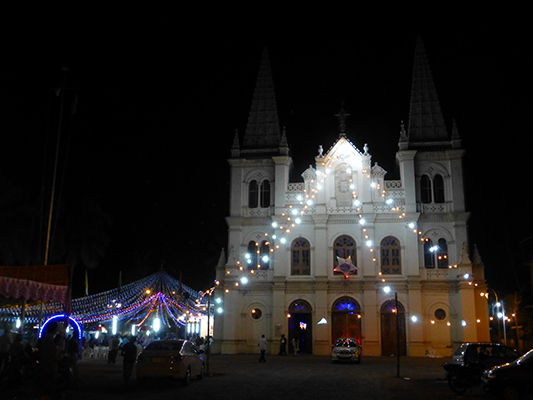
One of several Christian churches in Fort Kochi. The Christian population in India is largest in the south.

One of several Christian churches in Fort Kochi. The Christian population in India is largest in the south.

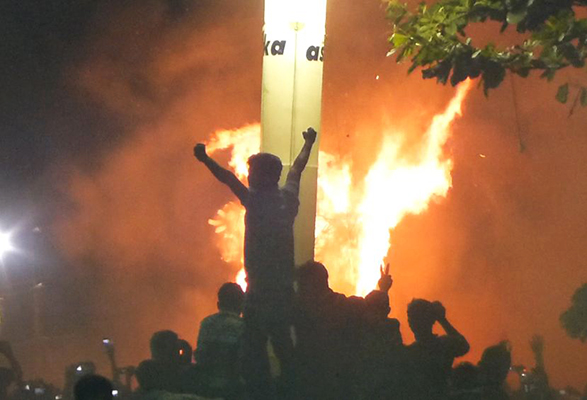
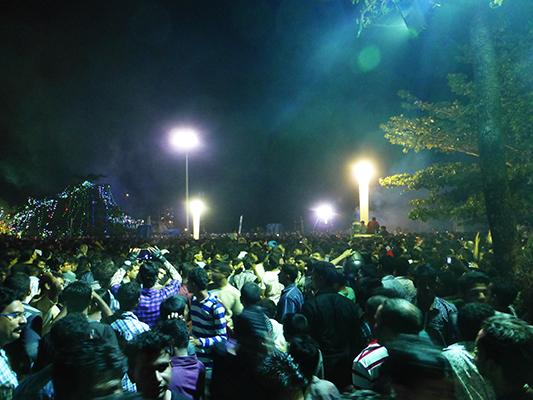
First, we took part in the New Year’s Eve celebration. For the celebration we joined up with a fellow traveler (David) we’d met at our hotel. The three of us walked from the hotel to the beach where the celebration was to take place. Sarah and I had done minimal research and didn’t know what to expect. During the walk David shared with us that as part of the celebration a giant Santa Claus is set on fire. We had noticed people in Santa Claus costumes driving around town but didn’t think much of it because it was so close to Christmas. Without hearing any sort of countdown, and before we knew what was going on, Santa Claus was ablaze and the massive crowd of people (mostly Indian men) erupted with yelling and arms in the air. The celebration ended as soon as the blazing Santa went out.

Happy New Year!

Happy New Year!

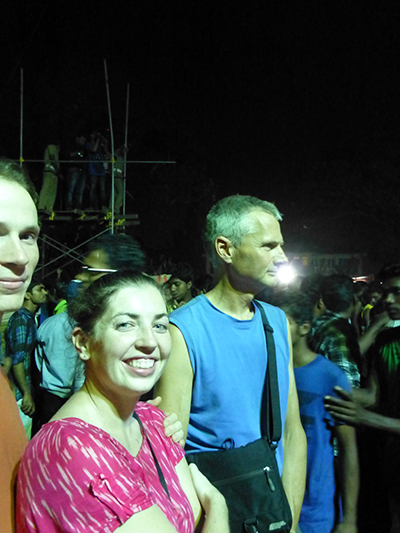
Enjoying the New Year's Eve celebration with a fellow traveler (David).

Enjoying the New Year’s Eve celebration with a fellow traveler (David).

Big crowd watching santa burn.

Big crowd watching santa burn.

What's left of Santa.

What’s left of Santa.

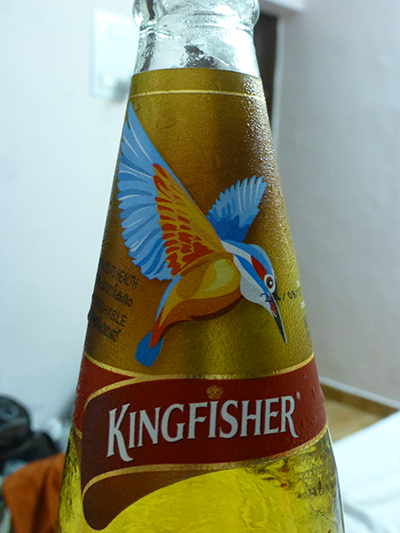
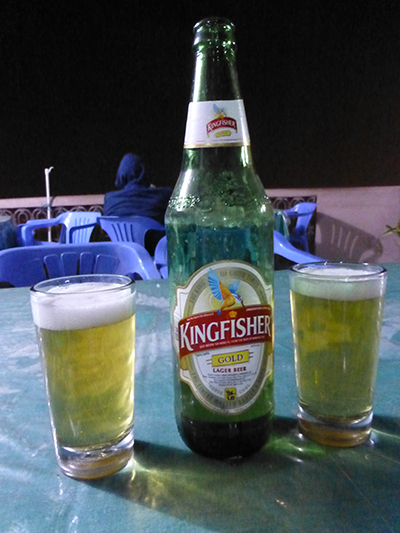
Celebrating the New Year by partaking in another type of Kingfisher beer.

Celebrating the New Year by partaking in another type of Kingfisher beer.

I really dig the Kingfisher logo. The actual bird is beautiful as well.

I really dig the Kingfisher logo. The actual bird is beautiful as well.

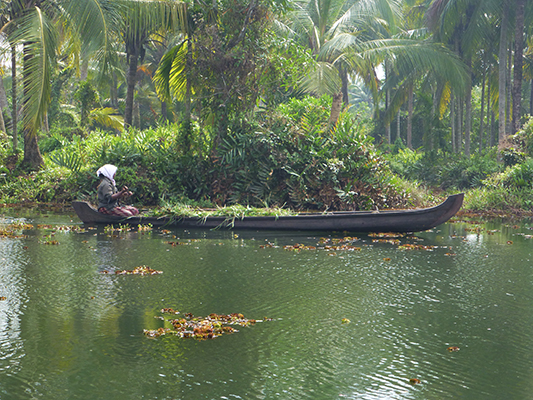
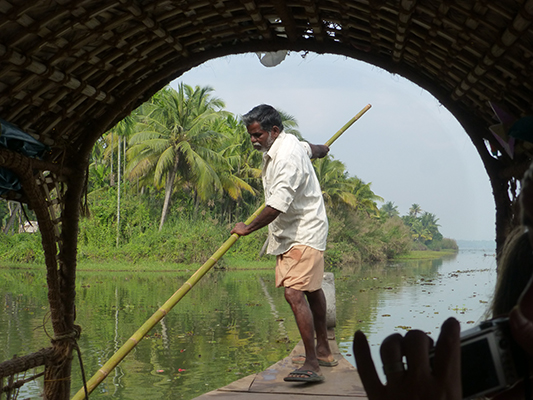
The remainder of our time in Fort Kochi involved watching the Carnival parade, taking a back waters boat tour of the surrounding lakes and canals, and finally doing a proper walking tour of the city. The characters in the parade included a lot of men dressed as women, an elephant, and some of the figures from the Hindu religion.

This little girl was loving the parade. It was fun watching her face as she saw each of the characters in the parade.

This little girl was loving the parade. It was fun watching her face as she saw each of the characters in the parade.

P1070979 P1070986 P1070999 P1080001 P1070961 P1070962

Local fisherman paddling to deeper waters.

Local fisherman paddling to deeper waters.

A fisherman pulling in his net.

A fisherman pulling in his net.

A coconut processing "plant". The use nearly every part of the coconut for some purpose. In the rainy season they use the building to dry out the coconut flesh. In the dry season they dry it in the sun.

A coconut processing “plant”. The use nearly every part of the coconut for some purpose. In the rainy season they use the building to dry out the coconut flesh. In the dry season they dry it in the sun.

One of several house boats we saw on the ride.

One of several house boats we saw on the ride.

Fresh peppercorns.

Fresh peppercorns.

Making rope out of coconut fibers.

Making rope out of coconut fibers.

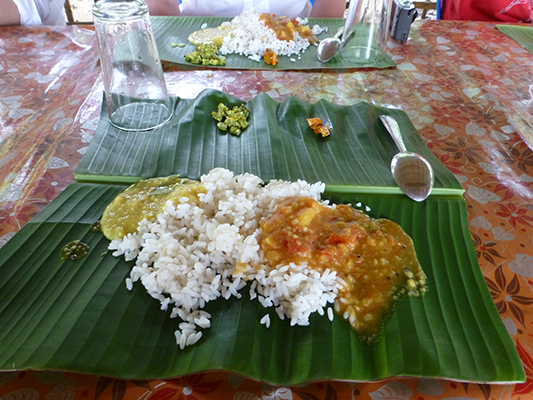
Traditional south Indian meal on a banana leaf.

Traditional south Indian meal on a banana leaf.

Using a canoe to transport goods through the canals.

Using a canoe to transport goods through the canals.

One of the more narrow canals we traveled through. Some of the canals were only a few feet wider than the boat.

One of the more narrow canals we traveled through. Some of the canals were only a few feet wider than the boat.

The boat is propelled and steered by a guy on the front and the rear using a long bamboo shaft to push off of the bottom of the waterway.

The boat is propelled and steered by a guy on the front and the rear using a long bamboo shaft to push off of the bottom of the waterway.

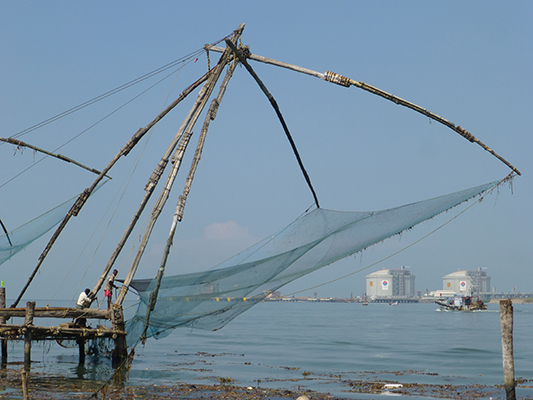
During our walk of the city we saw a bit more of the beach area and the giant Chinese fishing nets that Fort Kochi is known for. The nets are large contraptions, probably around 30 ft. tall when fully removed from the water. The net itself is around 25 ft. square. For sale on the boardwalk nearby were some of the catches of the day.

The "Chinese Fishing Nets" are very large and take a couple of guys to operate.

The “Chinese Fishing Nets” are very large and take a couple of guys to operate.

P1070920

Catch of the day.

Catch of the day.

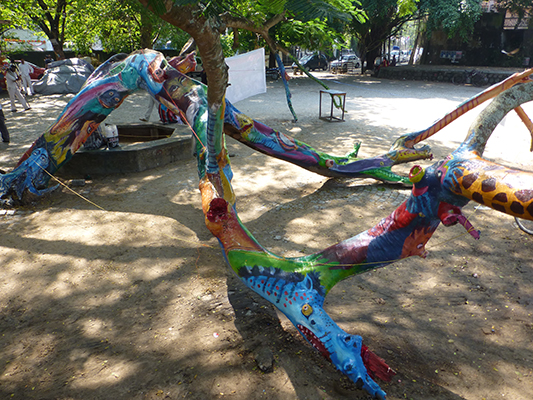
Colorful painted tree near the beach.

Colorful painted tree near the beach.

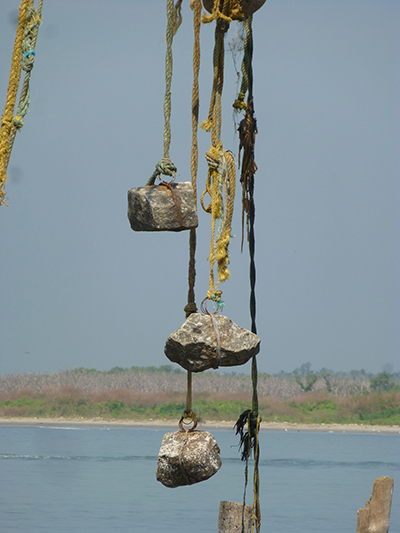
Counterweights used to lift the net out of the water.

Counterweights used to lift the net out of the water.

Close up the counterweights.

Close up the counterweights.

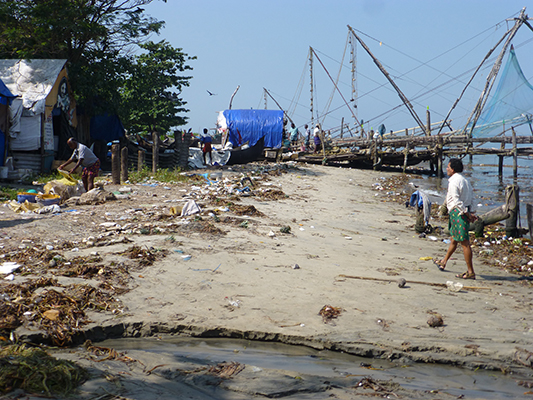
Sadly, there was a lot of trash in the water. Plastic is really difficult to manage.

Sadly, there was a lot of trash in the water. Plastic is really difficult to manage.

the fishing nets lined the beach.

the fishing nets lined the beach.

Fort Kochi was a fine place to bring in the new year. As usual, we met great people and saw some fascinating things. India continues to be full of surprises.

Categories: Cities, India, Traveling | Tags: , , , , , | 7 Comments

Tigers, nah, they’re only in zoos.

I was really feeling homesick. We had spent thanksgiving on an overnight bus and eating pad thai in Thailand, so I really wanted to experience Christmas and feel some Christmas spirit. There are Christians in India in the south who celebrate Christmas so we wanted to head down there. Due to the Varanasi train ticket fiasco, we couldn’t make it to the south to celebrate Christmas in time, so we opted for a Christmas celebration in the wild.

Kanha National park is one of the largest national parks in India and has over 200 Bengal tigers along with hundreds of other animal types. We decided to go here so we’d have the chance to see a tiger.

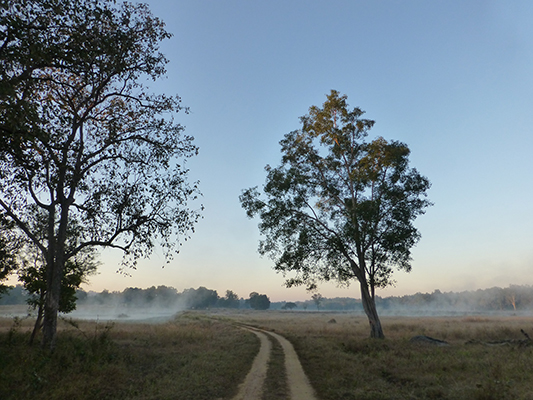
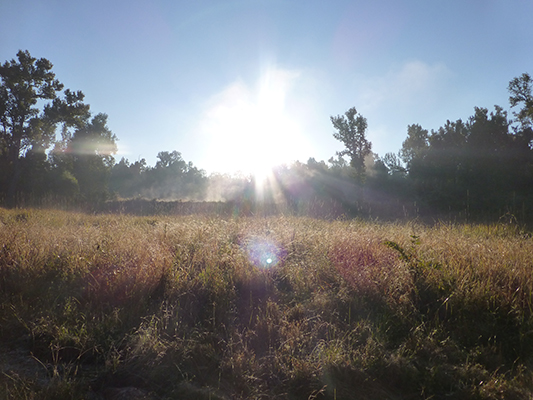
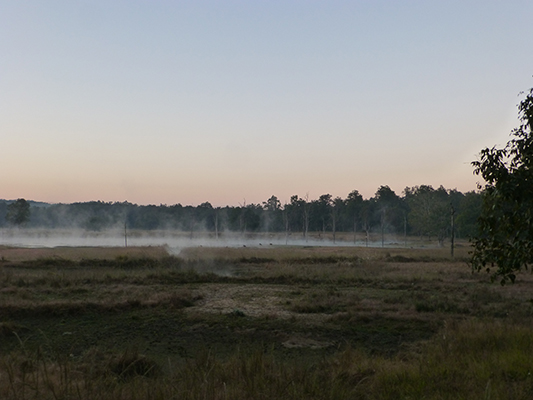
The park at dawn.

The park at dawn.

We had met an Italian couple on the bus ride to the village near the park entrance and had decided to share a jeep with them to reduce the cost. An older couple was staying at the same resort we were and decided to join us since you can take up to six people in one jeep. The manager of the hotel was very friendly and willing to help us fill out the appropriate paperwork to get a jeep and ticket into the park.

The Indian government restricts the number of jeeps going into the park to protect the land and animals that live there. I don’t disagree with this, I think it’s a great way to protect the park. But, there is an online system now where people can pre-book the jeeps and so all of them were sold out months ago. There is an emergency quota, similar to the train system, for people arriving the day before. But, the process to get this ticket was just baffling.

We had our paperwork filled out and completed for 2:30pm the day prior to going on the safari. The manager of the hotel said he somehow got us to the second position in the stack of paperwork of people trying to get in. This was good for us since they only give out 2 or 3 sometimes. All of these papers are then stapled together and additional ones can be added and stapled to the bottom of the pile. The office where the papers are kept and where the tickets are given is open from 2:30pm to 6pm and then re-opens at 6 am the following day. At 6 am they release the emergency tickets and whoever is first in the stack of papers gets the first ticket and so on until they run out. Simple right?

Wrong. The stack of papers remain outside the locked office all night and apparently people come in the middle of the night or early in the morning and remove papers so their group is towards the top. To avoid this, we were told you have to guard the stack of papers. HA! The manager of our hotel said that he will watch the stack and make sure we stay at our current place until midnight when he goes to bed. After that, he wanted us, the three couples, to check on the stack starting at 3 am (I guess people don’t come from midnight – 3am).  There were multiple times when we or the others in our group asked why they didn’t lock up the papers at 6pm when the office closed. We were told then people would come multiple days in advance and book the safaris and it just wouldn’t work and many other reason that we just couldn’t understand. We decided that, being foreigners, we couldn’t change the system and agreed to do the babysitting in shifts starting at a later time than suggested. The Italian couple was the first at 4:00 am, the older couple at 4:30 am, Dave at 5:00 am and Dave and I at 5:30 to 6 am when the office would open.

Well, the Italian couple got there at 4 am and our sheet was missing completely, so they added our second copy (which the manager knew we should have filled out in advance). The people who were there put our sheet at the bottom and the Italians tried to explain that we were on top, but couldn’t do it with the limited English they had. When the older couple showed up at 4:30 with our sheet on the bottom, they were very upset and adamant about getting back to the top. They did whatever they had to, which I think included yelling, to get our paper back on top. We were not there, but were told it got a little hostile. So when Dave arrived they decided to all stay together as a group until the office opened at 6 am. The babysitting worked and we got a ticket into the park. Woo.

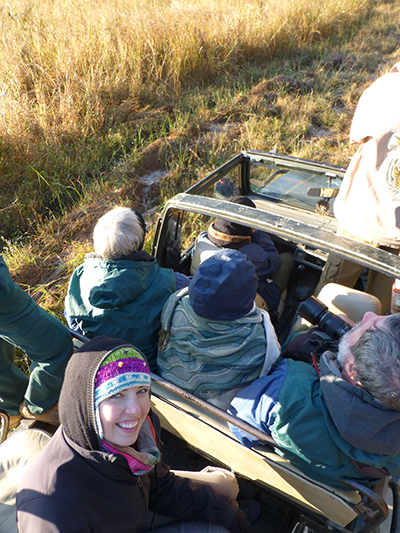
At 6:30 am we were off into tiger country. The sun was just rising and it was chilly in our open topped jeep, but there were many animals waking up and roaming the park. The goal of the safari is always to see a tiger, both the guide and driver know that, so many of the animals we saw were in passing for our tiger search. We saw many different varieties of deer, water buffalo, many birds, peacocks, and jackals. It was amazing how beautiful the park was with all of the wildlife, forests, and meadows.

P1070629

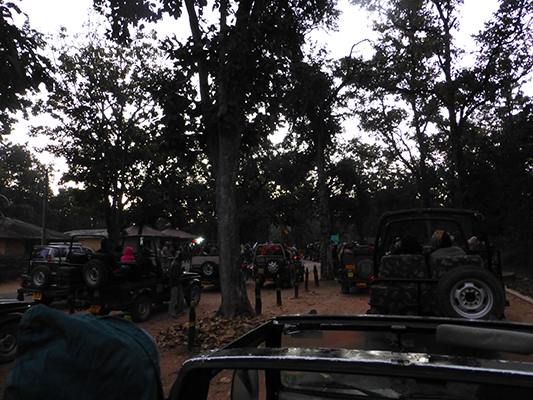
All of the jeeps lined up to get into the park and see the tigers first.

P1070628

All dressed up for the chilly morning and ready for the tigers!

P1070649

The park is beautiful in the morning.

But, of course, it’s mostly about the tigers. The jeep driver and guides know where the tiger territories are and stop at various spots. They also communicate with the other jeep drivers and guides to see if they’ve seen one and where it was. We had driven up behind a jeep that said they saw a tiger cross the road a couple of minutes before. Bummer, we just missed it. The jeeps usually hang out for 10 or so minutes in the same area with the engines off just in case the tiger decides to come back out. So we sat for a while all just hoping we’d get to see one. While waiting we hear this really loud yip noise all of a sudden and some rustling in the woods right next to the jeep. The rustling noise started to move away from the jeep and sounded like there was something running through the under brush. No one knew what it actually was but the jeep driver started the jeep and sped forward to stay with it. All of a sudden a baby deer jumps into the road in front of the jeep. Bummer! It was a just a deer.

A few second after the startled deer ran and stopped in the road a giant tiger came and chomped down on the deer, looked at us, and then ran off. HOLY COW! We just saw a tiger. HOLY FREAKIN COW! We just saw a tiger kill a baby deer.  It was awesome. Well, not for the deer.

All of us were high on adrenaline and we couldn’t keep the giant smiles off our faces when other jeeps came and asked if we saw a tiger or not. The whole debacle with the babysitting of our paper was well worth our tiger siting. Unfortunately, with all the excitement of the tiger siting we didn’t get our camera open and functioning to get a picture. But, the older couple has some awesome shots they are going to share with us (thank you so much!). We’re currently waiting for them and will update once we have them.

It was a perfect Christmas present, since we couldn’t be home with family.

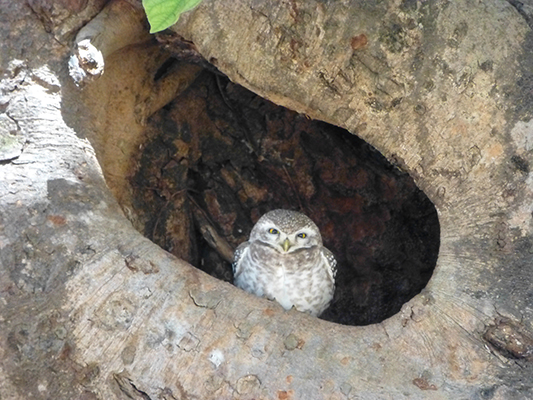
Cute little owl hiding in his tree hole.

Cute little owl hiding in his tree hole.

Jackel

Jackal

Langure Monkeys

Langur Monkeys

Yellow pigeons.

Yellow pigeons.

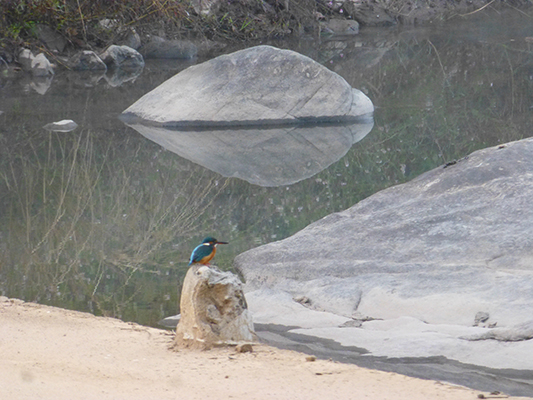
Kingfisher (the bird the Indian beer is named after)

Kingfisher (the bird the Indian beer is named after)

Deer

Deer

Peacocks!

Peacocks!

Searching for bugs

Searching for bugs

Waiting for an opportunity to steal our food.

Waiting for an opportunity to steal our food.

Yellow legged bird, I forget the real name.

Yellow legged bird, I forget the real name.

Good morning.

Good morning.

Our jeep

Our jeep

One spot where a female tiger and her cubs frequent.

One spot where a female tiger and her cubs frequent.

Dave and a water buffalo

Dave and a water buffalo

water buffalo

water buffalo

River in the park.

River in the park.

Another kingfisher bird.

Another kingfisher bird.

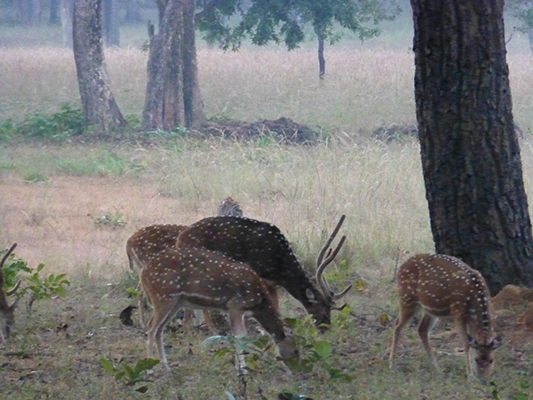
Spotted deer.

Spotted deer.

Sunrise.

Sunrise.

Categories: India, Nature, Outdoors, Traveling | Tags: , , , , , , | 2 Comments

Holy Varanasi

If you’ve ever seen a documentary about India on, say, The Discovery Channel, then you’ve probably seen images of the city of Varanasi. Images of stairs packed with people bathing in the Ganges river and narrow labyrinth like streets congested with cows, people and motorcycles might ring a bell. It’s seen as one of the holiest places in the Hindu religion and is one of the world’s oldest continuously inhabited cities, since around 1200 B.C. It was described to me to be as important to Hindus as Mecca is to Muslims. If as a Hindu you die in Varanasi then the cycle of reincarnation—a component of the religion—comes to an end. Varanasi was the third stop on our travels through India.

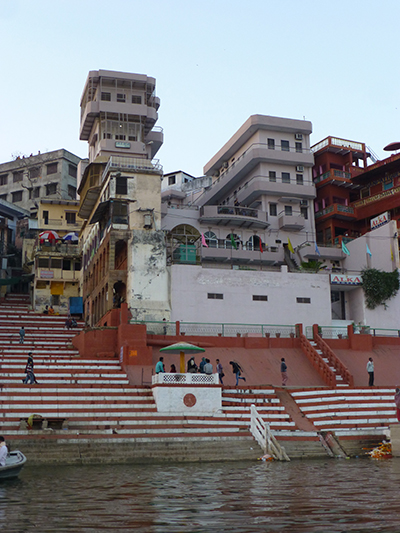
View of the Ganges river bank from our hotel.

View of the Ganges river bank from our hotel.

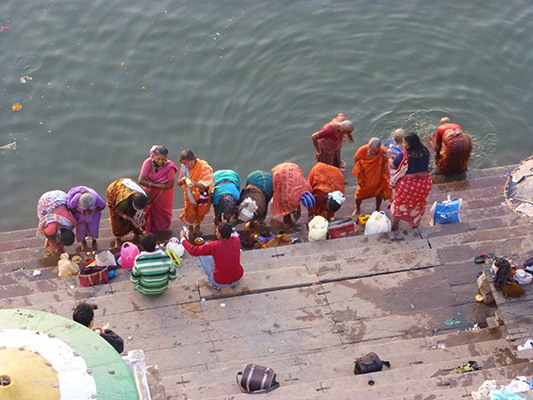
Morning bathers outside of our hotel.

Morning bathers outside of our hotel.

Celebrating our first night in Varanasi.

Celebrating our first night in Varanasi.

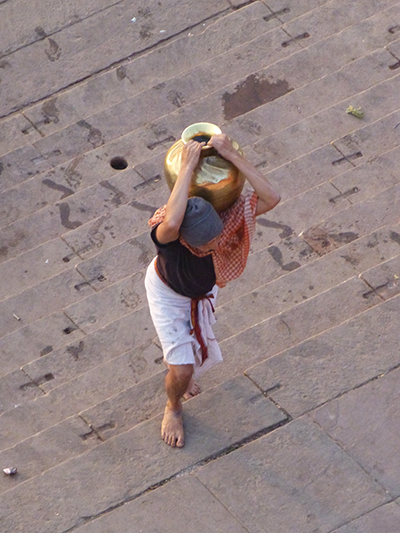
Man carrying water from Ganges in a pretty impressive golden pot.

Man carrying water from Ganges in a pretty impressive golden pot.

Legit masala chai, as opposed to just tea with milk.
It turns out the masala chai was made in a machine. Still some of the best we've had.

It turns out the masala chai was made in a machine. Still some of the best we’ve had.

P1070470

There were cricket games being played all along the river bank.

There were cricket games being played all along the river bank.

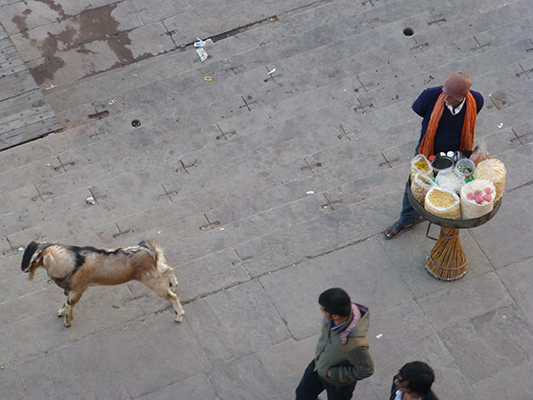
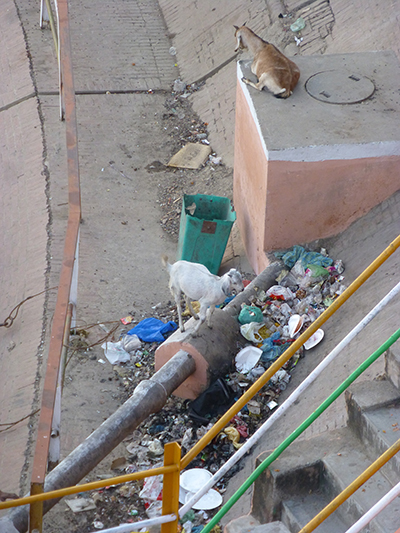
Goats indulging in one of the many trash piles.

Goats indulging in one of the many trash piles.

Our hotel (Alka Hotel). It was in a great location on the bank of the Ganges river. The price was decent too at  Rs 500 ($9) per night.

Our hotel (Alka Hotel). It was in a great location on the bank of the Ganges river. The price was decent too at Rs 500 ($9) per night.

Being a somewhat difficult place to navigate, specifically in the old section of the city, and the fact that we didn’t plan to visit for more than a couple of days, we decided to try out a guided tour. While researching hotels online I read quite a few reviews from travelers raving about the city tours. We don’t usually do tours because they can be a little pricey and most of the time we have no trouble exploring a place on our own. But due to the good reviews and our planned short visit we decided to give it a try. The tour we chose included seeing some of the sights outside of the old city, a walking tour of the old city and a boat ride on the Ganges. The tour was split over two days.

Beautiful lassis and two happy customers.

Beautiful lassis and two happy customers.

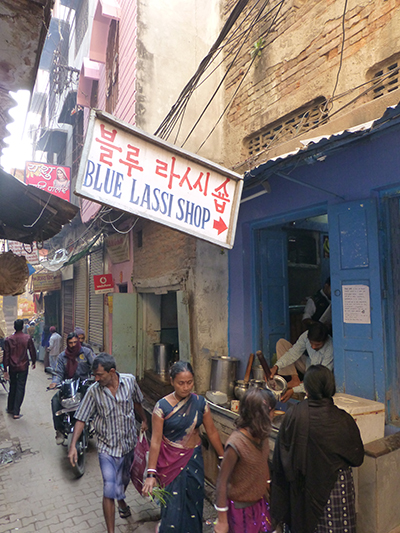
Great lassi shop. Evidently it's pretty famous with Koreans, hence the Korean script on the sign.

Great lassi shop. Evidently it’s pretty famous with Koreans, hence the Korean script (I think?) on the sign.

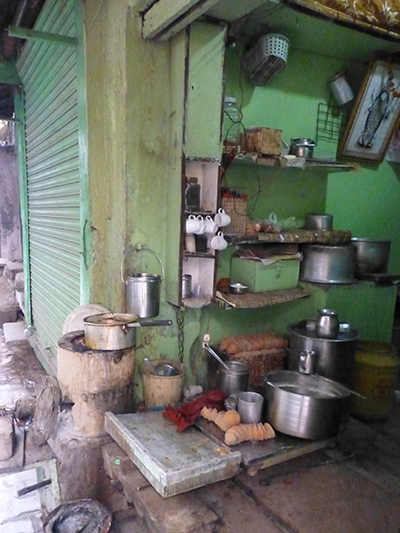
Lass in the making.

Lass in the making.

P1070598

One of the many narrow paths in the old city shared by people, cows and motorbikes.

One of the many narrow paths in the old city shared by people, cows and motorbikes.

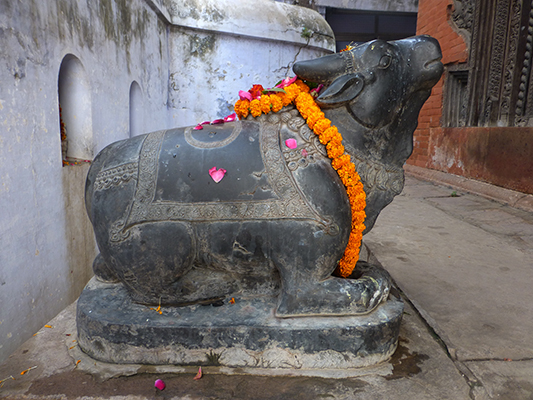
Nepalese Hindu temple: cow.

Nepalese Hindu temple: cow.

Wood carving with some naughty Kama Sutra action at the bottom.

Wood carving with some naughty Kama Sutra action at the bottom.

Nepalese Hindu temple

Nepalese Hindu temple

Nepalese Hindu temple: cow.

Crazy stairs leading to the Nepalese Hindu temple.

Nepalese Hindu temple: cow.

Nepalese Hindu temple: cow.

Nightly ceremony on the river bank.

Nightly ceremony on the river bank.

Nightly ceremony on the river bank.

Nightly ceremony on the river bank.

Nightly ceremony on the river bank. We observed the first half from a boat.

Nightly ceremony on the river bank. We observed the first half from a boat.

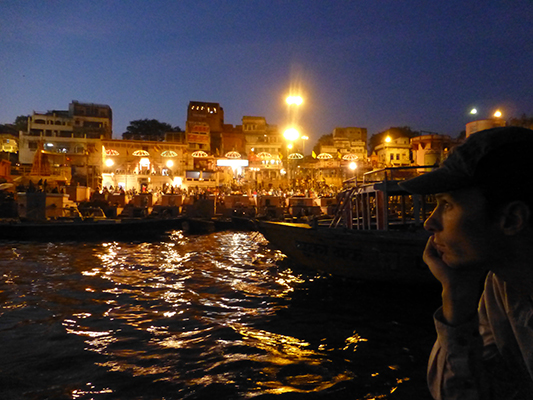
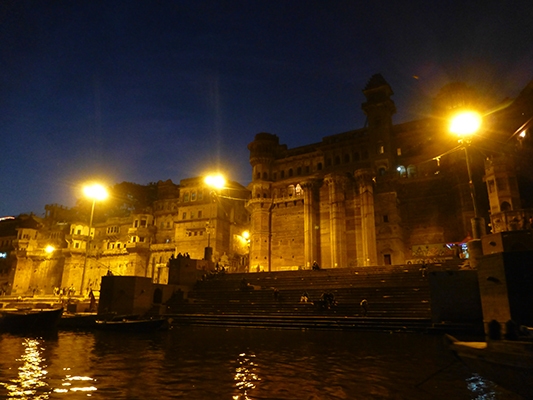
One of the Ghats we saw during our evening boat ride.

One of the Ghats we saw during our evening boat ride.

A leisurely trip down the river and Sarah's stretched face.

A leisurely trip down the river and Sarah’s stretched face.

Giant Buddha.

Giant Buddha.

This tower marks the spot where Buddha supposedly delivered the First Sermon of Sakyamuni.

This tower marks the spot where Buddha supposedly delivered the First Sermon of Sakyamuni.

Silk weaver.

Silk weaver.

Burger King veggie burger.

Burger King veggie burger.

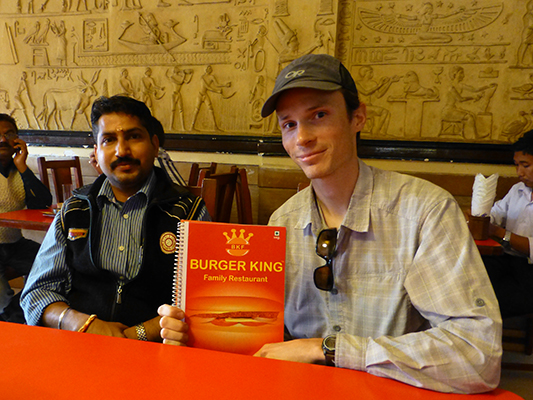
The other Burger King.

The guide and I at the other Burger King. They served a variety of India dishes but no hamburgers.

A very impressive hand carved marble topographic map of India.

A very impressive hand carved marble topographic map of India.

I love how they decorate the cows at some of the Hindu temples.

I love how they decorate the cows at some of the Hindu temples.

Another shot of one of the lively streets in the old section of the city.

Another shot of one of the lively streets in the old section of the city.

While the tour afforded us the ability to see a lot of places in a short amount of time, we walked away in the end feeling a little disappointed. The first half of the tour was great. Our guide was excited to show us around and seemed pretty knowledgeable about the sights. Then we noticed that his mood changed suddenly during lunch on the first day. After which his excitement waned along with his general involvement in the tour. For the rest of the tour we were simply being shuttled from sight to sight as he attempted to hurry us along and wouldn’t join us at some of the areas to provide guidance, as we witnessed other guides doing.

We think his drastic shift in behavior came about during lunch on the first day when he realized that we weren’t the big spenders he had hoped for and I‘m assuming usually gets on these kinds of tours. He realized this when for lunch he gave us the choice between a “good and expensive” restaurant or a “good and cheap” restaurant and we chose the cheap option. And after seeing the menu at the “cheap” restaurant we explained to him that our idea of cheap was actually about half the price of what this restaurant had to offer. To which he responded, “oh, you’re backpackers”. That’s the point at which we think he realized that we wouldn’t be buying anything from the shops he had planned for us to visit and made the assumption that his tip in the end wouldn’t be as hefty as he’d hoped for. What he didn’t realize was that this tour for us was an excursion from our normal practice as well as our budget. The price of the tour was high enough, so any extras like an expensive lunch or silk fabric from a local factory were out of the question. That aside, we saw a lot of the city and likely more than we would have otherwise.

In addition to the guided tour, we did some sightseeing on our own. One of the most interesting stops being the burning ghat. This is where bodies of deceased Hindus are cremated in the open on the bank of the Ganges river (not sure if non-Hindus can be cremated there as well). This is definitely a sight I never imagined seeing and when I think back on it am still surprised at how tolerant family members are of tourists and others that come simply to watch the ceremonies. While observing you feel like you’re intruding on a very private moment. Though, our experience thus far in India has shown us that there’s a lot done “in public” that we aren’t likely to see back home. I’m not sure if this is purely a cultural characteristic or a reality because of the dense population and the need to share space and resources the come with it, including a crematorium. (You’re not allowed to take pictures of the burning Ghat.)

This area is right behind the burning Ghat. This is only one of the places they store wood to be used in the cremations.

This area is right behind the burning Ghat. This is only one of the places they store wood to be used in the cremations.

This is where the way the wood to be used in the cremations.

This is where the way the wood to be used in the cremations.

Walking around the old city and along the Ganges river bank was in my opinion the richest part of our visit. There is so much energy packed into such a small area. There are temples, shops, people, cows, goats, water buffalo, boats, kites, cricket matches, ceremonies and more people and cows and ceremonies happening all around. All of these things in addition to the extra attention you receive as a tourist in a place like Varanasi can be an in-your-face experience nearly every moment you’re away from the confines of your hotel.

One of the many Ghats.

One of the many Ghats and cows.

Another of the many Ghats along the river.

Another of the many Ghats along the river. This one looks pretty old.

People bathed in here as part of some Hindu ritual. Not an intelligent description I know, but nonetheless a cool photo.

People bathed in here as part of a Hindu ritual (I think). Not an intelligent description I know, but nonetheless a cool photo.

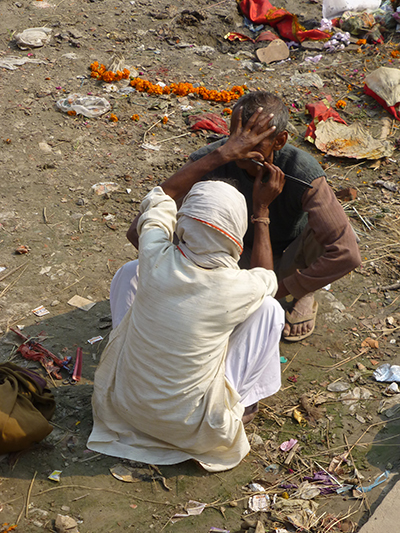
It's hard to tell, but this is a barber shop. The guy in white is shaving the face of the other.

It’s hard to tell, but this is a barber shop. The guy in white is shaving the face of the other.

A popular resting place for both people and cows.

A popular resting place for both people and cows.

Drying cow dung. I think it might be burned. Not sure though.

Drying cow dung. Not sure what it’s used for, maybe burned.

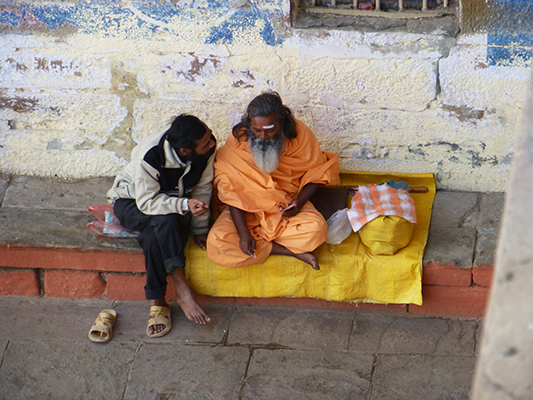
One of many holy guys hanging out.

Religious consultation perhaps?

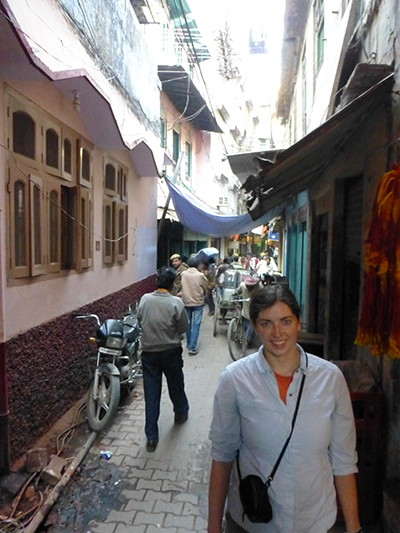
Sarah looking a little lost in the maze like streets.

Sarah looking a little lost in the maze like streets.

One of my favorite Ghats.

One of my favorite Ghats.

We ended up spending an extra day in the city due to some difficulties buying train tickets to our next destination. As we get further into our trip we’re figuring out more and more about India’s confusing train system. There are many ways to buy tickets and many types of tickets you can buy. To improve our chances of getting from A to B we’ve learned that it’s best to come armed with as much info as possible (e.g. train numbers, stations, etc.) when buying tickets because the ticket offices aren’t always willing to help you figure much out. This was especially the case in Varanasi’s foreign tourist ticket office. Our experience at Kolkata’s foreign tourist ticket office went so well we assumed things would be the same at all tourist offices.

In the end we spent about three and a half hours trying to buy tickets before we were successful. Throughout most of our exchange with the ticket salesman the only assistance he could provide us was telling us repeatedly that a route we had researched and settled on was “NOT POSSIBLE!”. My ineffective response was to tell him that it was his job to figure out what was possible, especially since he has the computer system at his disposal and, well, that’s what he does all day. Sarah’s approach was less confrontational and way more effective in the end. She politely, yet persistently, asked him to check different routes that she had researched until we found one that worked. At the end of it the salesman made sure to tell us that if we miss a train because of delays that “well, it’s not my fault and I won’t be there to help you”. And how is that different than what you’re doing now?

As with the the two cities we’d visited prior, Varanasi was full of surprises and unexpected challenges. It’s hard to capture a place like Varanasi in words and images only. Watching a documentary about it doesn’t do it justice either. It’s a place that needs to be seen, smelled and heard to really and truly get the full experience. And with the short time that we were there—in all about three days—we only experienced a sliver of what it has to offer.

Categories: Architecture, Cities, India, Traveling | Tags: , , , , | 4 Comments

Brrrrr…cold Darjeeling

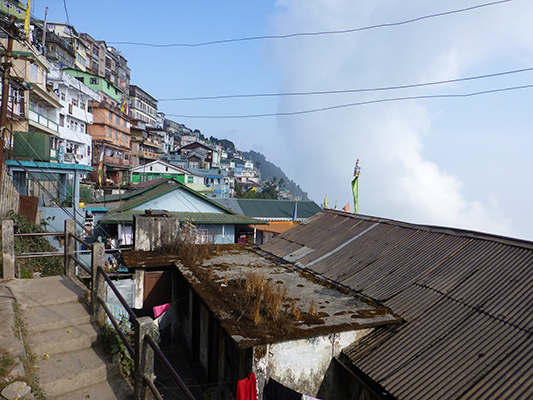
While we were in Kolkata we asked a few Indians where their favorite place to visit in India was and two of them said Darjeeling. So we were off. Darjeeling is an old hill station in the mountains with amazing views of the Himalayas.  And at over 6,500 ft it was COLD in December. For some reason we didn’t think it was going to be as cold as it was, I don’t know what we were thinking.

P1070019

Let me clarify my definition of cold. During the day in the sun it was enjoyable, my guess would be about  low to mid 50’s. Once that sun disappeared though, it went from enjoyable to I don’t want to stop moving or I’ll get frostbite. Which, I guess would translate to right around freezing. The most unexpected part, again, we should have expected this, was there was no heat. It is still so surprising that a location pretty far north of the equator and above 6,000ft does not have central heat during the winter months. There were some people that had portable heaters, but the fuel for them cost a lot so they were not used.

This might be the reason the fuel is so expensive.

This might be the reason the fuel is so expensive.

The first night we were there, we put on all of our layers (undershirt, t-shirt, long sleeve shirt, wool sweater, soft shell jacket, gortex jacket, long underwear, pants, hat and gloves) just to walk around at night. We were not sure if we would be warm enough with the clothes we had and the three blankets they gave us for sleeping. But we did get a surprise right before bed–a hot water bottle. What they do to stay warm at night in Darjeeling (and apparently other cold climates near by) is boil a bunch of water and put them in rubber bags. Each bed gets a rubber bag to put into your bed prior to getting in yourself. This pre-heats your bed and keeps you warm throughout the night. Let me tell you, it works! We were able to sleep in only a couple of layers. Both of us thought this would be a great addition to the cold nights in Maine.

Sitting inside with all my clothes on.

Sitting inside with all my clothes on.

Drinking lots of hot tea to stay warm.

Drinking lots of hot tea to stay warm.

Our heat for the night!

Our heat for the night!

Eating ice cream indoors with all of our winter gear on.

Eating ice cream indoors with all of our winter gear on.

While in Darjeeling we decided to visit a tea plantation. We were told multiple times that the best tea in India comes from here. We got a tour of the highest tea plantation in India and it also happened to be organic. It was called Happy Valley. December is not the picking season so the equipment was not up and running, but we did get a good explanation of what it would be doing when it was running. We both learned a lot of new things about the different types of tea and the tea making process that we didn’t know before. We left with some tea as a souvenir.

The chalk board where they listed which ladies were picking in which locations.

The chalk board where they listed which ladies were picking in which locations.

The beds where the tea leaves are partially air dried.

The beds where the tea leaves are partially air dried.

The fans that move the air into the bottom of the beds.

The fans that move the air into the bottom of the beds.

Location where they roll the tea leaves.

Location where they roll the tea leaves.

Ovens for further drying.

Ovens for further drying.

Sorting room for different types of tea.

Sorting room for different types of tea.

Us with the tour guide.

Us with the tour guide.

View of the tea plants.

View of the tea plants.

View of a portion of the tea plantation.

View of a portion of the tea plantation.

We visited the Zoo as well based on recommendations from other fellow travelers. The zoo did have some cool animals, mostly large cats, and an interesting museum on Himalayan Trekking and Treks to Mt. Everest.

Zoo

Zoo

The bear was sticking his tongue out at us.

The bear was sticking his tongue out at us.

P1070113

The bear didn't have a cage and was really close to us, there was a trench that stops the bear from escaping though.

The bear didn’t have a cage and was really close to us, there was a trench that stops the bear from escaping though.

Mountain goat.

Mountain goat.

Water Buffalo

Water Buffalo

Himalayan Museum

Himalayan Museum

Leopard

Leopard

Panther

Panther

Snow leopard

Snow leopard

Tiger!

Tiger!

This wolf wants to eat you.

This wolf wants to eat you.

Sly fox.

Sly fox.

Sleeping Red Panda

Sleeping Red Panda

Red Panda

Red Panda

Because Darjeeling is a hill station, they have a train system that go up the mountain side. They call these hill station trains toy trains. The toy trains are smaller trains than the regular trains they have in India. They only have a 2ft wide rail width and the cars are about 5ft wide versus a 4-5ft rail width and a 9-10ft car width. We took a toy train joy ride to a lower city and back. The joy rides specifically use a steam engine to power the cars like they did when these were originally built and used.

Toy Train

Toy Train

Steam Engine

Steam Engine

Inside the train.

Inside the train.

We saw this while we were on the train. They were lifting concrete to the top of the wall there. Good team work.

We saw this while we were on the train. They were lifting concrete to the top of the wall there. Good team work.

Adding fuel to the fire.

Adding fuel to the fire.

Removing the ashes.

Removing the ashes.

Someone sorting through the just removed ashes for unused coal.

Someone sorting through the just removed ashes for unused coal.

One of the cooler things we saw in Darjeeling wasn’t a tourist attraction at all. They were repaving some of the streets and we got to see the whole process up close and personal. The roads were not just regular black top either. They get a lot of rain in the monsoon season so they put stones in the black top, we believe these help with tire grip. Almost the whole process is done by hand or man power, even laying and tapping each one of the stones. It was an interesting process we’ve never seen before and will probably never see again. (Link to YouTube video)

That tar (?) chunk gets thrown into that machine which melts and mixes.

That tar (?) chunk gets thrown into that machine which melts and mixes.

Sealing the edges together.

Sealing the edges together.

Placing and banging in the stones.

Placing and banging in the stones.

Laying the black top with wood trowels.

Laying the black top with wood trowels.

Darjeeling was also our first true experience with obtaining railway tickets. We actually ended up getting stuck in Darjeeling because of it. Our first experience in Kolkata was at a Foreign Tourist Office and we were able to get a ticket the same day. Darjeeling is smaller and doesn’t have a special office for tourist so we tried the regular window. With the regular window comes the regular tickets. We found out that the tourist office only gives out tourist quota tickets and a certain amount of tickets are set aside for tourist only. Because there are over a billion people in India, they have different quotas set aside for different ticket types. They have the general, tourist, emergency (Tatkal), women, and more I don’t even know about.

So, if you are trying to purchase regular, non tourist quota, tickets for the day prior to when you want to leave, which we were, you are shit out of luck. Those tickets are sold out days, weeks, and even months in advance. For this reason, they have an emergency quota, or stash of tickets, that can be purchased only the day before at exactly 10 am. Our first attempt at getting general tickets didn’t work because they were all sold out, but we were told about the Tatkal emergency tickets so we decided to try that. It was already past 10 am so we had to return the following day. Which would put us leaving a day after we wanted to.

The Tatkal experience: we arrived at 9 am and didn’t see too many people around. We thought we were smart for coming early and getting in line. Well there is no line. There was a scrap piece of paper that you write your name on to hold your place in line. People were there at 8 am when the train station opened to write their name on the scrap paper. We were number 13 and were thinking we were in good shape. A couple of minutes before 10am, everyone comes back and queues up with their papers. Also, I forgot to mention before that you need to fill out a piece of paper with the train number, name, time, in order to get a ticket and in Kolkata someone was able to help us with that. The paper we had with us was partially filled out, as it was in Kolkata, because we didn’t know the number or name of the train. Well, 10 am comes around, the tellers are working as fast as they can to purchase tickets and move through the line. By the time we got there, got yelled at for not having the train number, and figured out which train number we wanted, there were no tickets left for us. Attempt number two failed.

The tatkal chaos

The tatkal chaos

Later that day, we were told that the general ticket window can purchase tickets from the tourist quota, but you need to specifically ask for that. So, we went back for a third time and tried to get tickets that way. The tickets that were available were two days out and had a connection in the middle. We took it. After two days, three visits, many conversations with the tellers, and lots of frustration, we finally got tickets. We ended up leaving three days after we originally wanted to and, we didn’t know this at the time, it was only the start to our wonderful train ticket purchase experiences. More to come later.

Getting stuck in Darjeeling was not so bad after all. It was quieter and more peaceful than Kolkata, we met many other interesting travelers, and there were some great places to eat western breakfasts, like omelets and pancakes. Also, on the last day, the clouds left long enough for us to see the beautiful, huge mountains that were close by. If we didn’t get stuck, we would have never seen them. Thank you crazy Indian train system.

The mountains that we got to see on the last day!

The mountains that we got to see on the last day!

Glenary's bake shop. They have very yummy desserts.

Glenary’s bake shop. They have very yummy desserts.

Old church at the top of the mountain.

Old church at the top of the mountain.

Dave got this excited about the Indian desserts every time.

Dave got this excited about the Indian desserts every time.

Categories: Architecture, Cities, India, Nature, Outdoors, Traveling | Tags: , , , , | 3 Comments

Blog at WordPress.com.