Cuenca: One of the many gems of Ecuador

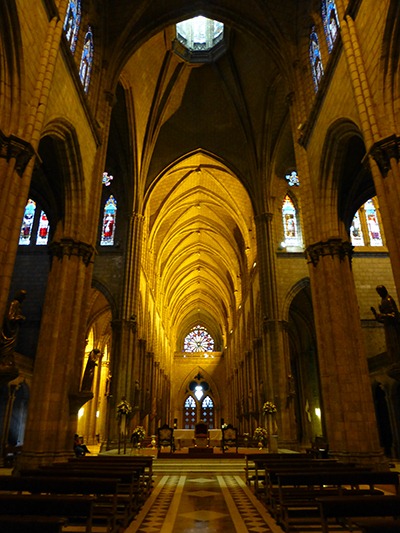
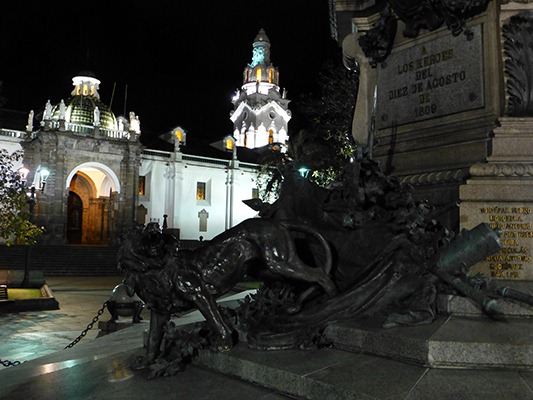
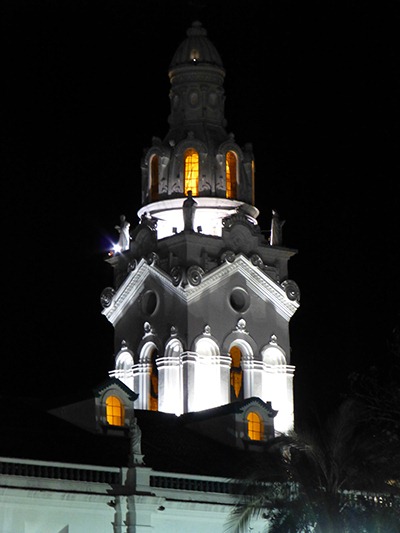
By the time we arrived in Cuenca we had spent a little over 3 weeks in Ecuador, by which time we had visited a handful of its cities and driven threw a dozen more. Those places shaped our view of Ecuador and allowed us to make assumptions about the next town we might visit. It’s safe to say that the city of Cuenca didn’t quite fit the mold of those other places. Cuenca and the surrounding area—especially Cajas National Park—were beautiful. Don’t get me wrong, there is an abundance of beautiful places in Ecuador, but of the places we saw, Cuenca and Cajas National Park top the list.

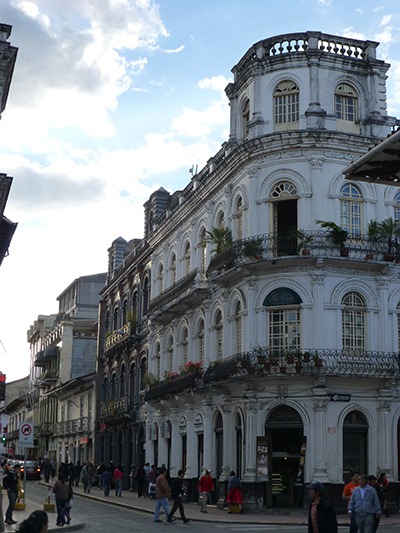
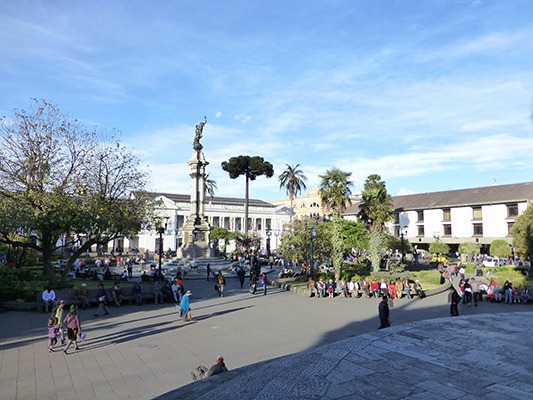
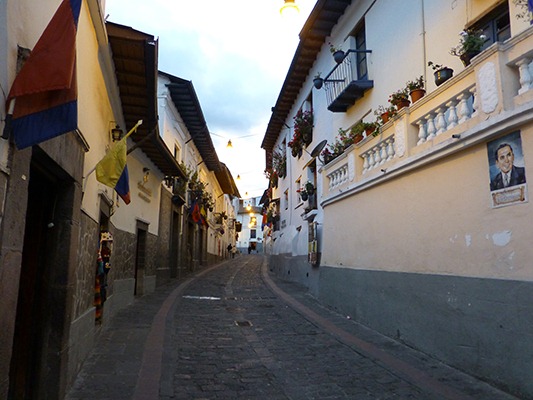
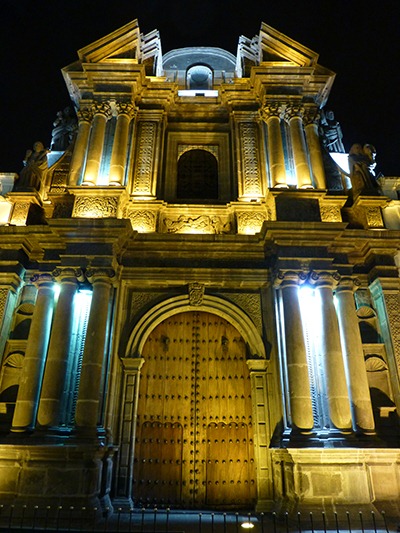
The most obvious example of this is the architecture. Most of the buildings are in good shape and nearly all of them had vibrant red/orange clay tiled roofs. Some of the streets were paved with nice stones, specifically near the town square. Though small, the town square rivals that of the capital city Quito. The overall beauty of the city, in addition to the low relative cost of living, might be part of what attracts many of the retirees from the U.S. and other wealthy countries. Cuenca has a relatively large expatriate community, somewhere around 1500 people living permanently and another 1,000 with long term visas—according to a New York Times article. It was pretty obvious too–we saw lots of gringos. But it seemed as though the expats and other visitors stuck to a small chunk of the city.

Travelers that might be turned off by the fact that it’s popular stop along the gringo trail shouldn’t be. It’s a friendly and attractive city with great historical architecture, and not to mention, the best variety of food we came across during our travels in Ecuador. The cost of our hostel wasn’t so bad either, probably because we were there just after the busy season.

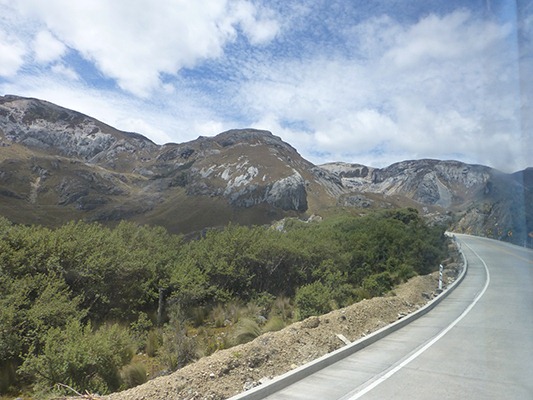
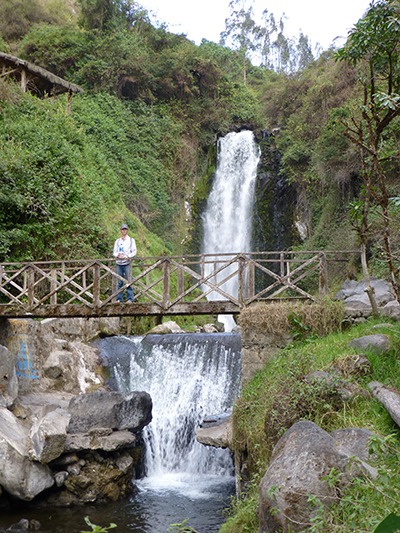
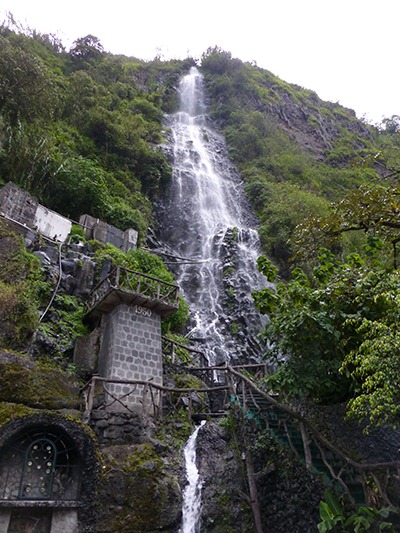
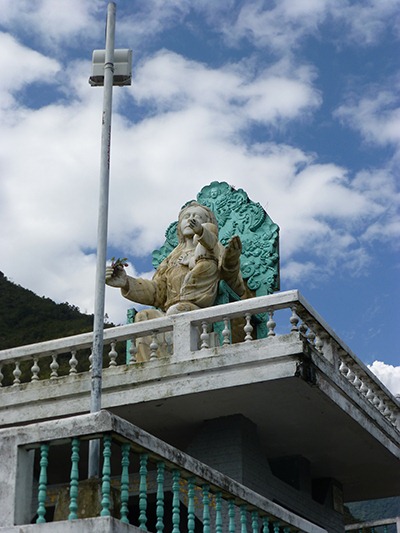
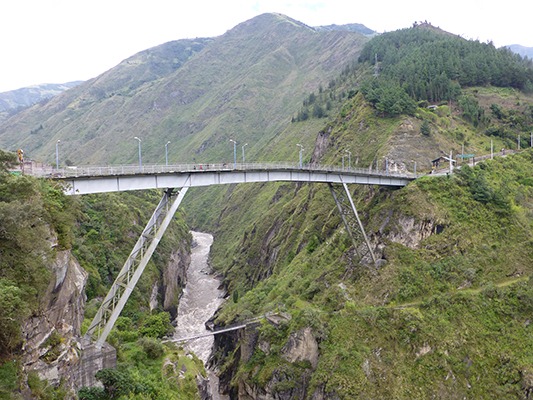
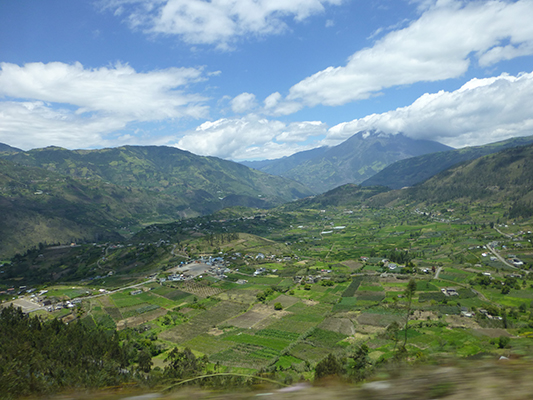
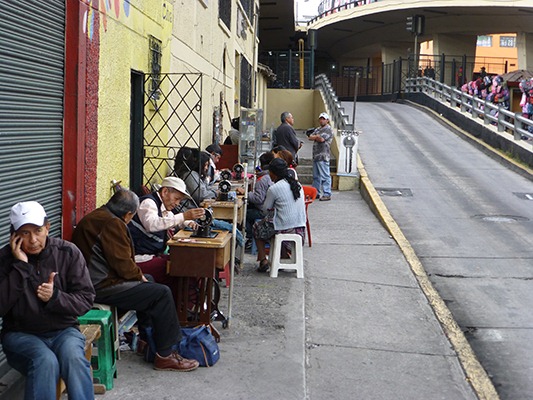
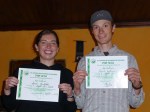
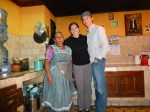
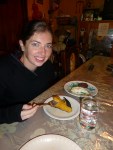
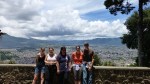
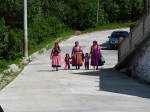
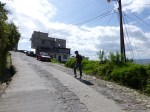
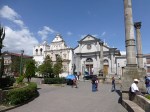
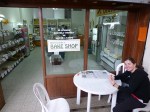
Here are some pics from our visit, as well as couple shots of the drive from Guayaquil to Cuenca through Cajas National Park. The next post will go into more detail about Cajas National Park.

Cuenca Panoramic

Drive through Cajas National Park.

A couple peaks in Cajas National Park.

The drive through Cajas National Park was spectacular. The road reminds me of the kind they use in car commercials showing a sweet sports car driving in a beautiful location on crazy windy roads.

The view from our hostel. We stayed at “Tourists of the World” hostel.

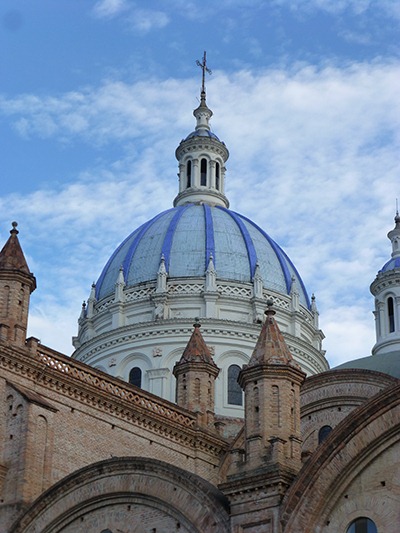
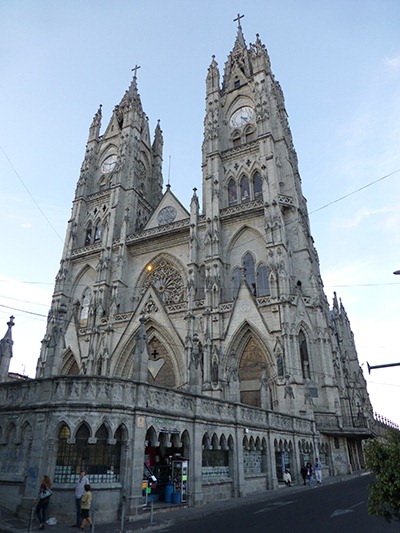
The church in the central square.

Cuenca central square.

Beautiful building near the square.

Same building, different view.

Blue dome and blue sky…awesome.

This flower market was open every day that we were there. The stalls were all run by local women.

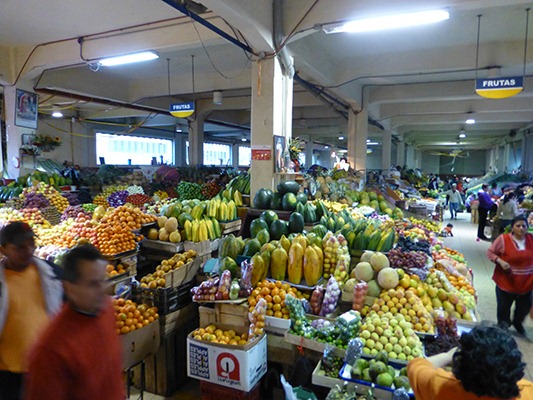
The local market where we bought most of our food. As usual we had to shop around and negotiate a bit to get the best prices. It had two levels and had pretty much everything you need. What’s interesting is that many of the towns we visit have local markets like this as well as more modern grocery stores. I wonder how long these markets will hang in there.

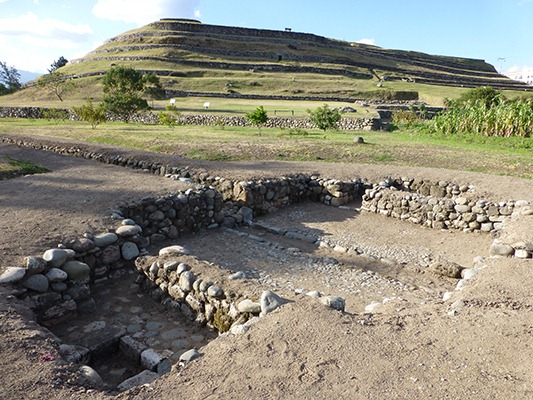
The Pumppungo site was created and occupied by groups that were part of the Incan empire. I believe the site construction dates back to the late 15th century and was later destroyed by the Spanish.

Our last night in Cuenca. This was the view from one of the balconies at our hostel.


Categories: Architecture, South America, Traveling | Tags: , , , , , | 2 Comments

Canoa, Ecuador

After working relatively hard for two weeks on the Rio Muchacho farm, we spent a well deserved couple days relaxing in the beach town of Canoa. From what we gathered, it’s known as one of Ecuador’s best beaches, if not the best, and is supposedly an up and coming town for both domestic and international tourism. Though neither of us would consider ourselves “beach people”, we had a good time there.

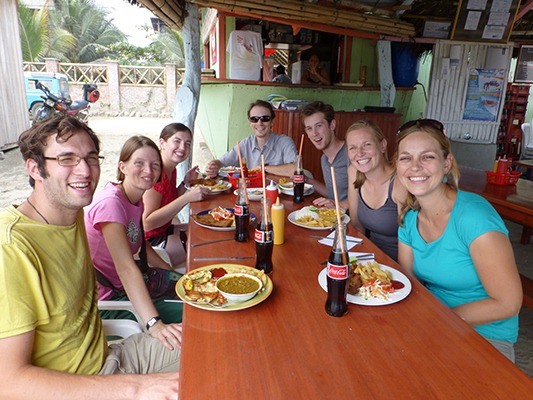
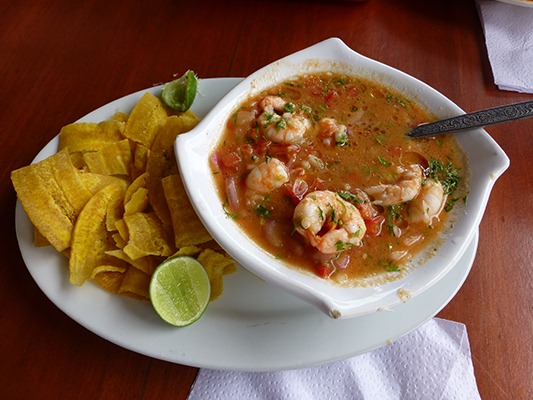
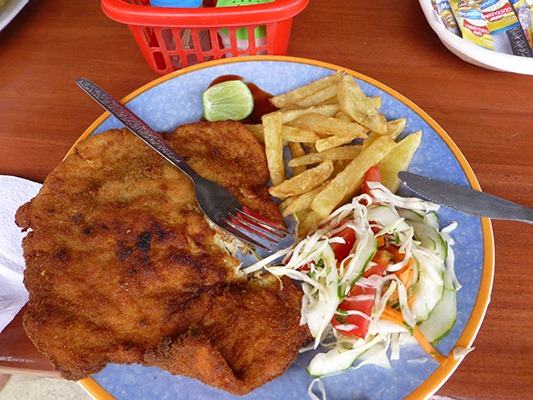
The first day and a half we spent most of our time with the friends we made on the farm. They were spending the weekend in Canoa before heading back to the farm for another week of work. First things first, we grabbed lunch at one of the beachside restaurants and indulged in some of the foods we didn’t have access to on the farm. Being near the coast there was a good selection of delicious seafood. My shrimp ceviche was excellent. Sarah doesn’t like seafood so she had some good old fashioned fried chicken and french fries. Can’t go wrong there. We topped that off with a tasty dessert drink called “Batido”, which is basically a milk shake. Instead of using a flavored syrup they use actual fruit.

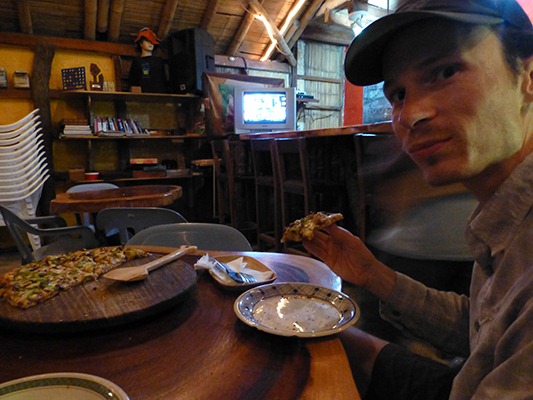
At the end of the second day and after the rest of the crew headed back to the farm, Sarah and I spent the evening relaxing and walking along the main strip parallel to the beach. For our last dinner in Canoa we hit up a restaurant called “Surf Shak”, which I’m guessing was started by a U.S. expat, as it seems to be geared towards folks from the U.S. They make great pizzas and have NFL football games playing all day Sunday, both of which we enjoyed. After traveling for a while and not having access to familiar things, e.g. food, friends, places, etc., you find that you start to miss them more than you imagined. And when you suddenly have access to them again it’s very comforting to indulge a bit. Pizza and football were two of those indulgences.

Our time in Canoa allowed us to spend a little more time with our new friends and to rest a bit before heading further south through Ecuador. It was definitely time well spent. Here our some pictures from our short two day visit.

Tomas and Steffi (Germany), Sarah and Dave (you know us), Zach and Erin (Seattle, Washington), and Conny (Switzerland) grabbing lunch on the Canoa beach.

Shrimp Ceviche and plantain chips. Very good.

Sarah’s fried chicken and fries. The salad was left untouched to avoid any foreign bacteria.

Paraglider flying low along the beach.

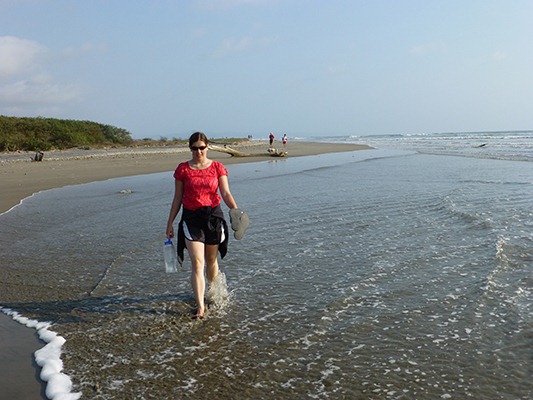
Sarah enjoying a walk along the beach. The beach here is very large, especially during low tide.  Also worth mentioning is that it’s pretty clean. This is noteworthy because litter is a big problem in many of the places we’ve visited in Central and South America.  One of the local restaurants offers a free margarita if you collect a full bag of trash.

Zach and Erin pumping iron/concrete on the beach.

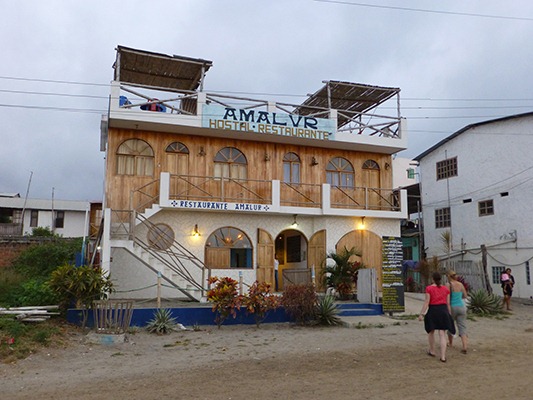
The hostel we stayed at–Amalur. Owned by a couple from Spain. Really nice place but maybe a bit above of our typical price range.

Sarah keeping safe from the mosquitos.

A morning walk with Erin and Zach a little further down the beach during low tide. Canoa really does have a beautiful beach.

Our go-to lunch food–bread, banana, and peanut butter–to save money and good for long bus rides. In Canoa the peanut butter was $1 per handful–a very accurate unit of measure. I love that the bread says “Molde”.

Ecuadorian volleyball should be considered a close cousin of the volleyball we’re used to seeing in the States. There’s a lot of holding and tossing of the ball. Sort of seems like cheating.

Pizza and NFL football at the Surf Shak. So good. 

Categories: Architecture, South America | Tags: , , , , , | Leave a comment

Rio Muchacho Organic Farm Volunteering

From Quito, Dave and I took a bus ride to Bahia de Caraquez, Ecuador. I will have to say that this was the longest, most uncomfortable bus ride we’ve been on so far. We got an estimate that the bus ride would take anywhere from 6-9 hours. Well, it took 8 hours and 45 minutes.

The most unpleasant part was that the bus arrived at 9pm at night and the room we reserved at Coco Bongo Hostal apparently didn’t exist. The owner had mistakenly given it away to someone who she thought was us. She then proceeded to direct us in a city that we didn’t know to a hotel that might or might not be open and have rooms. We were not very happy after a 9 hour bus ride. I don’t suggest staying at Coco Bongo if you need a place to stay in Bahia. The hotel su descanso ended up having a room and it all worked out in the end, it just was one of our first, but I’m sure not last, unpleasant experience with not getting what we expected.

The following day we took a boat taxi across the river to San Vincente and then a bus to Canoa. In Canoa there is an office for Rio Muchacho, the farm that we volunteered on, where you take a taxi to go to the farm. I say taxi because that is what they called it. It’s actually a pick up truck where you sit in the back and ride for a good 20 minutes on paved roads and then another 20 minutes on dirt roads. Don’t worry, we were assured it was “safe.”

Dave holding on for our taxi ride.

I took a seat on our taxi ride. Nice views on the dirt road to the farm though.

When we arrived Kevin and Nicola greeted us. Kevin is an intern who has been there for over 6 months and Nicola is one of the owners. They had saved lunch for us, which was very nice of them. We proceeded to start helping out with the activities in the afternoon and got our routines for the following week.

Panoramic of the farm.

The farm has a consistent routine:

6:00 am – wake up and get ready for the animals

6:30 am – put on your rubber boots and head to the animal area or kitchen depending on your routine.

View of the animal area.

  • Chanchos (pigs) – mix sugar cane syrup with water and give it to the pigs, mix grains with water and then feed to the pigs, shovel out any wet area of the pig pens and by wet that means urine and crap. After that, put a small amount of  sawdust where the pend was shoveled. And lastly, collect dry leaves to give to the piglets to rest on.

Chanchos eating.

  • Caballos (horses) – see chanchos. The chanhcos were a lot of work and whoever was on caballos was helping with chanchos. I was on Caballos the second week.
  • Pollos (chicken) – Feed the baby chicks ground up corn and fill up their water and feed the adult chickens corn. Dave was on Pollos the first week.

Pollitos eating their ground corn.

  • Cuyes (guinea pigs) – Cleaned out the cages and feed the cuyes

Guinea pig cage

  • Concina (kitchen) – cut up watermelon and pineapple and wash dishes. I was on the concina the first week and the second week Dave was doing the concina work.
  • Dave doing some dishes

7:30 am – routines are done and breakfast is ready. Breakfast consisted of fruit salad with granola, tea made from the pineapple peels, and some sort of starchy bread.

7:45-8 am – wash breakfast dishes or rest if you’re not on dish duty

8:30 am – Morning work

  • Some days we had a “Minga” which is an indigenous word that means group work. This could have consisted of moving brush, moving compost and so on.
  • Working in the vivero and semillero (nursery)

    I worked in the nursery for a week planting seeds and filling those bags.

  • Transplanting leeks

    Watching Nicola explain how to remove the baby leeks.

    Leeks transferred. Success!

    Proud of my hard work.

  • Planting lettuce
  • Digging trenches and/or holes

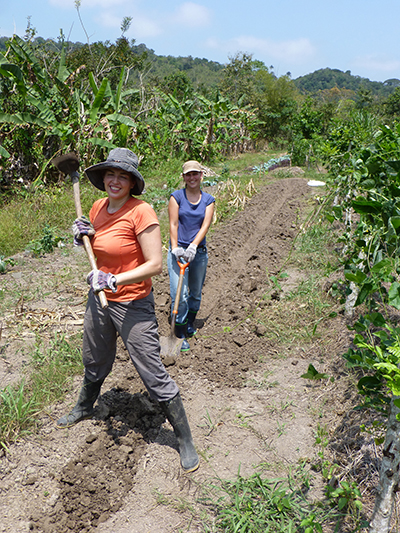
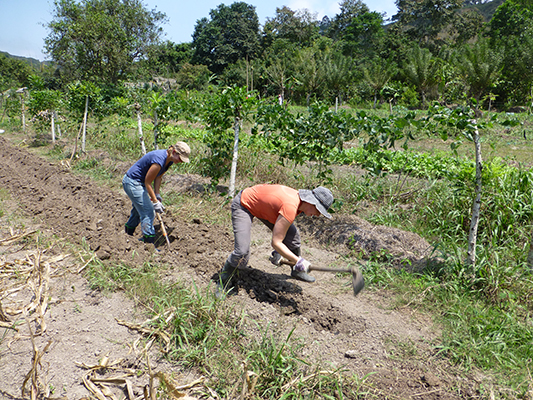
    Corney and I working hard digging the trench in the hot sun.

    Dave did most of the hard work. He was made for heat.

    It was hard with the hot sun baking us.

  • Weeding
  • Watering
  • Moving the Chancho Train

12:00 pm – Morning work is complete and lunch is ready. Lunch consisted of soup as the first course, and then rice with a vegetable side, salad, and juice.

Lunch. Yum!

12:15-12:30 pm – wash lunch dishes or rest if you’re not on dish duty

1:30 pm – 4:30 pm – Afternoon work

  • Making marmalade

    Our first task on the farm, chop a lot of mandarins for marmalade. We chopped for a good 2 hours. We also separated the pips (seeds for those of us who don’t speak British English).

    After the chopping and seed separating, the mandarins get boiled until soft and the pips and other whites get boiled to create pectin. They are combined with the same amount of sugar and simmered until it starts to set. Then placed into sterilized jars.

    We made a lot of marmalade the first week we were on the farm.

    Our finished marmalade in the office in Canoa. We’re famous, kind of.

  • Watering
  • Drawing instructions

    He’s a professional.

    Hopefully Dave did a good job so people understand what to do and what not to do.

  • Decorate cups
  • Plant flowers
  • Ride horses for visiting students
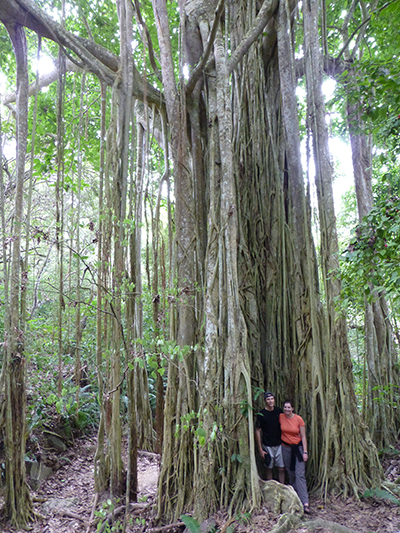
  • Every Wednesday was cultural day. So we made rings from a local nut and visited the giant tree.

    Dave cutting the nut into a ring like shape before sanding it.

    Sanding the inside and outside of my ring.

    Finished rings!

    Dave climbing the giant tree.

    One of the strangest trees I’ve seen. It sends roots down from its branches and it can eat other trees!

6:30 pm  – Dinner, which consisted of rice and some vegetable sides

6:45 – 7:00pm – wash dinner dishes or rest if you are not on dish duty

7:30 pm – Night activity

  • Watching movies on dirt or permaculture
  • Making coffee

    Build a fire and then roast the coffee beans to the desired darkness level.

    Tomas and Kevin grinding up the roasted coffee beans.

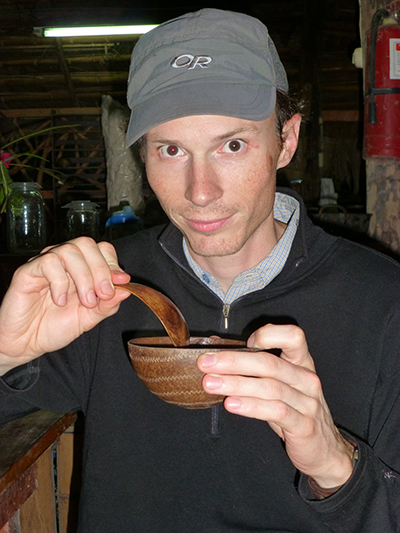
    Dave enjoying his freshly made coffee.

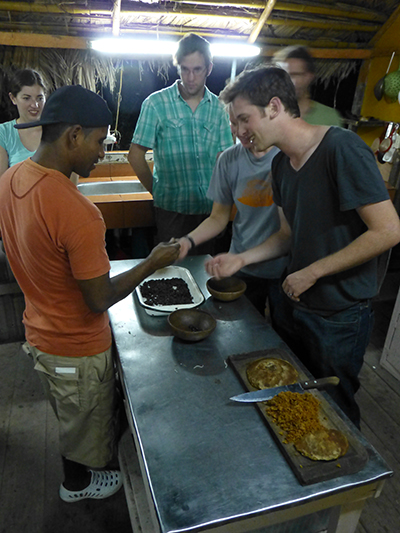
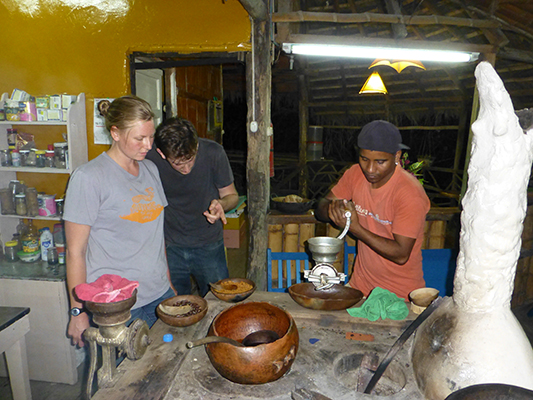
  • Making chocolate

    Cacao beans prior to being roasted.

    Roasting the cacao beans.

    Peeling the freshly roasted and very hot cacao beans.

    Grinding the cacao and mixing with panela (sugar cane). We decided on a one to one mixture.

    Mix the cacao and panela mixture with milk on the stove and add more panela if needed.

    Enjoy!

    mmmm…chocolate and pineapple.

  • Hanging out and making friends.

    Cornelia, Tomas, Steffi, Kevin, 3 Ecuadorian Guys that were only there for the weekend, Sarah, Erin, and Zach

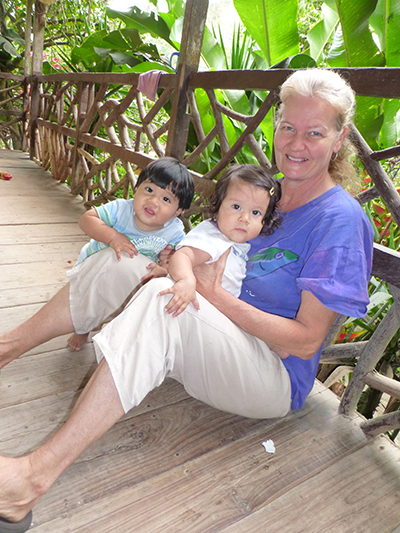
    Nicola and her adorable twins Raphael and Florence.

    Our packed full taxi pickup on our way out from the farm.

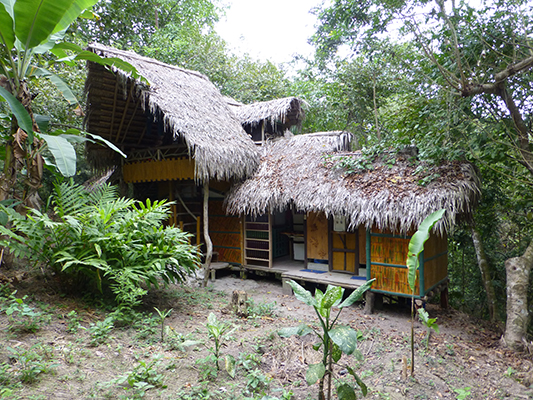
    The cabana Dave and I stayed in for two weeks.

    They compost everything. This is the humanure pile.

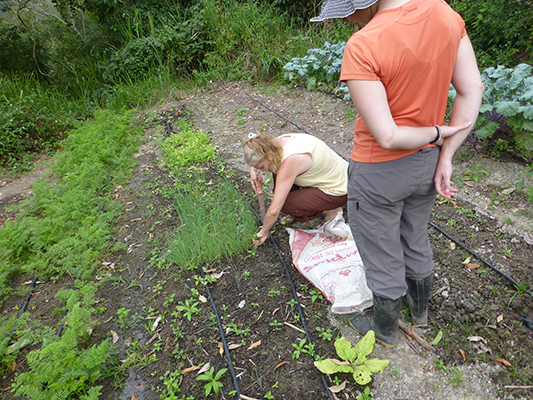
    A portion of the garden.

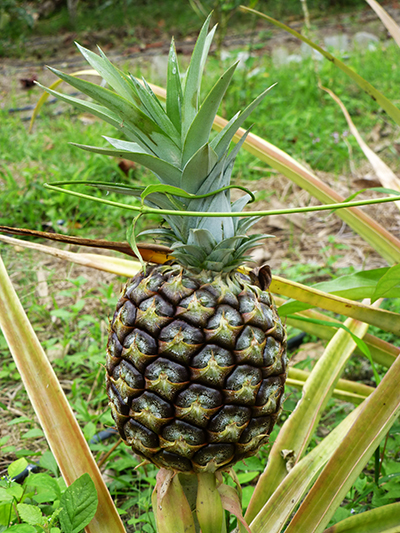
    Pineapple!

    Pretty birds

    Overall we had a fun time on the farm and it was a good experience. We now know how hard farm work really is.

Categories: South America, Traveling, Volunteering | Tags: , , , , , | 7 Comments

Bikes + Cotopaxi + Quito + Dancing = Longest/Best Day Ever

This by far was one of the most epic days we’ve had on our trip. Epic in length, number of activities, and most importantly, epic in the amount of fun one could have in a single day. You may remember our awesome Couchsurfing host Sebas from the Quito  posting. On our last full day in Quito he created an agenda that has yet to meet comparison on rest of our trip. Don’t get me wrong, we’ve had many great days on our trip thus far, but not as jam packed as this one. Here’s what the agenda looked like.

  1. Woke up at the crack of dawn and rode our rented mountain bikes through Quito to meet other riders.
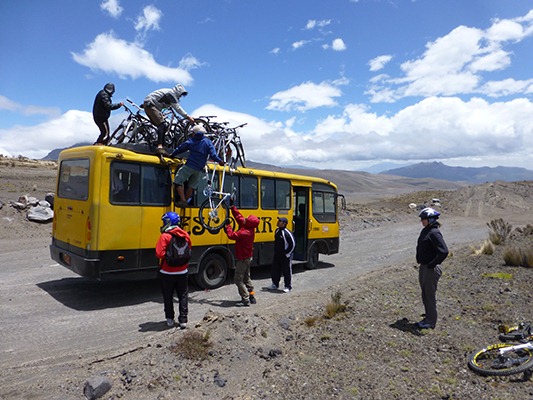
  2. Transported riders (spiked with Cuban rum) and bikes  to Cotopaxi National Park.
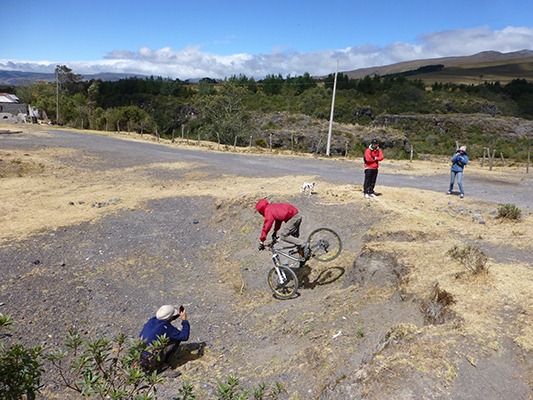
  3. Rode rented mountain bikes down some gnarly trails in Cotopaxi National Park.
  4. Took a quick nap on the ride back to Quito.
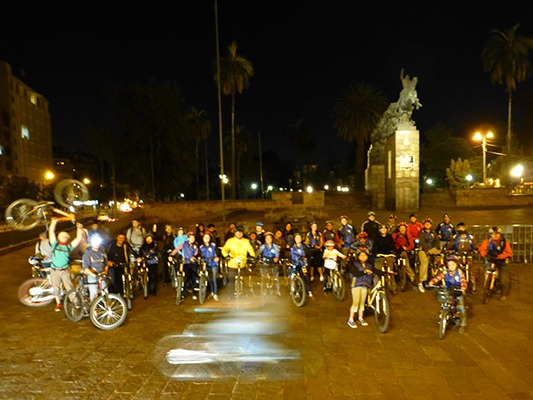
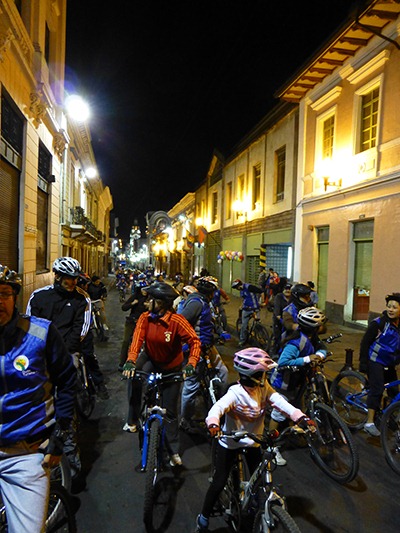
  5. Directly after arriving in Quito joined a city cycling tour for yet more riding.
  6. After city bike tour rode bikes to a dance club in “Gringolandia” (as it’s know locally) to partake in some delicious beverages and dancing.
  7. At the wee hours of the morning—the next day—rode bikes from bar to home.
  8. Slept really well.

This is what happens when a 21 year old who cycles everyday plans your day. Suffice to say, we were beat. But we were also thrilled and grateful for the experience. Thanks again Sebas.

Here are some pictures from the day.

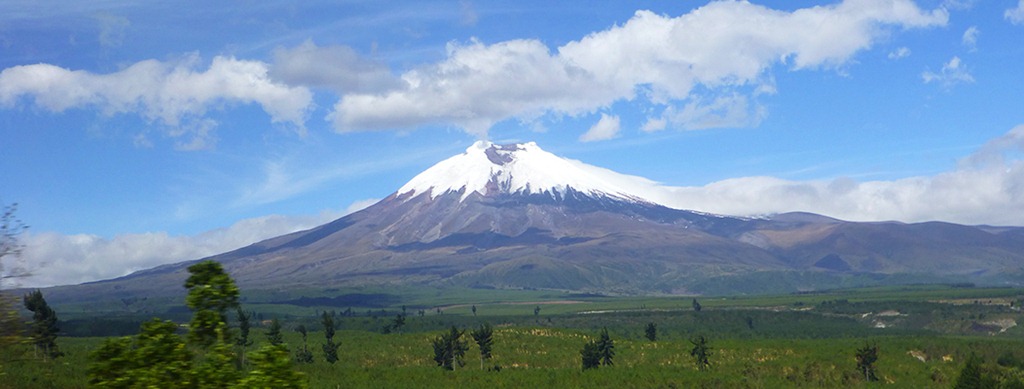
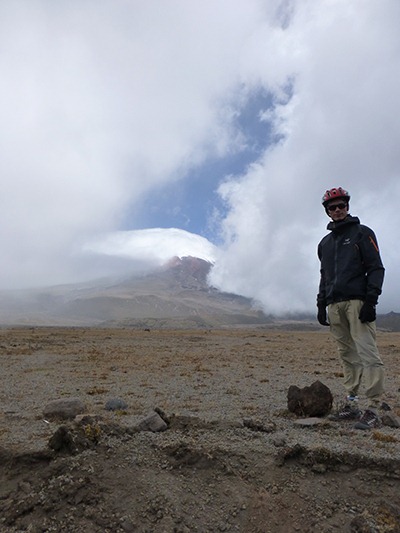
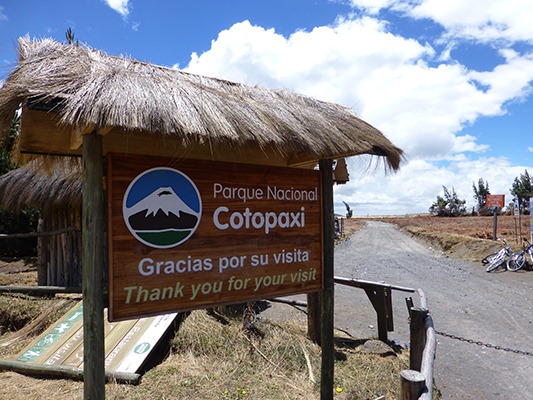
Cotopaxi Volcano (19, 347 ft.) It’s the second highest summit in the country.

Sampling some Cuban rum on the ride to Cotopaxi. It’s better when you know you can’t have it.

Enjoying the ride and mentally preparing for our trip down the mountain. Neither of us had mountain biked before this trip.

Unloading the bikes before the start of the trip.

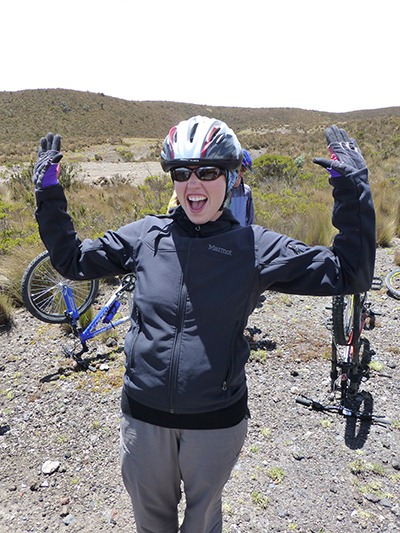
Sarah is clearly siked for the journey ahead.

That’s right, a tandem mountain bike. 

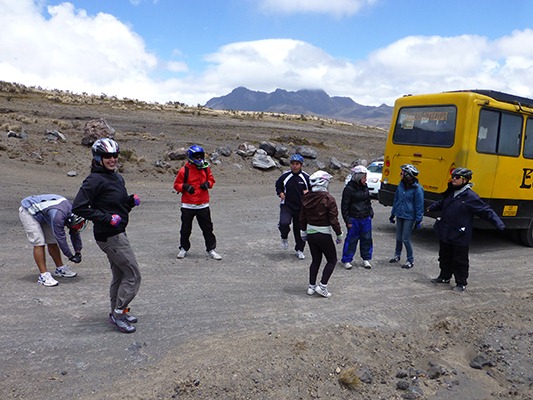
Pre-ride warm ups. Gotta loosen up in preparation for the rough terrain ahead.

Catching a glimpse of Cotopaxi during the ride. It was a bit windy up there, and a little chilly too.

No, thank you Cotopaxi. You rock!!!

The crew.

Most of the ride was beautiful. That’s when you didn’t have your eyes glued to the road of course.

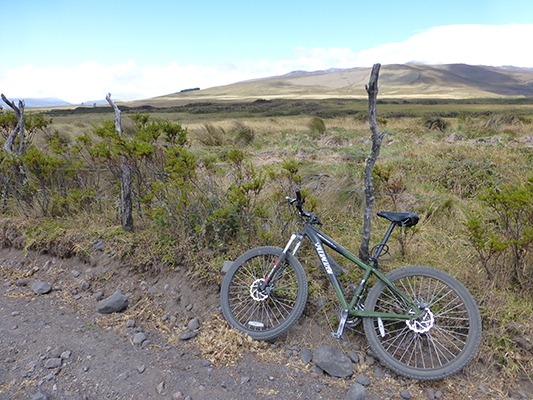
My mean machine posing in front of a beautiful background. You served me well.

A well deserved rest before the roughest part of the ride. The next leg was a very long cobble stone road with a few unwanted uphills along the way.

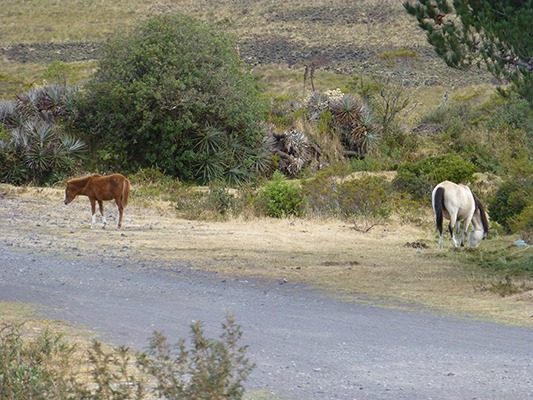
These guys were taking it a bit slower over the rough terrain.

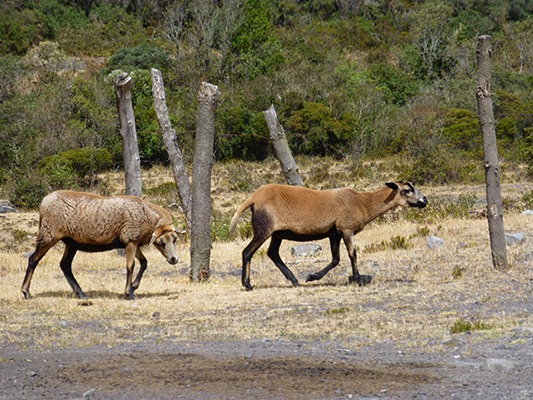
Sheep moving at a little faster pace than the horses but not by much.

One of the guides demonstrating a proper landing after jumping.

Actually, not such a proper landing. After the crash landing a local puppy came to make sure he was ok.

Proper landing. Back wheel first is better I guess.

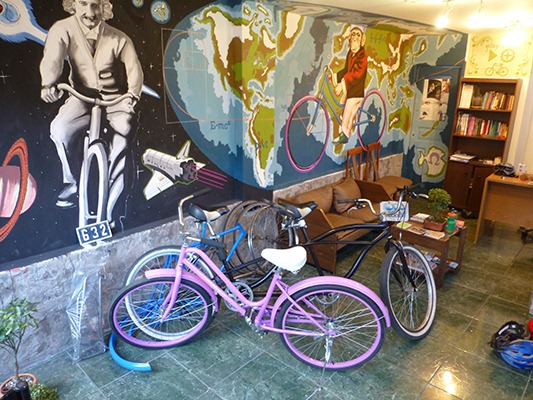
Inside of the bike rental/guide service. Pretty sweet mural on the wall. 

Sarah chilling with the Beatles before our night ride through Quito.

Sebas organizing the cyclist before the start of the ride.

Posing with Cental Park in the background. Right before this I almost had my leg bitten off by a large stray dog that clearly thought I was encroaching on his turf. You missed me sucka!

Riding through the Historical Center of Quito. They have these security personnel patrolling the area at night. They wear capes and carry swords. That’s what you call old school.

Independence Square looks really cool at night.

Waiting at a stop light for the rest of the group to catch up.

Yup, that one is with me. Sarah (a.k.a. Aunt Jemima) enjoying a deep fried dough ball with a banana inside and a couple of local drinks. The white one is a corn drink I can’t remember the name of. This one wasn’t particularly tasty.

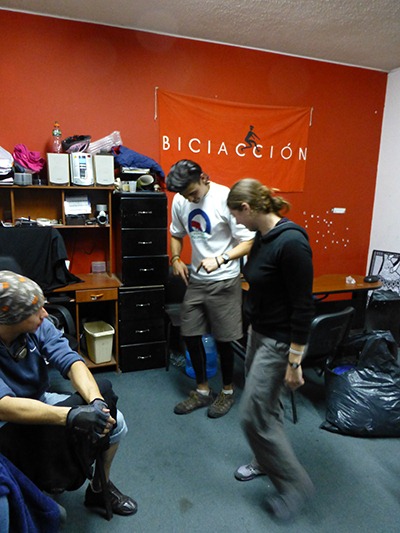
At the Biciaccion headquarters (the group that organized the city ride) where Sebas taught Sarah some salsa moves before heading to the dance club.

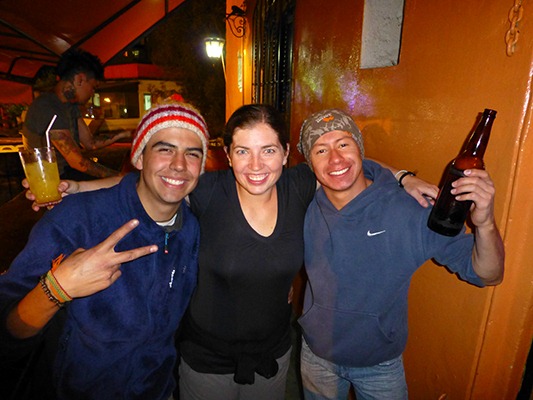
Sarah with Sebas and Frank at the dance club with ice cold beverages in hand.

Me with Sebas and Frank, and the locally brewed and Ecuadorian favorite beer in hand.

Frank and Sebas bustin the move whilst hunting for gringas. As you can see from the blond girl behind Sebas, their moves were working.

Categories: South America | Tags: , , , | 6 Comments

Sightseeing in Otavalo and Banos

During our stay in Quito we traveled to some other nearby towns that were recommended by both the guidebook and our couchsurfing host Sebas. Our first town was in Otavalo. Otavalo is north of Quito and on our way there we passed over the equator. The bus didn’t stop and there were no exact signs that we could see from the bus, but we officially had been on the equator at some point during the ride. Sadly no cool pictures to show this.

Otavalo is a town that is known for it’s market. They have a variety of hand-made crafts, clothing, toys and such. You can see the colorful display of local handicrafts with a great view of a volcano in the back. Also, another interesting fact, a lot of the volcanoes are so tall that they are covered by clouds all day and the peaks are hard to catch on camera.

P1010454

It seems that we always are traveling during or around lunch time, so by the time we arrive we are famished for food. We searched what seemed like a long time for some yummy, cheap, and somewhat healthy food and then decided on the deep-fried street food that cost $1.65 total. Below you’ll see a picture of Dave enjoying that food. This particular one consisted of an egg, covered in a rice, potato, beef mixture, then battered and fried. Very delicious.

P1010449

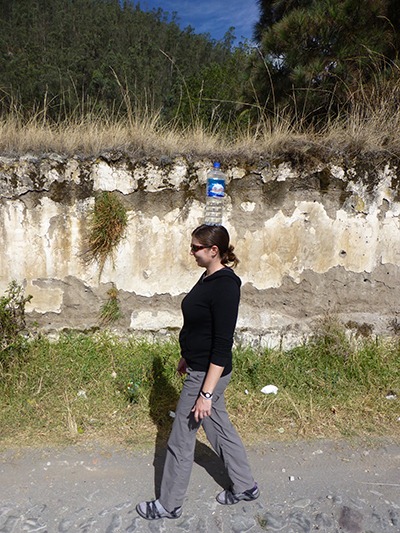
After our brief, greasy lunch and quick tour of the goods in the market, we decided to check out the waterfall that was in the next town over. The walk took us about 30-35 minutes. It was only estimated to by about 20, but we did check out the views along the way and I tested out my head carrying skills with the 2 liter jug of water. Which shouldn’t have slowed us down, but it did.  I’d like to say that I mastered it, but then again, I only did it for a little while. Also, we have been buying water since our Steripen broke. It hasn’t been working since week two. We’ve emailed Steripen complaining about the poor reliability and hoping they will offer us some sort of solution. Which they have offered to ship us a replacement. The only problem now is where to ship it to…

P1010467

Back to the waterfall. It was called cascada de peguche and was located in a little protected area with some trails and nice views of the stream. Below are some pictures of the waterfall and the park it was located in.

P1010484P1010507P1010508

Otavalo was a short day trip with a majority of our time spent on a bus watching “Face Off” in spanish, twice. All in all it was a quaint little town with a nice waterfall located not that far away. It would have been better if we were heading back to the states shortly after visiting and could bring back some souvenirs. But since we’ll be traveling for another 11 months and don’t have room in our bags, we decided pictures will do.

The following day we headed to Baños from Quito. Baños is south of Quito and about a 3.5 hour bus ride. It took us about 4.5 hours total because the south bus station from Sebas’s place is an hour away on public transport. Baños is farther east heading down towards the jungle part of Ecuador. It’s lower in elevation than Quito, but still not out of the mountains.

Banos Panoramic_01

The name Baños comes from the agua caliente (or hot water springs) that they have there. The water from these springs are pumped into different pools where you pay to enter. Dave and I went after it was dark and a bit cooler. There were a couple of different pools with the water ranging from either very hot or very, very hot. The first pool we decided to try apparently was the hotter of the two and it took me a good 10 minutes to get into the pool, no exaggeration. It felt like my skin was burning off. Eventually we decided to head up to the cooler of the two pools so we could hang out longer in the water.

You can see in the picture that the water is a cloudy brownish color due to the minerals in the water. Supposedly, the minerals here have healing powers. People come here to help with arthritis and other such ailments. It defiantly felt good on the skin.

P1010550

Next to the pools was a pretty tall waterfall. We could also see this waterfall from our hostel.

P1010542P1010544P1010583

We decided to stay over night because it was a bit farther away and there was more to do than there was in Otavalo. So on the second day, we went for a short hike up to this Angel. The hike was hard, it is supposed to be a short simple hike, but it was still really hard to breath at such high elevations. The view from the top was an awesome one of the town and is where the panoramic shot came from.

P1010592

Because Baños is a touristy town for both foreigners and people from Ecuador there are a handful of fun things you can do. There is a big bridge that spans the river where you can jump off. Sebas highly recommended it. We decided to pass, but did get the chance to see someone do it. It wasn’t like bungee jumping, it was just two regular climbing ropes and what appeared to be a climbing harness. Not the right amount of risk versus reward for me.

P1010598P1010636

We had bought some sugar cane to chomp on while we were here as well. Very good in small amounts as it is very sweet. They also made taffy here by hand. They did the pulling and stretching on door frames all over the town. We tried some taffy on one of the bus rides and it had a very strong sugar cane taste so we didn’t end up buying any. That and we want to protect our fillings from any taffy damage.

P1010656P1010665

We enjoyed our short time in Baños, it was very relaxing and soothing with all of the minerals from the water. It’s too bad we didn’t have more time or money. They offered white water rafting, which looked like it would have been a lot of fun. The next time we’re there we’ll do it.

Some cascading waterfalls off the mountains into the raging river below.

A walking bridge over the very fast moving river below. I thought the bridge was rather creepy and didn’t stand on it for very long.

There was a weird cable car system over the valley from one mountain to the next.

The mountains and valleys were being farmed on every open surface on the way to Banos.

On the way back from Banos a lady sat next to Dave who was wearing typical Ecuadorian clothing. You can ignore Dave and check out the lady behind him.

Categories: Nature, South America, Traveling | Tags: , , , , | 4 Comments

Quito, Ecuador

It’s been a few weeks or so since our last posting and our departure from Guatemala. From Guatemala we flew directly to Quito, Ecuador and have been very busy since our arrival—too busy to post on the blog. While in Quito we spent a couple of days exploring the city itself and also used it as a hub for exploring other nearby cities and sites. This post will solely describe some of what we saw while touring Quito. A couple other postings will follow describing some of our excursions to nearby places, i.e. Otavalo, Baños, and Cotopaxi National Park.

Let’s first get our bearings. We just left the country of Guatemala, which located in Central America just south of Mexico. Ecuador—where the city of Quito is located—is in the northwest part of the continent of South America, just below Colombia. Quito, the capital city of Ecuador, is 25km (15.5 miles) south of the equator. My basic understanding of Ecuador is that it has three distinct regions: the coastal region west of the Andes Mountains; the central region located in the highlands of the Andes Mountains—where Quito resides; and the Amazonian region on the east side of the Andes Mountains, where the rain forest is located. For such a small country it has a great variety of climates as well as activities.

Being so close to the equator one assumes that Quito would be a very hot place. We’ve been told that the Amazon region to the east can get pretty warm. But Quito is located in the central highlands of the Andes at an elevation of about 2840 meters, or roughly 9300 feet. That elevation makes for a much cooler climate, which is fine by us. During our time there I estimate that the temperatures hovered around the mid 70’s during the day and got a bit chilly in the evenings. The temperatures are similar to early Fall temperatures in New England.

Quito Panoramic_02

Panoramic of Quito from Itchimbia viewpoint

As you can see from the picture above, Quito is a densely populated city at around 1,700,000 people. It definitely had a big city feel but only felt overwhelming when cramming onto the public buses during peak hours. The city sits in a valley flanked by Pinchincha Volcano (4794 m) on its west side. It’s easily walkable and has a great public transportation system, which we used often in the city and for our excursions outside of the city. Public buses within the city cost only $0.25 per ride. We were told by our couchsurfing host, Sebas, that fuel is subsidized in Ecuador, making for pretty cheap transportation all around, i.e. buses, taxis and personal vehicles.

One big reason we had such a great time in and around Quito was because of our couchsurfing host Sebas. He was recommended to us by a fella we hosted at our place in Massachusetts a few times, Dick Schroth. Dick stayed with Sebas in Portsmouth, NH and in Quito. We stayed with Sebas and his mother, Silvia, for almost an entire week and they were excellent hosts. Sebas seemed to make it his personal mission while we were there to ensure that we had plenty to do and were supplied with the best information for how to get from place to place. We’ve yet to be disappointed with our couchsurfing experiences. It’s our opinion that they have provided us with a much richer experience than we would have otherwise had. Thanks so much Sebas! We had a great time!

P1010403

Our couchsurfing host Sebas and me (Dave) enjoying a very popular Pilsener brand beverage. Cheers 🙂

My favorite part of the city was by far Centro Historico, or Historical Center. Supposedly, it has some of the best preserved colonial architecture in South America. Some of the buildings were built as early as the 1550s. That’s pretty old for new world architecture.

P1010216

Independence Plaza

P1010231

La Compania

P1010248

On our way to La Basilica

P1010254

Outside of La Basilica

P1010274

Inside of La Basilica

Sebas and Sarah near one of he recently restored areas of the Colonial Center.

P1010363

Sidewalk alterations while you wait. Sweet.

P1010402

This was a really cool street in the Colonial Center, but quiet because it was a week night.

P1010419

Beautifully lit Basilica in the Colonial Center

P1010427

Indepence Plaza at night. I think the building on the left is where the President of Ecuador works.

P1010431

Independence Plaza centerpiece.

P1010441

Independence Plaza Centerpiece with a very old Basilica in the background.

Tower of the Basilica.

During the day each one of the arch ways at ground level are filled with shoe shining station.

Another cool spot, but requiring a more difficult walk, was the Itchimbia viewpoint atop a pretty big hill. The walk up  was difficult due to the steep terrain and thinner air at the high elevation of Quito, but well worth it. At the top was what looked like a giant green house, but instead of being filled with plants it was filled with giant paintings in preparation for a showing later that evening. We checked out the paintings inside and the awesome view of the city outside while enjoying a small snack of cheese filled bread. So far tasty breads sometimes filled with cheese or other deliciousness have been a popular food in both Guatemala and Ecuador.

P1010314

Centro Cultural Itchimbia

P1010339

View from Itchimbia overlooking the Historical Center of Quito

P1010348

Giant Painting exhibit inside of the Centro Cultural

P1010359

Great view of El Panecillo from Itchimbia

During one of the activity filled days in Quito we spent a few hours checking out the artifact and art exhibits in the Casa de la Cultura located in the La Mariscal section of the city. The best exhibit in my opinion consisted of a great collection of prehistoric artifacts belonging to the Inca and other indigenous cultures within the region. Some of the sculpture artwork was amazing. We also got to see a couple of human skulls altered by clamping them with rope and wood.

P1010282

Inca man carrying a backpack.

P1010301

This man is clearly content with a full belly and cheek full of coca leaves. This statue is about 3 feet tall.

Awesome intricate clay sculpture. Looks like it could be from China.

P1010307

Transformed human skull

P1010308

Example of a clamp used to transform the skull.

All in all Quito was a very tourist friendly city and we definitely enjoyed our time there. Much credit for our great experience belongs to Sebas, our couchsurfing host. We’d highly recommend paying Quito a visit if you happen to be in Ecuador.

Categories: Architecture, South America, Traveling | 12 Comments

Todo de Quetzaltenango

We have finished our 3 weeks of Spanish language lessons and boy was that difficult! We have both learned a lot but are not even close to being able to speak fluently. We should be able to improve upon our foundation with the next 3 or so months of travel in South America.

I just want to recap and summarize our time in Quetzaltenango (Xela) for the past 3 weeks.

The city of Xela sits at an amazing 2,330 M which is 7,640 ft high. That’s taller than any of the mountains we’ve hiked in the White Mountains in New Hampshire. After three weeks of living here we are still not used to it. It’s hard to breath and we’re always tired. We hoped we’d get somewhat acclimated because we’re heading to Quito Ecuador next, which is at 9,350 ft. Maybe we have improved but it’s just been slow enough that we haven’t noticed.

Xela is also home to a lot of “Chicken buses” which consist of old school buses that are considered no longer fit for use in the United States. My theory is that they are considered that way because the emissions are no longer functioning. The exhaust that comes out of the back of these things is dense black smoke and makes the air impossible to breath. This could also be adding to our difficulty breathing and always feeling tired.

Panoramic picture of Xela and Dave

But, those are the only two downsides to Xela. Everything else we’ve experienced has been great. Some of the great things…

Chocolate Puro – The best hot chocolate I’ve ever had. I’m not sure hot chocolate would even be a good way to describe this. Chocolate puro is a piece of Xela Chocolate melted down into liquid form with some hot water (or milk if you so desire). It’s very smooth and creamy. The best Chocolate Puro I had was at Cafe Nim Sut.

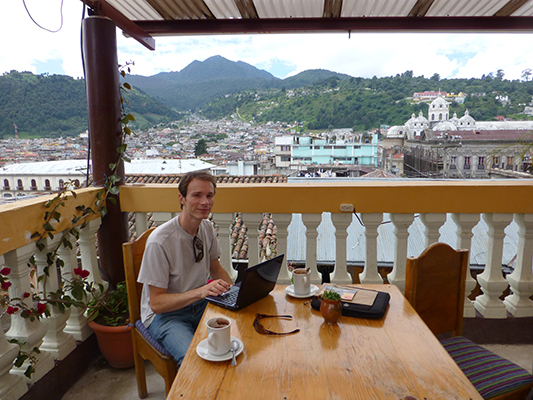
Cafe Nim Sut is also a favorite of ours. They have an amazing view of the city, the best chocolate puro and Wifi.

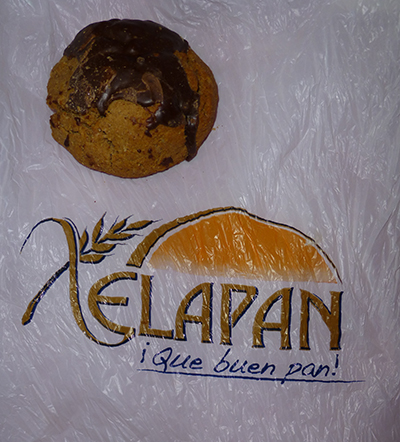
Xelapan is the local bakery chain in Xela. They have the special bread of Xela called Sheca. Sheca is bread with anise inside. We tried it and it was ok. We really one variety of bread sold there made with tasty spices and a chocolate coating on it; AND it only costs $0.25. They are pretty big, one is enough to share if we’re not too hungry. Xelapan was our go to place for a quick, cheap snack during the break.

The Bake Shop is the other local bakery that we’ve come to love. This bakery serves more sweets than bread. They are only open two days a week and are a little bit more expensive. They are also owned by a group of Mennonites–you can kind of see them in the picture. We came to love the donut type pastries that were filled with either fruit or peanut butter, both of these are $1 each, so comparably it’s 4 times more expensive. We also got a loaf of banana bread from them. Don’t worry Mom, yours is still the best.

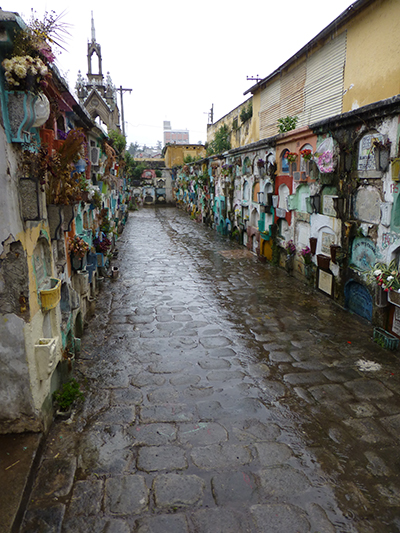
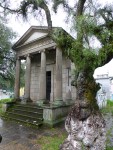
The cemeteries they have in Guatemala are very different from what we have back home. Families pay for a plot and then decorate it however they want. Some of them are very intricate. There was also a section where people could rent a spot if they couldn’t afford to buy a location outright. The problem with the rented spots is that if you stop paying you get evicted.

You could get evicted from these…

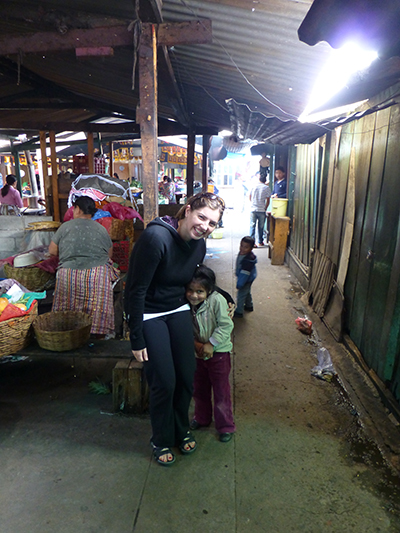
Xela has a market every day of the week. The farmers that grow veggies and fruit from the surrounding land outside of Xela travel every day with their goods and sell them. We were big fans of the bananas.

This little girl wanted her picture taken. We couldn’t say no.

Xela is surrounded by some good size hills and mountains, a couple of which we hiked. The first was to a church that overlooks the city with an awesome view. And the second was to Cerro El Baul Mountain. Which was described as a daily 30 minute hike for Guatemalans. But it ended up being an 1.5 hour up because it’s 8,695 ft high. It’s was beautiful up there and there was 100ft long concrete slides. Dave and I both tried them, but I feared my pants would melt so I didn’t get the full experience.

The first hike. The panoramic in the beginning is from this hike.

Last day in Xela. With Elise, Sarah, Nicki, Sarah, and Dave.

The 100 ft long concrete slides.

And of course the people we met…

Marina – She was our house mother for the past three weeks. She was very hospitable and is an amazing cook.

Marina, Sarah and Dave

Fredy – He was Dave’s Spanish teacher for the three weeks we were here. Dave has learned a lot from him and has been able to hold some interesting conversations, both in English and Spanish.

Patty – She was my first teacher and was very patient throughout my first two weeks of struggling through Spanish. I learned a lot in those two weeks.

Carlos – He was my second teacher, they suggest you switch after two weeks. So I said I was flexible and they ended up switching me. He was also a very good teacher and he was able to explain to me many tenses in one week.

Nicki – She started the same time we did and has been able to hang with us the most. She’s going to be an expert at Spanish since she’ll be at Pop Wuj for 7 months! Here’s a link to her blog if you’re interested. Naraneta Crossing.

And of course all of the other students we hung out with and/or worked on projects with during our time in Xela.

Categories: Central America, Traveling | 4 Comments

Stove Project (Proyecto Estufa) Update

In a previous post we described the stove project that we had an opportunity to work on while attending school at Pop Wuj Spanish Language school. The stove project is just one of the ways that Pop Wuj helps the local communities near Xela. The project is done in three phases: Phase 1 includes laying down the cement base; Phase 2 includes laying down three layers of bricks using clay cement and regular cement; and Phase 3 includes installing the inner ramp (to direct smoke to the chimney), the metal stove top, and chimney pipe. In the previous post we described phases 2 and 3 because those were the steps we had been involved in up until that point. We weren’t sure at the time whether we would have an opportunity to participate in phase three, hence the addendum.

Phase 3 is a relatively fast step when compared to steps 2 and 3, but is a very important step because it’s the foundation for the entire stove. So the first phase requires a bit more attention to detail to ensure the rest of the phases and the final product are the best they can be. We were lucky to have Carmenlina on hand again to ensure quality throughout the building process. In addition to bringing quality to the table she’s also a speedy worker.

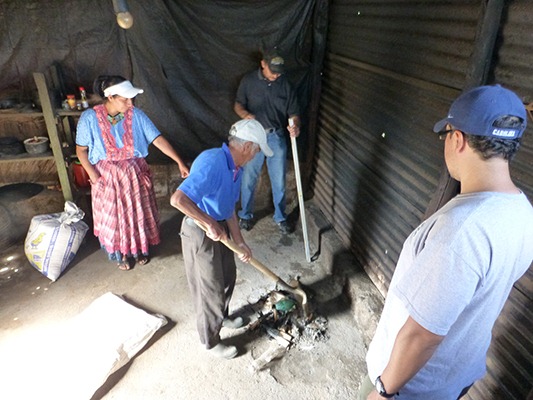
The stove recipient cleaning up the remains of a small fire that he previously used to cook with.

The stove recipient cleaning up the remains of a small fire that he previously used to cook with.

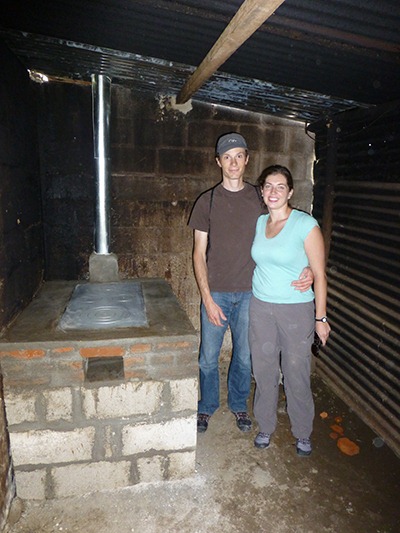
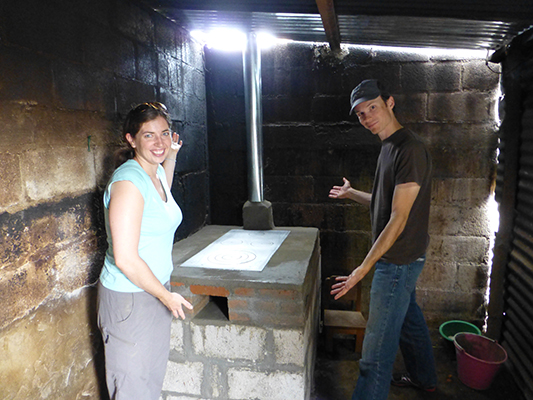
The first image (above) illustrates one of the effects of using an open fire with which to cook. All of the surfaces (walls, ceiling, pillars, light bulb, etc.) inside of the building are coated in a black residue from cooking with an open flame over a long period of time. I couldn’t help but think about the similar effect the open flames have on one’s lungs. Many of us back home enjoy a campfire from time to time and may experience this to some extent, but we definitely don’t spend several hours everyday over an open flame preparing meals. It’s easy to see the immediate benefits of these stoves. This is a known problem in certain parts of the world and there are many projects going on to help address the smoke inhalation issue. Here’s a link to a stove project a friend of ours worked on in India in collaboration with a group called Design Impact.

Sarah and Dave chopping cement blocks with machetes. It's amazing what you can do with a machete.

Sarah and Dave chopping cement blocks with machetes. It’s amazing what you can do with a machete.

The working crew that day included Sarah, Fredy, Carmelina and Carlos.

The working crew that day included Sarah, Fredy, Carmelina, Carlos and Dave (behind the camera).

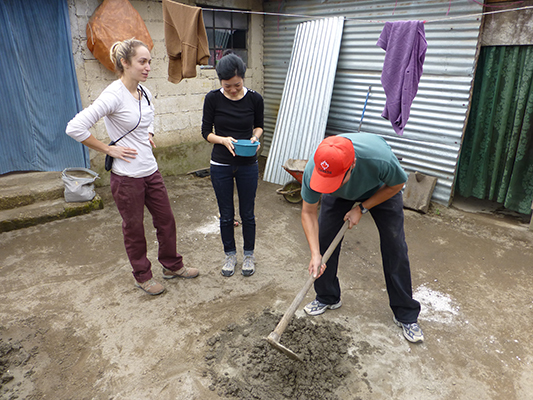
This man lived at the home where the stove was installed. He was a construction worker in the past and was a master at mixing cement. He waited patiently as we unskilled laborers attempted the mixing process but took over to make sure it was done properly.

This man lived at the home where the stove was installed. He was a construction worker in the past and was a master at mixing cement. He waited patiently as we unskilled laborers attempted the mixing process but took over to make sure it was done properly.

Carmenlina laying out the base.

Carmenlina laying out the base.

Sarah and Carmenlina verifying the outer dimensions. Sarah's engineering skills coming in handy here.

Sarah and Carmenlina verifying the outer dimensions. Sarah’s engineering skills coming in handy here.

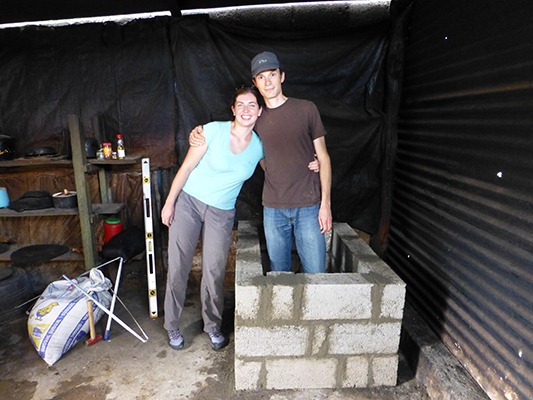
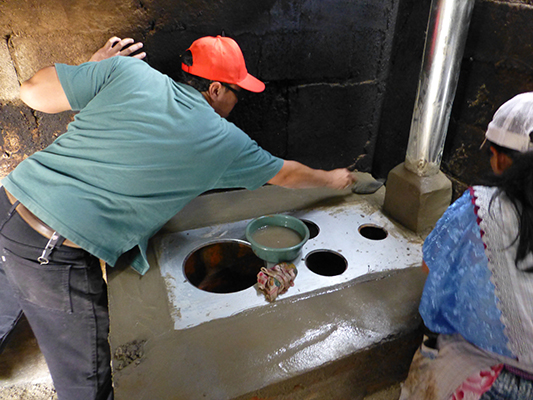
Sarah and Dave posing with the finished product.

Sarah and Dave posing with the finished product.

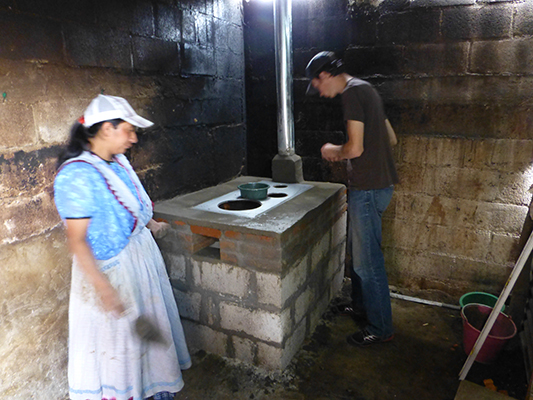
We visited the stove we finished last week. Still look awesome. It needs many more weeks to dry before it can be used though.

We visited the stove we finished last week. Still look awesome. It needs many more weeks to dry before it can be used though.

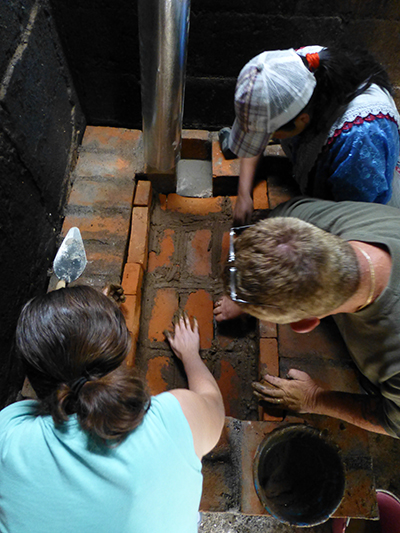
A view inside the stove. You can see the ramp leading to the exhaust hole in the rear of the stove.

A view inside the stove. You can see the ramp leading to the exhaust hole in the rear of the stove.

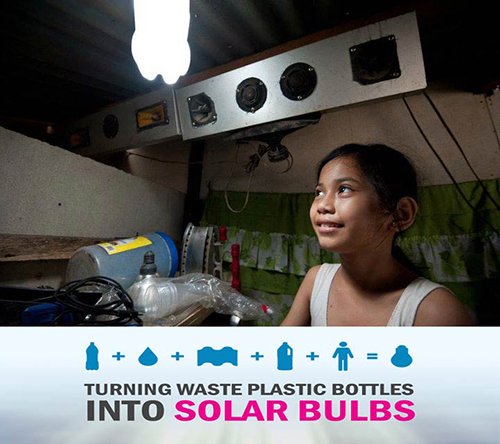
On a separate but related topic, this stove project reminded me of a project I’d heard about some time ago taking place in the Philippines. According to a video about the project, many of the buildings there are similar to some we saw here in Guatemala in that they are dark inside during the daytime and aren’t connected to an electrical source to power a light bulb. The project is called “Liter of Light“. It helps solve the problem of low light or no light situations in buildings by installing a 2 Liter soda bottle filled with clean clear water and a little chlorine (to prevent growth of algae) in the roof/ceiling of the building. During the day when the sun is shining the 2 Liter bottle filled with water transmits the light from the sun through the water into the room where it is installed. According to the folks that came up with this idea it can put off the same amount of light as a 50-60 watt light bulb. This of course depends on the strength of the sun outside. Nonetheless it’s a very cheap solution when compared to the electricity and bulb needed otherwise.

We shared this idea with the folks at Pop Wuj and they expressed great interest in incorporating this project into their already large scope of projects. They’d like to potentially install a water bottle light fixture in the same homes that receive the stove. It’d be really cool to see that take place. If you are someone who’s involved in communities that might benefit from this and you happen to be reading this blog post, check out the Liter of Light website.

Thanks Pop Wuj for allowing us to participate in such a cool project.

Categories: Central America, Traveling, Volunteering | 2 Comments

Lake Atitlan (Lago Atitlan)

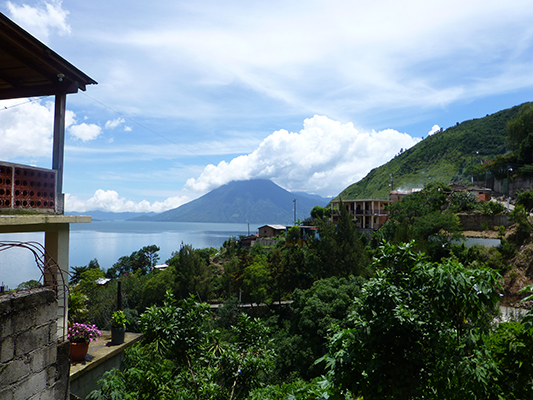
Panoramic shot of Lake Atitlan from the docks in Jaibalito

This past weekend (August 17-19) we visited a few cities just east of Xela (where we’re studying Spanish) that all reside on the banks of Lake Atitlan. Lake Atitlan is the deepest lake in Central America and is actually the caldera left from a volcanic eruption 84,000 years ago. In addition to being a giant caldera–filled with water of course–the lake is abutted by 3 volcanoes. For more info about the lake check out the link provided above or just Google Lake Atitlan.

Our journey began by leaving school a little early on Friday to catch the bus that leaves Xela and goes directly to Panajachel, the largest city on the lake. The options were to take a shuttle directly to Panajachel for $25 (that’s U.S. dollars) or a chicken bus for 20 Quetzales (~$2.50 U.S.). We opted for the less expensive and more adventurous chicken bus. For the low low price of only $2.50 you get to ride with locals, haggle for price with the bus attendant, sit in seats designed to fit children (most chicken buses are old yellow school buses from the U.S.), and a terrifying ride around sharp curves at high speeds. Excellent value if you ask me.

Dave holding on tightly on our way to Panajachel.

We arrived in Panajachel (Pana as it’s known locally) earlier than expected and before our couchsurfing host could meet us, so we wondered around town a bit trying to get our bearings. We eventually met up with Helga (couchsurfing host) and her three kids, ranging in age from 8-13 years old, I think. She and the kids were busy that night so Sarah and I set off exploring Pana.

Due to rain that set in that evening there wasn’t much going on in town. After much deliberation and being propositioned to come in and eat by many of the restaurants we passed, we settled on a place that served burgers and Asian cuisine. The choice was primarily based on finding the cheapest food. We planned to try local cuisine the next day. Not to mention, I just wanted a burger.

Wimpy looking burger but a burger nonetheless, with yummy fries too.

Saturday had a lot more in store. First thing in the morning we headed to the local market to grab food for the weekend and day. Our Spanish is good enough to buy food. That’s a good start. We bought 2 avocados, 1 onion, 6 bananas, 1 red bell pepper, 14 eggs and 1 box of pancake batter (panqueques in Spanish) for about $4.50. Not bad I guess.

The local market right around the corner from where we stayed.

After breakfast we took a boat–the main, and only mode of transport in some cases, to and from the towns on the lake–from Pana to Santa Cruz, about a 10 minute ride away. The boat ride cost 10 Q ($1.25). We’ve found that the best way to make sure you don’t overpay for anything is to figure out what the going price is ahead of time and then supply exact change when it’s time to pay, and be firm when necessary. Those tactics paid off all weekend, for both the bus and boat rides. It’s pretty gratifying to know you’re getting the best price possible. That said, it’s common for visitors to spend more than locals. There are typically two sets of prices for anything: local prices and visitor/traveler prices.

Sarah enjoying the mini cruise on the lake on our way to Santa Cruz.

Once we arrived in Santa Cruz we found the walking trail between there and the next town to the east, Jaibalito. The walk was only about a mile or so but packed with great views and some fun terrain. It was the first bit of hiking we were able to do on the trip thus far.

Trail sign showing we’re on the right path.

We observed a local fisherman pulling in a few small catches using only a line, hook, bait, and his mouth to reel in the line.

The town of Santa Cruz overlooking the lake.

A house in/on the lake. Our guess is that the lake level is lower in the dry season. Though, we were told that the lake level has been on the rise in recent years and not going down. Old timers say it was even higher about 40 years ago.

An amazing hotel we didn’t stay at but that was recommended by several people. Not in the budget.

A closer shot of the aforementioned hotel (La Casa Del Mundo, I think). Also has a section in the lake.

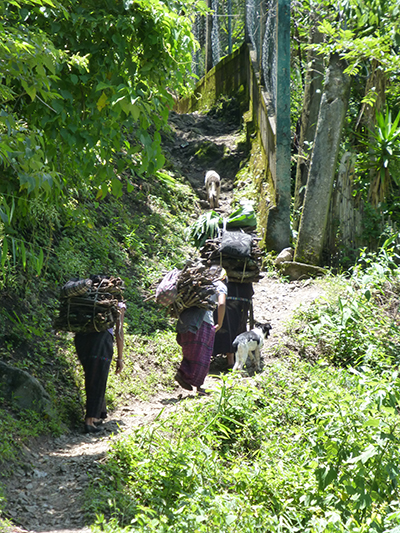
Some of the folks we encountered on the hike. Their loads were a lot heavier than ours. Along the way we heard one of the local Mayan languages spoken. Pretty sweet to hear the language of an ancient people.

Sarah hiking on the wooden plank trail.

Dave hiking on the wooden plank trail.

Example of some of the pretty vegetation we encountered along the way.

More interesting vegetation.

Unfortunately there was lots of trash along the lake shore. We were told by people from Guatemala that the lake is relatively polluted. Also in image are floating rocks. Volcanic rocks I think.

This is the inside of Hotel Isla Verde we visited on the trail. Pretty cool place. Evidently they were holding a seminar called “Consciousness and Sacred Sexuality Guatemala”. The session was called “Sex Magic-Manifesting your Deepest Desires”. Interesting.

Sarah walking the narrow streets of Jaibalito.

After making it to Jaibalito we walked the same trail back to Santa Cruz to explore for a while before heading back to Panajachel. At the Santa Cruz boat dock, where the walking trail ended, we were bombarded by tuk-tuk operators asking if we wanted a ride to the top. We assumed the walk to Santa Cruz was a short distance away and decided that tuk-tuks were for lazy tourists. No way we’d consider ourselves part of that group. It turned out that Santa Cruz was much further away and higher in elevation than we thought, and the path there was steep the entire way. Even with the terrain and distance we decided to continue the journey on foot and raised our noses at the tuk-tuks.

Once we reached what we assumed was the top, we took in the view and shortly after began our descent. There wasn’t much to the town of Santa Cruz. It was more of a community/large neighborhood than a place for tourists to hang out and sip on a cup of joe. If there was a place that could be considered a tourist friendly area we didn’t find it. Tourist definitely visit the town though. One sure sign is that more than a few of the kids asked for one Quetzal to have their photo taken. Still a cool place to visit, even for a short time.

Switchback number 1. Sure we don’t want to take the tuk-tuk?

It can be much further, right? Maybe we should take the tuk-tuk. Nah.

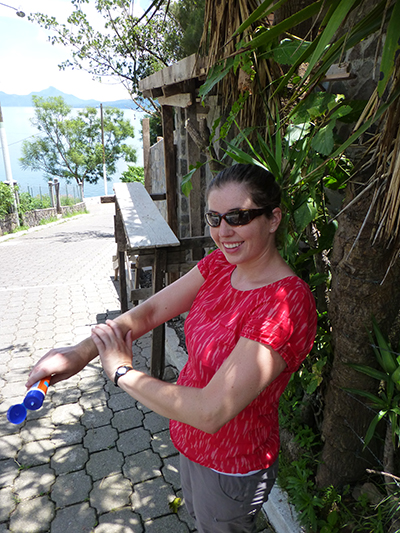
Turns out it’s hard to find shade midday when you’re close to the equator. We found ourselves looking for someplace on the north side of a building in order to get out of the sun, like we were still in New England. Turns out the sun is pretty much smack dab in the middle of the sky. Hence reapplying sunscreen.

It’s amazing the terrain buildings are built on. All of Santa Cruz was like this.

View from the top-ish of Santa Cruz.

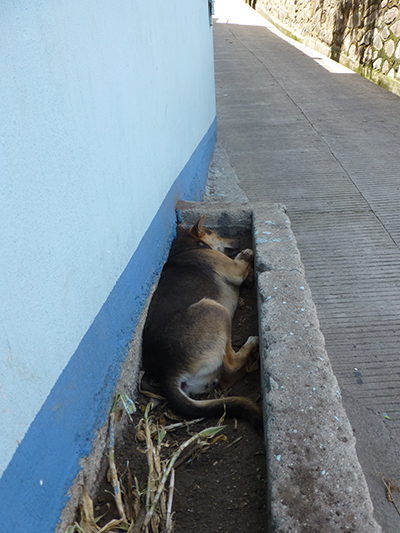
This guy had the right idea. Find a shaded hole on a patch of cool dirt and take a nap.

After descending back down to the boat docks we took a boat back to Panajachel. We both promptly took warm showers, which neither of us had had for a couple of weeks at that point–“warm” being the key word here. Afterwards we took a short walk around town with Helga, seeing a couple of places we hadn’t yet found.

One of the rivers leading into Lake Atitlan. We walked along it with Helga and her dog.

Our couchsurfing host Helga, her dog, and a bunch of the local strays. The strays aren’t so scary if you have dog treats. They all loved Helga.

And of course a local frozen treat. Seeing a theme yet. Strawberry frozen ice cream covered in chocolate.

For dinner we finally had a chance to hang out with Helga’s kids. They introduced us to some local street food. We had Tostadas (deep fried corn tortillas covered in a thin coating of avocado, black bean sauce and salsa, and then chopped onions and cheese on top) and Atol (a creamy warm drink made from corn tasting a lot like canned creamed corn, but better). They were both delicious. Afterwards the two of us went to a bar to grab a drink but were beat and headed back soon after I (Dave) finished my beer.

The next morning we made pancakes and scrambled eggs for Helga and her family. The kids tried banana pancakes for the first time so we agreed to try pancakes covered in black bean sauce. It was surprisingly good, and according to Helga, good for you. We spent a couple of hours after breakfast having a great and varying conversation with Helga.

All in all it was a great weekend. The bus ride home was equally scary and thrilling as the one to Pana, this time with twice as many people on board. Still no chickens on the chicken bus though.

Categories: Central America | 2 Comments

Proyecto de Estufa (Stove Project) and Traveler’s Sickness First Victim…

First off, I know it’s been awhile since we last posted. Sorry.  Our brain has been working hard trying to learn Spanish. Which is VERY hard and exhausting…but I digress.

Back to the Stove Project!

Pop Wuj is committed to helping the community around Xela with a handful of different projects, one of which is the stove project. A couple of women who work for Pop Wuj travel to different communities outside of Xela and visit families to characterize the need for a new stove or not. Every Wednesday is the stove project day where students (and teachers if their class is in the morning) volunteer to go build one of three stages of the stove.

So far Dave and I have volunteered two days and have been able to build stage 2 and 3 on the same stove! Since the locations are outside of the city we get to take chicken buses too.
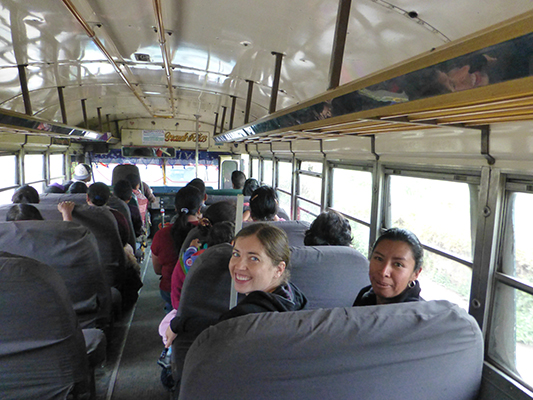
Sarah and her Teacher Patty on the Chicken Bus
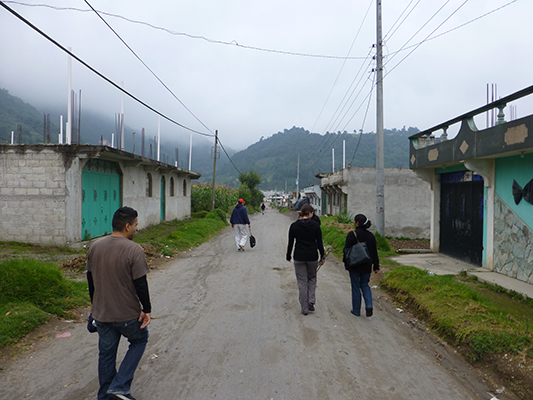
Ryan (another Student), Freddy (Dave’s Teacher), and Sarah and Patty walking to the house

Stage One:

This stage includes building the base and foundation for the stove. It uses cement blocks, known as just blocks in Spanish, and cement to bond them  together. There are three layers of blocks. Sand is then filled in the center of the blocks to bring it up to the same level. You can see the first level in the pictures below. We did not build this it was there when we started the second phase.

Stage 1 completed the week before and ready for Stage 2

Stage Two:

I think stage two could be the most difficult stage and takes the longest time to build. Although this could be biased since I didn’t build stage one and there were only 5 of us working on stage two and about 7 or 8 working on stage three.

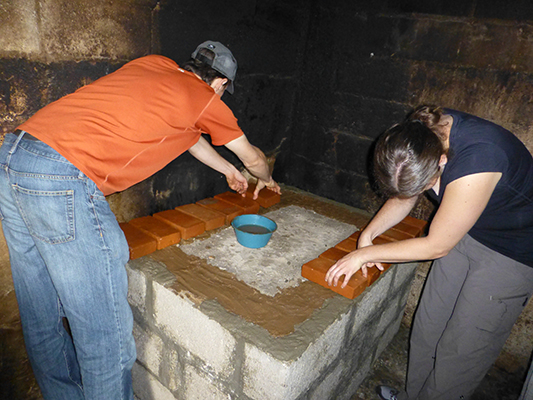
Stage two has three different materials. Baro, which consists of a clay, water, and a brown sugar liquid to make it sticky. Baro is the thermal insulation for the stove. It goes on the inner 2/3’s of the stove. Cement is the second material that goes on the outside 1/3 of the stove and is to hold the bricks together. The bricks are the third material used in this step.

The first thing you do is soak the bricks. Eighty bricks in total, it was good practice counting…I made it to 80, with only one wrong pronunciation.
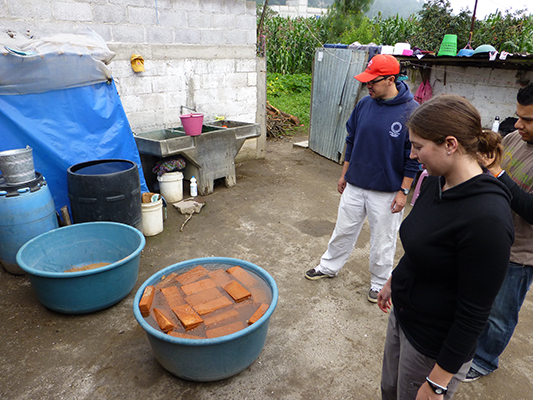
80 bricks soaking in the water

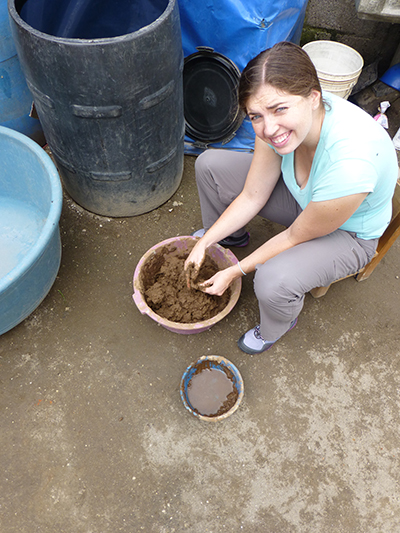
Then you make the Baro. The Baro is very sticky and very dirty. All three of us, Ryan included in this, were mixing the Baro and there for no pictures. Sorry.

Sarah measuring out the clay for the Baro

A layer of Baro goes on top of the blocks on the inside 2/3’s and a  layer of cement on the outside 1/3. The first layer of bricks are placed on top of that about a finger width apart. Which turns out is very important for the next step. The bricks were also leveled before the next step took place. This involved putting more Baro or cement to even things out.

Dave and Sarah placing the bricks on the Baro and Cement layer.

The next step includes putting the Baro, which let me remind you is VERY sticky and doesn’t slide in very easily, between the bricks and then on top of the bricks. Again, Baro on the inside 2/3 and cement on the outside 1/3.

Ryan and Dave working on getting the Baro and cement in the back of the stove. Notice the small working space.

Repeat two more times until you have three layers total. Making sure to leave space for a door in front and a chimney or chiminea in Spanish in the back.

Ryan and Sarah on the second layer applying Baro and Cement

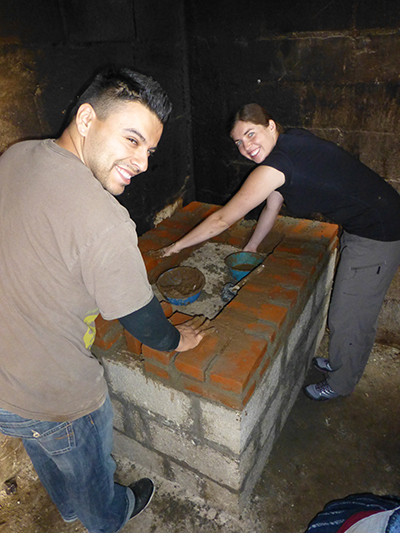
And tudah! (I googled this word and still not sure if this is how it’s spelled.) Phase 2 complete. Except for the clean up and ride home…

Looks beautiful!

Sarah cleaning her hands of Baro

Dave and Freddy cleaning the tools

Adios!

Phase Three:

Phase three includes putting the floor down for the inside of the stove, the chimney, and the metal top. The first task for Dave was to carve a brick in a gradual arc shape for in front of the chimney while I mixed the dried Baro from last week to a better consistency.
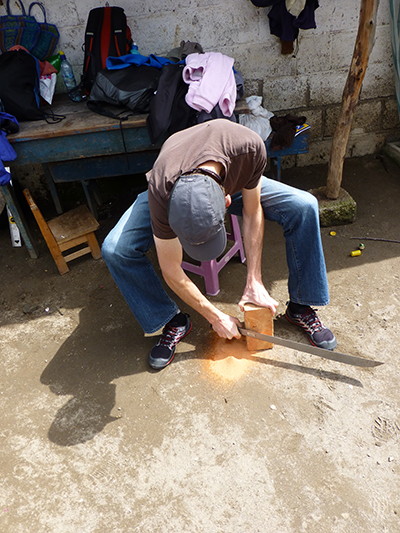
Dave carving the brick with a Machete
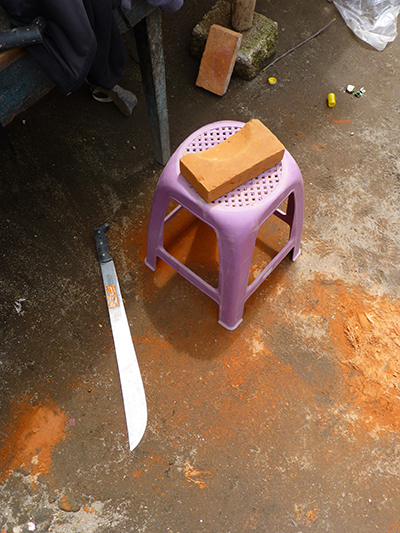
They actually had him make two because he did such a good job on the first one. This is for the other stove near by.

Sarah mixing Baro

Then next process was lining up the chimney and cutting a hole through the roof. This process was mostly done by the teachers and Carmenlina, who is the stove master.
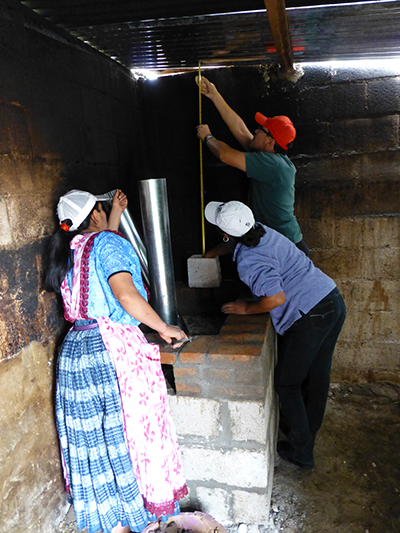
Carmenlina, Patty and Freddy figuring out where the chimney will go.

While the roof was being cut, Carmenlina was placing the gradient stove floor. She put the bricks down so it slowly increased in height towards the chimney. Then more Baro between the bricks.

Sarah, George (another student), and Carmenlina putting the Baro down.

Next was placing the chimney through the hole and connecting it to the stove. Dave caught an awesome picture of the women receiving the free stove watching the teachers do this step. She was very grateful for this stove.
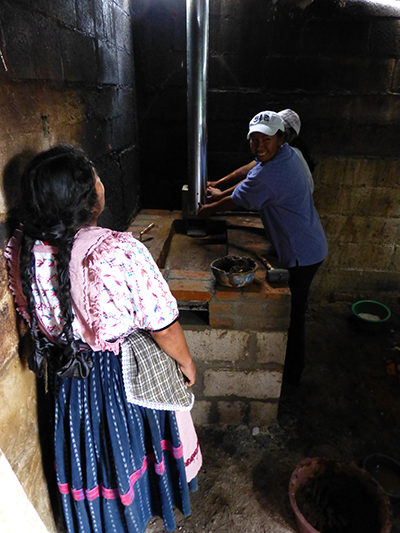
Grateful eyes watching the stove making.

Following the stove is the placement of the metal top and more cement to top it all off. Notice the perfect cement job done by Carmenlina on the chimney block. Once this done, they let the stove sit for 7 weeks to dry out. Once dry, they return to put a door on and then the stove can be used for a long time.
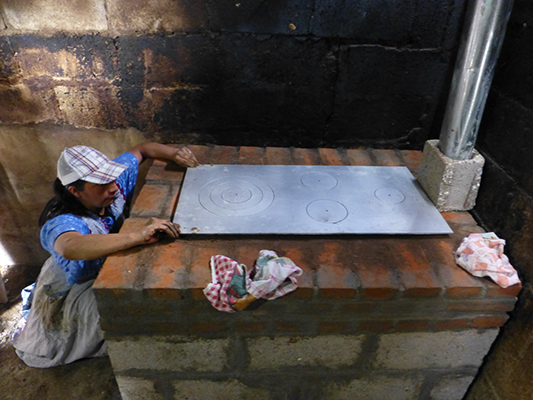
Carmenlina works fast but is very good at what she does.

Students watching how to make cement.

Reaching the long spots for Carmenlina.

Dave trying to master the trowel. He either wasn’t going fast enough or not doing a good enough job, Carmenlina eventually took the trowel from him.
our teacher’s told us “good work” or “bueno trabajo”

There was enough people this time that another stove was worked on as well. Check out the other group…
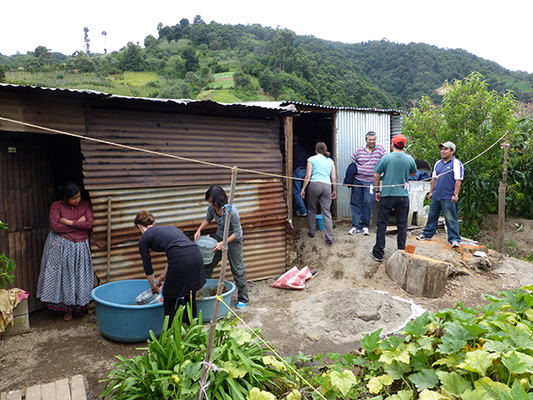
Other group of students cleaning their tools.

The two ladies who live there and were receiving the stoves were very grateful and made everyone (there was 14 of us total) some hot beverage that consisted of chocolate and rice. Everyone had to take some, they were not taking no for an answer. There was a lot of concerned students…they didn’t want any bacteria friends from this drink. Dave and I both tried it. Not my favorite. The texture was similar to rice pudding, not a fan.

Some pictures of us leaving that day…

Carmenlina leaving the house between the rows of corn.
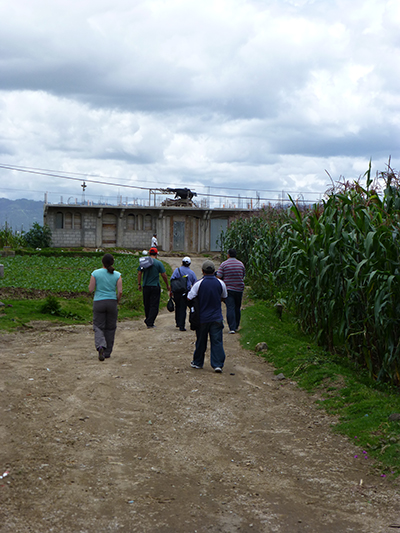
Walking towards the street to catch the bus.

A hill of corn, onions, broccoli, etc. behind the house.

And finally Dave and I treated ourselves to the chocolate covered frozen bananas we’ve been seeing on our walk home every day.
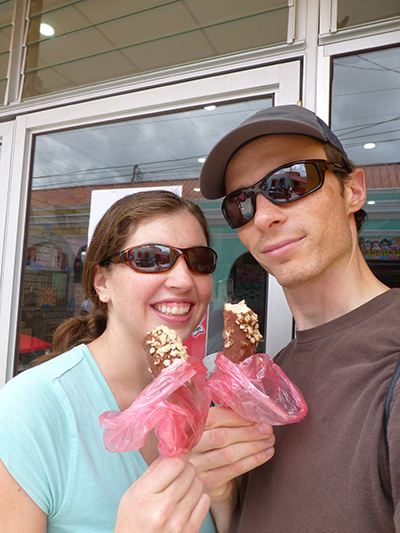
They were yummy…

Lastly, I’ve either made the post so long that you’ve been waiting in anticipation for the first victim of traveler’s sickness or you completely forgot. I’ll go with the first…

It was ME…I’ve had stomach problems since Friday and then Tuesday after lunch I had a fever of 99.3 for well over 9 hours. I don’t know the exact time, about 5 hours into the fever (a fever that ibuprofen nor aleve helped, I know tylenol would be best…but we didn’t have that) I broke down and took a dose of my antibiotics. The fever broke sometime in the night and I felt good enough to go to the stove project the following day. I’m still not feeling 100 percent…time will tell if I need something else.

As a side note, Dave has had some minor stomach issues, we’re afraid he wasn’t far behind my problems, but no fever yet. Good job Dave.

Thanks for sticking in there for this long post!

Cheers, Sarah

Categories: Central America, Volunteering | 10 Comments

Blog at WordPress.com.